
LA Metro Transit Center: A Blueprint for Urban Renewal and Equity
The long-awaited $900 million LA Metro Transit Center, set to fully operationalize by late 2026, represents a landmarkLARK-- moment in Los Angeles's urban transformation. Opening its doors on June 6, 2025, the station—designed to connect Los Angeles International Airport (LAX) to the regional rail system—embodies a rare confluence of infrastructure ambition, equity-driven policy, and environmental stewardship. For investors, this project offers a compelling lens through which to assess the future of urban mobility, real estate, and socially responsible investment opportunities.
The Infrastructure Leap: Connecting a Global City
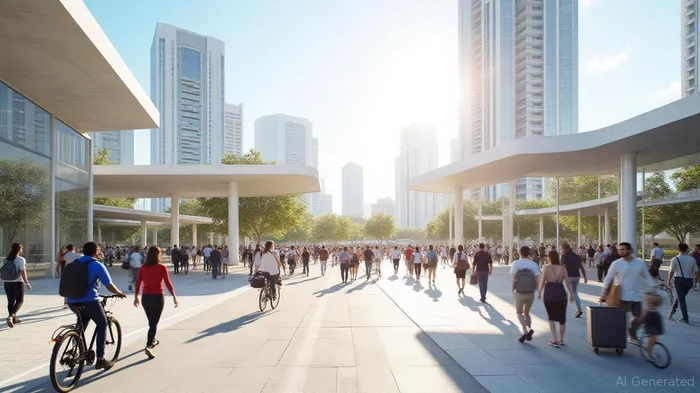
The Transit Center's phased completion marks a critical step toward bridging LAX—a key economic artery—to Los Angeles's rail network. By integrating the K and future C lines, buses, and the upcoming automated People Mover (due in late 2026), the station aims to reduce car dependency and cut traffic congestion. While delays have pushed back timelines—most notably the People Mover's one-year slip—the project's core infrastructure is now operational, with free shuttle buses already running to LAX terminals.
The design by Grimshaw Architects emphasizes accessibility: natural light floods the concourses, ADA-compliant facilities abound, and commercial spaces cater to travelers. Yet the project's true transformative potential lies in its integration with broader regional plans, such as the “28 by 28” initiative targeting readiness for the 2028 Olympics. For investors, this underscores a structural shift in LA's transit ecosystem—one that could catalyze real estate values near transit hubs and reduce reliance on car-centric infrastructure.
Equity in Action: More Than a Station
The Transit Center is not merely about steel and concrete. It is a flagship for L.A. Metro's Equity Information Hub, a platform launched in 2023 to embed social and environmental justice into every project. Key initiatives include:
- Community partnerships: Collaborations with grassroots organizations like Pacoima Beautiful ensure marginalized voices shape transit planning.
- Affordable housing: Metro prioritizes housing near transit stations, addressing displacement risks in gentrifying areas.
- Fare reductions: Lower fares for low-income riders and seniors expand access to 1.3 million annual Metro users.
These efforts align with the Long Beach–East L.A. Corridor Mobility Plan, which targets air quality improvements, pedestrian infrastructure, and reduced freight congestion in overpopulated, historically underserved communities. For socially conscious investors, this signals a shift toward projects that balance economic growth with community welfare—a trend increasingly valued in ESG (Environmental, Social, Governance) portfolios.
Environmental Justice: Cleaner Air, Healthier Cities
The Transit Center's environmental impact is equally profound. L.A. Metro's Green Construction Policy, which mandates greener equipment and renewable diesel, has already slashed nitrogen oxide emissions by 63% and particulate matter by 79% on projects like the Regional Connector. For communities near LAX, where air pollution disproportionately harms low-income residents, this is a lifeline.
By reducing reliance on single-vehicle traffic and incentivizing public transit, the project contributes to LA's goal of net-zero emissions by 2050. Investors in clean infrastructure firms—such as those supplying electric buses or sustainable materials—may benefit as similar projects scale across the U.S.
Investment Implications: Where to Look
The Transit Center's success hinges on three pillars:
1. Real estate: Properties near transit hubs, particularly in underserved areas like South LA or the San Fernando Valley, could see premium valuations as accessibility improves.
2. Tech and infrastructure: Companies involved in automated transit (e.g., People Mover systems) or EV charging infrastructure (the Transit Center's 16-bay EV-ready bus plaza) stand to gain.
3. Equity-focused funds: ESG funds emphasizing urban equity and climate resilience may allocate capital to metro expansions like LA's, which align with global sustainability goals.
However, risks remain. Delays, funding gaps, and public skepticism—particularly over fare hikes or service gaps—could temper returns. Investors must balance optimism with due diligence, tracking metrics like ridership growth, project timelines, and community engagement outcomes.
Conclusion: A Model for 21st-Century Cities
The LA Metro Transit Center is more than a transit hub—it is a template for how cities can reimagine infrastructure to serve both economic progress and social equity. For investors, its success offers a roadmap: prioritize projects that merge environmental stewardship, community inclusion, and technological innovation. As Los Angeles edges closer to its 2028 Olympic vision, the Transit Center's legacy may well be a blueprint for a fairer, cleaner urban future—one train ride at a time.

Stay ahead of the market.
Get curated U.S. market news, insights and key dates delivered to your inbox.


AInvest
PRO
AInvest
PRO



Comments
No comments yet