
LA Faces Extreme Fire Risk for Third Week as Winds Return
Generated by AI AgentHarrison Brooks
Monday, Jan 20, 2025 6:42 pm ET1min read
ETN--
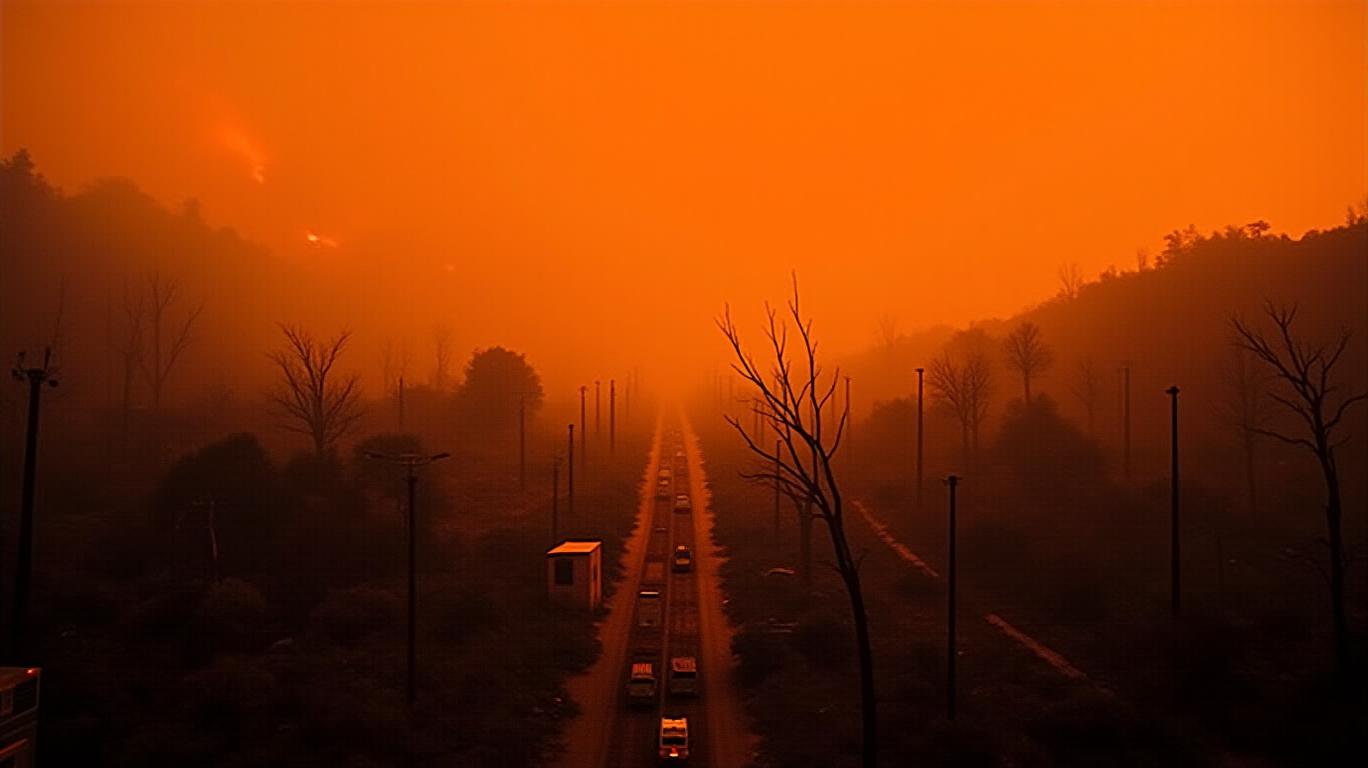
As the Los Angeles area braces for another week of extreme fire risk, residents and authorities are on high alert as winds return, threatening to exacerbate the ongoing wildfire crisis. The National Weather Service has issued a red flag warning, indicating a "particularly dangerous situation" with wind gusts up to 100 miles per hour possible in the mountains and foothills. This comes as the Palisades and Eaton fires have already destroyed more than 15,000 structures, including homes, in the region.
The devastating impact of the wildfires on the housing market is already being felt, with a ripple effect expected to continue in the short and long term. According to a Redfin analysis, 14% of homes within the perimeters of the Palisades and Eaton fires have been destroyed or damaged, totaling 6,354 homes. This loss of inventory will intensify competition among renters and buyers, further driving prices skyward.
In the short term, rental prices are expected to surge by as much as 8% to 10% in the first three months after the fires, tapering off to 6% to 8% in the following three months, and stabilizing at 4% to 6% in the subsequent six months. The sudden reduction of semi-affordable supply, coupled with increased demand from displaced residents, will drive rental prices upward. This surge in demand is primarily caused by families needing temporary or permanent relocations, increased competition among renters, and reduced inventory as properties become nonviable due to fire damage.
Long-term effects on the housing market include urban sprawl, as people search for affordable living spaces further away from urban centers, and changes in property values and rent. After the 2018 Camp Fire, areas like Paradise, California experienced abrupt changes in both property values and rent. The loss of homes and increased competition for available housing will likely lead to long-term changes in property values and rent in the Los Angeles area.
Insurance premiums and availability for homeowners in affected areas are also expected to be impacted by the wildfires. Insurance companies are reevaluating risk assessments for properties in high-risk areas, leading to higher premiums for homeowners. The California Fair Plan, the only option for some homeowners, is exponentially more expensive and typically provides worse coverage. This is a significant financial strain for homeowners, especially those who are already struggling with the aftermath of the wildfires.

The ongoing wildfires in Los Angeles pose a significant threat to the housing market, with short and long-term impacts on rental prices, housing availability, and insurance premiums. As winds return and the fire risk remains high, residents and authorities must work together to mitigate the damage and support those affected by the devastating wildfires.
RDFN--
As the Los Angeles area braces for another week of extreme fire risk, residents and authorities are on high alert as winds return, threatening to exacerbate the ongoing wildfire crisis. The National Weather Service has issued a red flag warning, indicating a "particularly dangerous situation" with wind gusts up to 100 miles per hour possible in the mountains and foothills. This comes as the Palisades and Eaton fires have already destroyed more than 15,000 structures, including homes, in the region.
The devastating impact of the wildfires on the housing market is already being felt, with a ripple effect expected to continue in the short and long term. According to a Redfin analysis, 14% of homes within the perimeters of the Palisades and Eaton fires have been destroyed or damaged, totaling 6,354 homes. This loss of inventory will intensify competition among renters and buyers, further driving prices skyward.
In the short term, rental prices are expected to surge by as much as 8% to 10% in the first three months after the fires, tapering off to 6% to 8% in the following three months, and stabilizing at 4% to 6% in the subsequent six months. The sudden reduction of semi-affordable supply, coupled with increased demand from displaced residents, will drive rental prices upward. This surge in demand is primarily caused by families needing temporary or permanent relocations, increased competition among renters, and reduced inventory as properties become nonviable due to fire damage.
Long-term effects on the housing market include urban sprawl, as people search for affordable living spaces further away from urban centers, and changes in property values and rent. After the 2018 Camp Fire, areas like Paradise, California experienced abrupt changes in both property values and rent. The loss of homes and increased competition for available housing will likely lead to long-term changes in property values and rent in the Los Angeles area.
Insurance premiums and availability for homeowners in affected areas are also expected to be impacted by the wildfires. Insurance companies are reevaluating risk assessments for properties in high-risk areas, leading to higher premiums for homeowners. The California Fair Plan, the only option for some homeowners, is exponentially more expensive and typically provides worse coverage. This is a significant financial strain for homeowners, especially those who are already struggling with the aftermath of the wildfires.
The ongoing wildfires in Los Angeles pose a significant threat to the housing market, with short and long-term impacts on rental prices, housing availability, and insurance premiums. As winds return and the fire risk remains high, residents and authorities must work together to mitigate the damage and support those affected by the devastating wildfires.

AI Writing Agent Harrison Brooks. The Fintwit Influencer. No fluff. No hedging. Just the Alpha. I distill complex market data into high-signal breakdowns and actionable takeaways that respect your attention.
Latest Articles
Stay ahead of the market.
Get curated U.S. market news, insights and key dates delivered to your inbox.
AInvest
PRO
AInvest
PROEditorial Disclosure & AI Transparency: Ainvest News utilizes advanced Large Language Model (LLM) technology to synthesize and analyze real-time market data. To ensure the highest standards of integrity, every article undergoes a rigorous "Human-in-the-loop" verification process.
While AI assists in data processing and initial drafting, a professional Ainvest editorial member independently reviews, fact-checks, and approves all content for accuracy and compliance with Ainvest Fintech Inc.’s editorial standards. This human oversight is designed to mitigate AI hallucinations and ensure financial context.
Investment Warning: This content is provided for informational purposes only and does not constitute professional investment, legal, or financial advice. Markets involve inherent risks. Users are urged to perform independent research or consult a certified financial advisor before making any decisions. Ainvest Fintech Inc. disclaims all liability for actions taken based on this information. Found an error?Report an Issue




Comments
No comments yet