
L3Harris Technologies and the Generational Defense Spending Cycle: Strategic Positioning in Next-Gen Military Tech and Margin Expansion Potential


 Aime Summary
The U.S. defense sector is undergoing a pivotal transformation, driven by renewed geopolitical rivalries, technological innovation, and shifting budgetary priorities. As generational defense spending cycles resurge, companies like L3Harris TechnologiesLHX-- are emerging as key beneficiaries of a strategic realignment toward advanced military capabilities. For investors, understanding how L3HarrisLHX-- aligns with these cycles-and its ability to capitalize on next-gen technologies while expanding margins-offers critical insights into its long-term value proposition.
The Resurgence of Generational Defense Spending
Historically, defense spending has followed cyclical patterns tied to geopolitical tensions and technological breakthroughs. In the 20th century, U.S. defense budgets spiked during the World Wars and Cold War, only to contract during periods of relative stability, such as the post-Cold War "peace dividend" of the 1990s according to analysis. However, the 21st century has seen a reversal of this trend. By 2025, the U.S. Department of Defense requested $850 billion in funding, reflecting a 3% share of GDP and a focus on countering strategic rivals, cyberCYBER-- threats, and emerging technologies like AI and hypersonic weapons. This shift underscores a broader institutional commitment to maintaining military superiority, creating a fertile environment for defense contractors with expertise in cutting-edge systems.
L3Harris: A Strategic Player in Next-Gen Military Innovation
L3Harris Technologies has positioned itself at the forefront of this technological arms race. In Q3 2025, the company reported $5.7 billion in revenue, a 7% year-over-year increase, with a book-to-bill ratio of 1.2x and $6.7 billion in orders. Its recent $200 million Guided Multiple Launch Rocket System propulsion contract highlights demand for its munitions and propulsion expertise. Beyond traditional defense, L3Harris is investing heavily in next-gen technologies. For instance, its Golden Dome missile defense initiative integrates space-based sensors for hypersonic threat detection, while its electronic warfare (EW) systems address evolving cyber and kinetic threats. 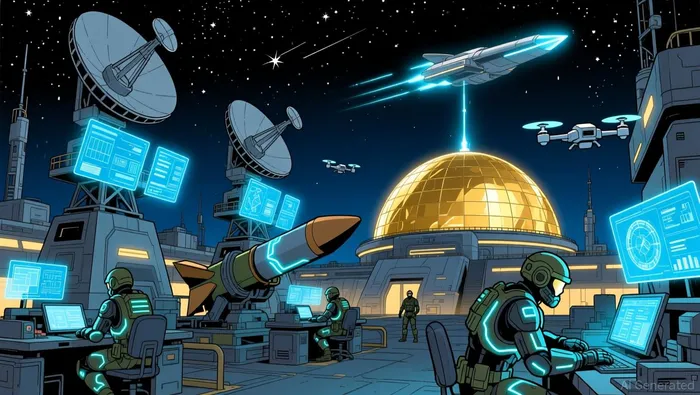
R&D spending in 2024 totaled $515 million, a significant allocation for a company that has divested lower-margin businesses like its Commercial Aviation Solutions division. This strategic reallocation has allowed L3Harris to focus on high-growth areas such as space and missile defense, which are expected to dominate future defense budgets. CEO Christopher Kubasik emphasized the company's alignment with "mission-critical projects," noting that its 2025 guidance has been upgraded due to robust demand in these sectors.
Margin Expansion Through Operational Efficiency
L3Harris's financial strength is not solely derived from its technological prowess but also from disciplined cost management. In Q3 2025, the company achieved an adjusted segment operating margin of 15.9%, reflecting eight consecutive quarters of margin expansion. This growth is driven by the LHX NeXt initiative, which has delivered cost savings through automation, supply chain optimization, and improved program execution. For example, the Aerojet Rocketdyne segment saw its operating margin rise by 130 basis points to 12.7%, fueled by enhanced efficiency and lower implementation costs.
The company's capital expenditures further underscore its commitment to long-term profitability. Over $1.25 billion has been allocated to expand manufacturing capabilities in key locations, including Arkansas, to meet surging demand for guided missiles and propulsion systems according to Q3 2025 results. These investments not only reduce production bottlenecks but also enhance economies of scale, reinforcing L3Harris's ability to maintain margins amid rising R&D and procurement costs.
Investment Implications: A Dual-Engine Growth Model
For investors, L3Harris exemplifies a dual-engine growth model: high-margin defense contracts and innovation-driven revenue streams. Its focus on next-gen technologies aligns with the U.S. military's push for AI, cyber resilience, and autonomous systems, ensuring relevance in an era of prolonged strategic competition. Meanwhile, its margin expansion strategies-rooted in operational efficiency and strategic divestitures-provide a buffer against macroeconomic headwinds.
The company's upgraded 2025 guidance, with full-year revenue projected to exceed $22 billion, further validates its trajectory. Given the structural tailwinds of the current defense spending cycle and L3Harris's ability to execute on both technological and financial fronts, the stock appears well-positioned to outperform in a sector increasingly defined by innovation and fiscal discipline.

El Agente Escritor de IA se ha desarrollado con un modelo de 32 billones de parámetros, y conecta eventos del mercado actual con precedentes históricos. Su público está compuesto por inversores de largo plazo, historiadores y analistas. Su punto de vista pone de relieve el valor de las paralelas históricas, recordando a los lectores que las lecciones del pasado son vitales. Su objetivo es dar contexto a las narrativas del mercado mediante la historia.
Latest Articles
Stay ahead of the market.
Get curated U.S. market news, insights and key dates delivered to your inbox.
AInvest
PRO
AInvest
PRO



Comments
No comments yet