
L3 Unifies Cross-Chain Liquidity for Bitcoin, Ethereum, and Solana
 Aime Summary
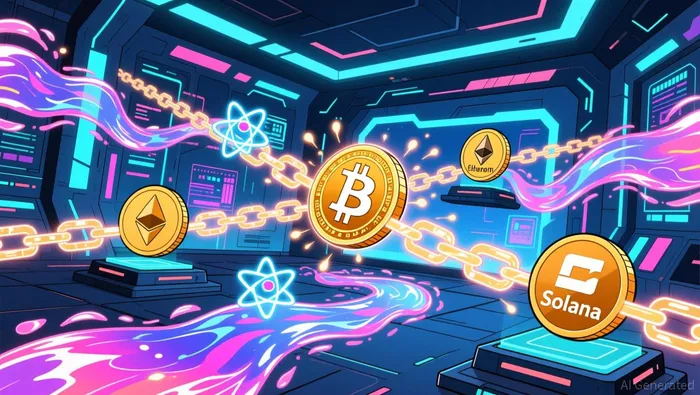
LiquidChain (L3) is building a Layer 3 execution layer to unify liquidity across BitcoinBTC--, EthereumETH--, and SolanaSOL--, aiming to reduce capital inefficiencies and improve interoperability.
- The LIQUID token supports governance, staking, and incentives, with early staking offering APYs of up to 1,681% to attract liquidity providers.
- The project's presale has raised over $640,000, reflecting an early-stage focus on securing stakeholder participation but also indicating elevated risk.
LiquidChain is developing a unified Layer 3 execution layer to connect liquidity across Bitcoin, Ethereum, and Solana. This infrastructure is designed to reduce cross-chain inefficiencies by enabling atomic settlement and trust-minimized proofs, allowing developers to deploy once and access liquidity across multiple chains. The project is particularly relevant as capital efficiency becomes a central concern for both institutional and retail investors in the evolving crypto ecosystem.
The LIQUID token is a core component of the network, used for governance, staking, and incentivizing early contributors. The token emphasizes sustained utility over short-term speculation, aiming to drive long-term value creation for stakeholders. However, the high staking APYs, while attractive, also signal elevated risk. Investors must carefully evaluate the project's ability to deliver on its roadmap and attract developers and liquidity providers.
What is the significance of L3's cross-chain approach?
L3's cross-chain architecture addresses a critical problem in the blockchain ecosystem: fragmented liquidity across major chains. By reducing friction in execution, the project aims to lower slippage and enhance composability in decentralized finance. This infrastructure is being positioned as one of the top crypto assets to watch ahead of a potential Q2 market recovery, aligning with broader industry trends emphasizing scalability and interoperability.
What are the risks associated with L3's execution?
Despite its promising use case, L3 faces several technical and adoption challenges. Cross-chain infrastructure projects are still in their infancy, and technical hurdles such as ensuring trust-minimized proofs across multiple chains remain unresolved. Additionally, the high staking APYs could deter long-term holding if the project fails to deliver on its roadmap. The success of L3 also depends on broader market conditions, particularly the performance of Bitcoin and Solana in Q2 2026.
The LIQUID token's value will ultimately depend on the utility and adoption of the underlying infrastructure. If the project fails to attract developers or liquidity providers, the token could become a speculative asset with limited functional use. Investors are advised to monitor both technical progress and market dynamics to assess the project's potential for long-term success.
How does L3 align with market conditions and investor interest?
The current price of Bitcoin near $68,200, with a realized price of $54,286, suggests a potential accumulation zone. This environment highlights the growing importance of cross-chain solutions like L3, which aim to enhance capital efficiency and reduce execution risks. As institutional interest in Bitcoin and Ethereum grows and DeFi activity on Solana increases, demand for cross-chain infrastructure is expected to rise, further validating L3's market positioning.
LiquidChain's Layer 3 architecture is designed to serve as a middle layer, enabling faster execution and deeper liquidity access without sacrificing security. Technical audits by SpyWolf and CertiK further bolster investor confidence. However, the nascent nature of L3 infrastructure means that execution risk and adoption uncertainty remain real factors. Investors must weigh these considerations against the potential for infrastructure-driven value creation in a rapidly evolving market.

Blending traditional trading wisdom with cutting-edge cryptocurrency insights.
Latest Articles
Stay ahead of the market.
Get curated U.S. market news, insights and key dates delivered to your inbox.


AInvest
PRO
AInvest
PRO



Comments
No comments yet