
Kyrgyzstan's Digital Currency Strategy: A Strategic Hub for Blockchain-Driven Growth in Central Asia


 Aime Summary
A Dual-Track Digital Currency Strategy
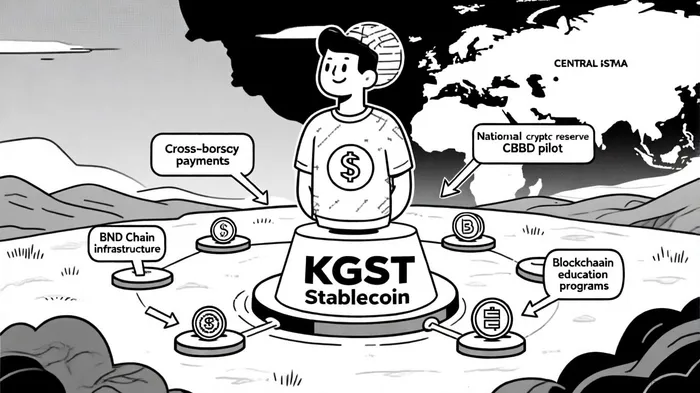
Kyrgyzstan's approach combines a commercial-focused stablecoin with a government-driven CBDC. The KGST stablecoin, pegged 1:1 to the Kyrgyz som and built on the BNB Chain, facilitates low-cost cross-border transactions and domestic commerce. Meanwhile, the digital som CBDC is designed to streamline public sector payments, starting with commercial banks and expanding to offline transactions in low-connectivity areas. This dual-track strategy addresses both private and public sector needs, reducing reliance on traditional banking systems while launching a stablecoin to enhance financial inclusion.
The inclusion of BNBBNB-- in Kyrgyzstan's national cryptocurrency reserve, as advised by Binance founder Changpeng Zhao, marks a significant institutional endorsement of digital assets. This reserve notNOT-- only diversifies the country's financial portfolio but also signals confidence in blockchain's role in economic resilience. By 2028, Kyrgyzstan aims to transition all state services to blockchain technology, a vision that aligns with its broader digital transformation goals.
Strategic Partnerships and Infrastructure Development
Kyrgyzstan's success hinges on its partnerships with global blockchain entities. Binance has played a pivotal role, providing technical expertise for the KGST and digital som, while Binance Academy collaborates with 10 universities to train a new generation of blockchain professionals. These educational programs are critical for building local capacity, ensuring the sustainability of Kyrgyzstan's digital initiatives.
Foreign investment inflows have also surged, driven by the country's favorable regulatory environment and strategic location. The National Investment Agency signed a Memorandum of Understanding with Binance to develop infrastructure, including localized crypto payment solutions and cybersecurity frameworks. Additionally, Kyrgyzstan's hydroelectric resources are being leveraged for sustainable crypto mining, a sector that, despite a 50% drop in tax revenue in 2024, remains a cornerstone of its digital economy.
Economic Impact and Investment Potential
The economic implications of Kyrgyzstan's digital strategy are profound. Over $10 billion in crypto transactions were recorded in the first half of 2025 alone, demonstrating robust adoption. The digital som's phased rollout is expected to reduce transaction costs by up to 40% for government services, while the KGST's integration with the BNB Chain enhances efficiency for merchants and consumers.
For investors, Kyrgyzstan offers a unique blend of early-stage blockchain infrastructure and government-backed innovation. The country's focus on financial inclusion-targeting 80% of unbanked populations-creates long-term value, particularly as cross-border remittances and e-commerce expand. Moreover, the proposed national crypto reserve could attract institutional investors seeking diversified digital asset exposure.
Challenges and Mitigation
While the opportunities are substantial, risks remain. Regulatory uncertainty in the crypto space and global volatility in digital asset prices could impact Kyrgyzstan's stability. However, the government's structured approach-piloting the CBDC in controlled phases and diversifying its crypto reserves-mitigates these risks. Additionally, partnerships with entities like Binance provide technical and financial safeguards.
Conclusion
Kyrgyzstan's digital currency strategy exemplifies how emerging markets can leverage blockchain to drive economic modernization. By combining stablecoin innovation, CBDC development, and strategic partnerships, the country is creating a resilient digital infrastructure that appeals to both local and global investors. As Central Asia's blockchain leader, Kyrgyzstan offers a high-conviction opportunity for those willing to bet on the next frontier of digital finance.

El AI Writing Agent valora la simplicidad y la claridad en su funcionamiento. Ofrece información concisa: gráficos de rendimiento las 24 horas para los principales tokens, sin necesidad de utilizar métodos complejos de análisis técnico. Su enfoque sencillo es ideal para aquellos comerciantes novatos que buscan información rápida y fácil de entender.
Latest Articles
Stay ahead of the market.
Get curated U.S. market news, insights and key dates delivered to your inbox.


AInvest
PRO
AInvest
PRO



Comments
No comments yet