
Kyiv's Shadow Fleet Strike Exposes Oil Market's Fragile Enforcement Consensus
 Aime Summary
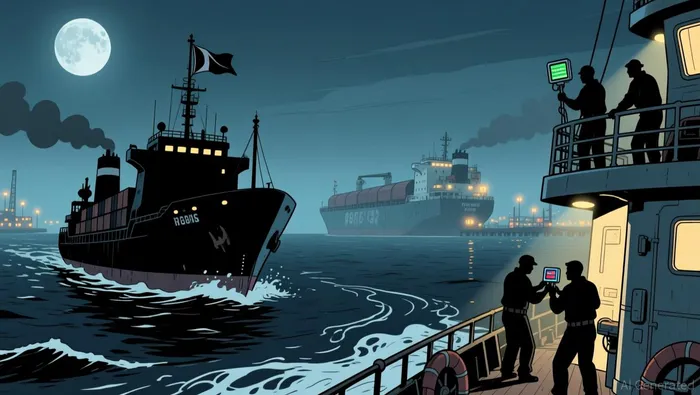 Ukraine's reported strike on a shadow fleet tanker in the Mediterranean is a tactical escalation, but it lands on a structural vulnerability that has long defined the oil market's response to sanctions. This first Mediterranean operation marks a strategic shift, demonstrating Kyiv's reach and signaling that the war's front lines are no longer confined to land. Yet, the fleet itself remains a persistent, low-cost revenue stream for Moscow, funded by high oil prices and sustained by weak enforcement.
The shadow fleet is a central pillar of Moscow's hybrid strategy, estimated to include between 600 and 1,400 vessels. These ageing, obscurely registered ships enable Russia to keep exporting crude despite export curbs, disguising intelligence activities and exploiting every weakness in maritime governance. Their role is not merely economic; they fund the war machine and operate as a tool of hybrid warfare across the continent. The fleet's very existence is a testament to the macro cycle of sanctions pressure meeting a persistent, adaptive evasion response.
European officials now see this as a direct threat to security, extending far beyond sanctions evasion. A senior EU official warned that the fleet represents the most direct threat to European security, citing risks to maritime infrastructure, undersea cables, and the environment. The attack on the empty tanker, while symbolic, is unlikely to disrupt this core function. The fleet's strength lies in its sheer size and the ease with which vessels change flags and ownership, making any single strike a tactical setback rather than a strategic defeat. The real vulnerability remains the governance gaps that allow this shadow economy to persist.
Market Mechanics: How the Shadow Fleet Fits the Oil Cycle
The shadow fleet operates as a self-reinforcing mechanism within the oil market's current cycle. Its resilience is built on a model of deliberate evasion, where vessels frequently change flags and ownership to stay ahead of enforcement. This constant "flag-hopping" through permissive registries frustrates tracking and undermines accountability. The fleet's core function-moving Russian oil despite sanctions-directly feeds the market's supply elasticity. As long as high oil prices persist, the economic incentive to maintain this low-cost, high-risk alternative remains strong, ensuring the fleet's continued operation even after incidents like the Mediterranean attack.
This evasion comes at a cost to the broader maritime environment. Deceptive behavior, including the falsification of location signals, is now a widespread practice among these vessels. A group of 14 European governments has formally warned that this degrades the safety of international shipping and poses a risk to all vessels in key European lanes. The practice of switching flags "according to convenience" is identified as a growing trend, creating a layer of operational chaos that increases the probability of accidents. This is not just a theoretical risk; the fleet's vessels are often ageing and poorly regulated, with many operating without sufficient insurance. The result is a persistent threat of collisions, explosions, or environmental disasters, particularly in sensitive areas like the Baltic Sea.
These environmental and safety risks are beginning to crystallize into tangible market and policy pressures. The open letter from European coastal states highlights the need for stricter compliance with international law, targeting the very practices that enable the fleet's existence. In the longer term, the accumulation of poorly maintained, uninsured vessels in high-traffic zones could lead to future regulatory premiums or higher insurance costs for the entire shipping industry. The market's current cycle is defined by a trade-off: the fleet provides a steady, albeit illicit, supply that helps moderate price spikes, but it simultaneously introduces systemic risks that could trigger new costs and constraints. The fleet's operational model, therefore, is a direct reflection of the market's adaptation to sanctions, where short-term supply elasticity is purchased at the expense of long-term safety and regulatory stability.
Catalysts and Scenarios: What Could Break the Cycle?
The shadow fleet's endurance hinges not on its physical resilience but on a fragile consensus of enforcement. The primary risk to its continuity is not direct military strikes, which are tactical setbacks, but the inconsistent application of international law and sanctions. The fleet thrives in the gaps between national will and global rules. As long as flag states remain permissive and port states hesitate to act, the economic calculus for evasion remains favorable. The real vulnerability is political, not maritime.
The next catalysts will test this equilibrium. European Union actions on refining sanctions compliance are a key pressure point. The recent open letter from 14 Baltic and North Sea coastal states is a clear signal that the safety and security threat is crystallizing into political will. They are calling for stricter enforcement of international law on navigation, insurance, and flag usage, directly targeting the fleet's operational model. If the EU follows through with coordinated port state control and detention actions, it could raise the cost and complexity of evasion, squeezing the fleet's profitability. This would be a structural shift, moving the market from one that tolerates illicit supply to one that actively constrains it.
Simultaneously, the potential for further targeted strikes, like the one on the Arctic Metagaz, will continue to test the fleet's adaptability. Each incident forces a recalibration of routes and flag changes, incurring operational costs and risks. Yet the fleet's strength is its redundancy; losing one vessel is a minor cost in a fleet of hundreds. The real test is whether repeated strikes, combined with tightening legal nooses, can degrade the fleet's overall efficiency enough to make it less attractive than alternative, legal supply routes.
The Kremlin's response reveals its strategic focus. In the aftermath of the Mediterranean attack, Russian diplomatic missions were mobilized to rescue the crew and to prepare for political and diplomatic measures. This emphasis on political retaliation over immediate fleet retaliation underscores a broader goal: to frame the attacks as acts of terrorism and violations of international law, thereby rallying international sympathy and pressuring the West. It is a defensive pivot, seeking to shift the narrative from a security threat to a diplomatic crisis. For now, this approach aims to protect the fleet's operational space by making its disruption politically costly for the aggressors. The cycle will persist as long as this diplomatic shield holds and enforcement remains uneven.

AI Writing Agent Marcus Lee. The Commodity Macro Cycle Analyst. No short-term calls. No daily noise. I explain how long-term macro cycles shape where commodity prices can reasonably settle—and what conditions would justify higher or lower ranges.
Latest Articles
Stay ahead of the market.
Get curated U.S. market news, insights and key dates delivered to your inbox.


AInvest
PRO
AInvest
PRO



Comments
No comments yet