
Do Kwon Pleads Guilty to Terra/Luna Fraud Scheme After 2022 Collapse
 Aime Summary
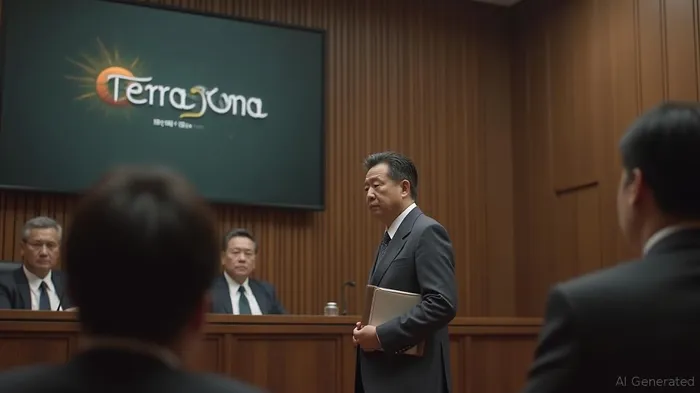
Do Kwon, the founder of Terraform Labs and architect of the TerraLUNA-- (UST) and LunaLUNA-- (LUNA) stablecoin ecosystem, pleaded guilty on August 13 to two federal charges: conspiracy to commit securities, commodities, or wire fraud, and wire fraud [1]. The plea came after years of legal battles, extradition delays, and a not guilty plea in an earlier court appearance. Kwon admitted to misleading investors, including making false statements about the safety and stability of the Terra/Luna ecosystem.
Kwon’s guilty plea marks a definitive admission of responsibility in the 2022 collapse of Terra and Luna, which saw the price of LUNA plummet from nearly $120 to less than 10 cents within weeks [1]. UST, the algorithmic stablecoin tied to the U.S. dollar, also lost its peg, triggering a cascade of collapses across the crypto market. Kwon had repeatedly assured investors through public appearances and tweets that their funds were secure, a claim he now acknowledges was misleading.
In court, Kwon apologized for his actions and stated, “Between 2018 and 2022 in the Southern District of New York and elsewhere, I knowingly agreed with others to engage in a scheme to defraud, and did in fact defraud, purchasers of the cryptocurrencies issued by my company, Terraform Labs” [1]. As part of the plea deal, the Department of Justice agreed to recommend a maximum prison sentence of 12 years, with the possibility of an international prison transfer after serving half the term [1]. Kwon’s legal team also noted that he still faces separate charges in South Korea, where he had sought extradition during his time in Montenegro [1].
The guilty plea is a significant development in the broader legal and regulatory scrutiny of crypto projects. Kwon’s case is one of the most prominent criminal prosecutions in the industry, reflecting heightened enforcement by U.S. and global regulators. It also underscores the consequences of misleading investors in a market that has historically lacked robust oversight.
Kwon’s statements during the court proceedings highlighted the geographic scope of the fraud, noting that victims were primarily based in the Republic of Korea and the Southern District of New York [1]. The plea hearing concluded with a commitment to further legal proceedings, including the potential for sentencing and extradition decisions.
The Terra/Luna collapse was a pivotal moment in the crypto industry, accelerating regulatory interest and prompting calls for greater transparency and accountability among crypto firms. Kwon’s guilty plea represents a formal acknowledgment of responsibility, though it leaves open questions about the broader systemic risks and investor protections that remain unaddressed in the digital asset sector.
Source: [1] State of Crypto: Do Kwon Pleads Guilty A few years after telling Terra/Luna investors that their funds were safe, Kwon admitted to misleading them (https://www.coindesk.com/policy/2025/08/17/state-of-crypto-do-kwon-pleads-guilty)

Stay ahead of the market.
Get curated U.S. market news, insights and key dates delivered to your inbox.


AInvest
PRO
AInvest
PRO



Comments
No comments yet