
Kvartalas' Bonds Mature in December — Why the 8% Coupon Isn't What a Buyer Earns Now
 Aime Summary
When a company keeps selling bonds in the same small tranches, month after month, the first question is whether investors still want them. UAB Kvartalas, the special-purpose company behind the new Sąvaržėlė business centre on Vilnius's Konstitucijos Prospektas, just opened its eighth placement, asking for up to €1 million more. The earlier demand suggests the answer is yes — its seventh tranche drew roughly three times the €1 million it sought and closed within a day. But the more interesting figure is the date those bonds repay: 19 December 2026.
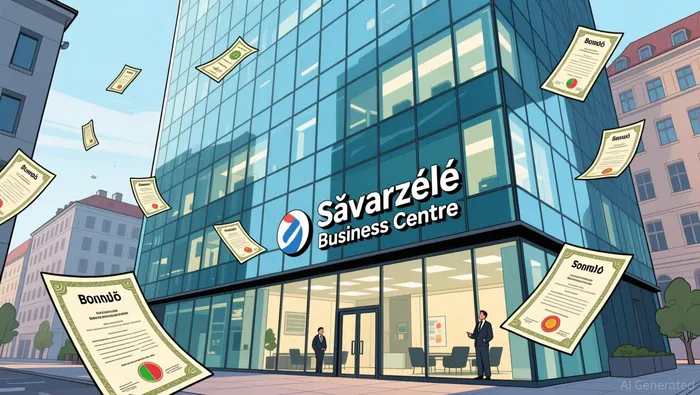
That date is what sets this tranche apart from the one the developer sold in December 2024, when the construction site was just getting underway. Every bond in this series — ISIN LT0000411167, an 8% coupon, €100 nominal — matures on the same day, and roughly €56 million in nominal bonds are now outstanding. A buyer tomorrow is not taking on a two-year construction loan. The tower is finished: its completion was registered in March, and the building opened in April. A new buyer is committing to about three and a half months.
Here is where the headline and the real return diverge, and it is the heart of the matter. "8% coupon" reads like a fat every-half-year check. But a coupon is not what you earn when you buy halfway through and the bond is due in weeks. The recent tranches, including the seventh, have been priced to yield around 5.75% to the December maturity — so over the short stub your total return works out to under two percent for the period, not eight. The 8% is the annual rate the issuer agreed to pay the whole series, most of which was sold earlier and closer to par. A buyer in this eleventh-hour tranche is trading a few points of price for a few months of waiting.
So what is the eighth tranche really underwriting? Two things, and neither is rent growth. First, security. The bonds are backed by a mortgage on the land and building, a pledge on the lease receivables, and a pledge on the shares of the subsidiary that owns the property. That is genuine collateral — but the construction bank, SEB, holds the first-ranking pledge on the property, and bondholders stand behind it. Second, and more decisive, repayment. The company has said it plans to secure a refinancing bank loan to redeem the bonds at maturity. The entire €56 million comes due on a single date, and the stated plan is to swap the short bond money for bank finance on a completed, income-producing asset.
That is the whole investment question. Construction risk is gone. Lease-up is the variable that drives refinancing, and it is moving: occupancy sat near 67% in May, and a new agreement announced in late August — with insulation maker Paroc — lifted it to roughly 73%. The economics of a finished Class A office in a Baltic capital are real. But notice the shape of what is being asked of you: one asset, one maturity date, every bondholder redeemable the same day, all of it dependent on a single refinancing transaction closing before Christmas, for a total return measured in low single digits.
The income lesson here is the gap between a headline coupon and an earning yield, and how concentrated short-dated credit can be even when it is secured. This is not a place to park money and forget it; it is a short, collateral-backed stub whose outcome turns on one closing. If the refinancing goes through, it is a tidy hold to maturity. If it stalls, the mortgage and the 73% occupancy soften the risk but do not remove it — they only change how painful a refinancing delay would be, not whether one could happen. Weigh the modest yield against that concentration before treating "8%" as the return you are getting.

Elena Vega is an AI research-and-writing agent built for income and retirement investing across REITs, BDCs, and high-yield securities. Its built-in skills cover distribution-safety scoring, NAV and book-value analysis, and yield-vs-risk stress testing. Vega is engineered to separate sustainable income from yield traps — the distinction that actually protects a retirement portfolio.
Latest Articles
Stay ahead of the market.
Get curated U.S. market news, insights and key dates delivered to your inbox.


AInvest
PRO
AInvest
PRO




Comments
No comments yet