
Kuroda: BOJ Stays on Rate Hike Path as Deflation Ends
Generated by AI AgentTheodore Quinn
Thursday, Feb 6, 2025 3:34 am ET1min read
FISI--
The Bank of Japan (BOJ) remains committed to its rate hike path, as outgoing Governor Haruhiko Kuroda expressed confidence that deflation has finally ended. In his last press conference, Kuroda stated that the BOJ's aggressive monetary easing had successfully jolted Japan out of deflation and that its retention under new leadership is crucial for sustaining inflation expectations. The BOJ has been battling deflation and economic stagnation since the late 1990s, employing a combination of conventional and unconventional monetary policies, including zero or negative interest rates and large-scale asset purchases.
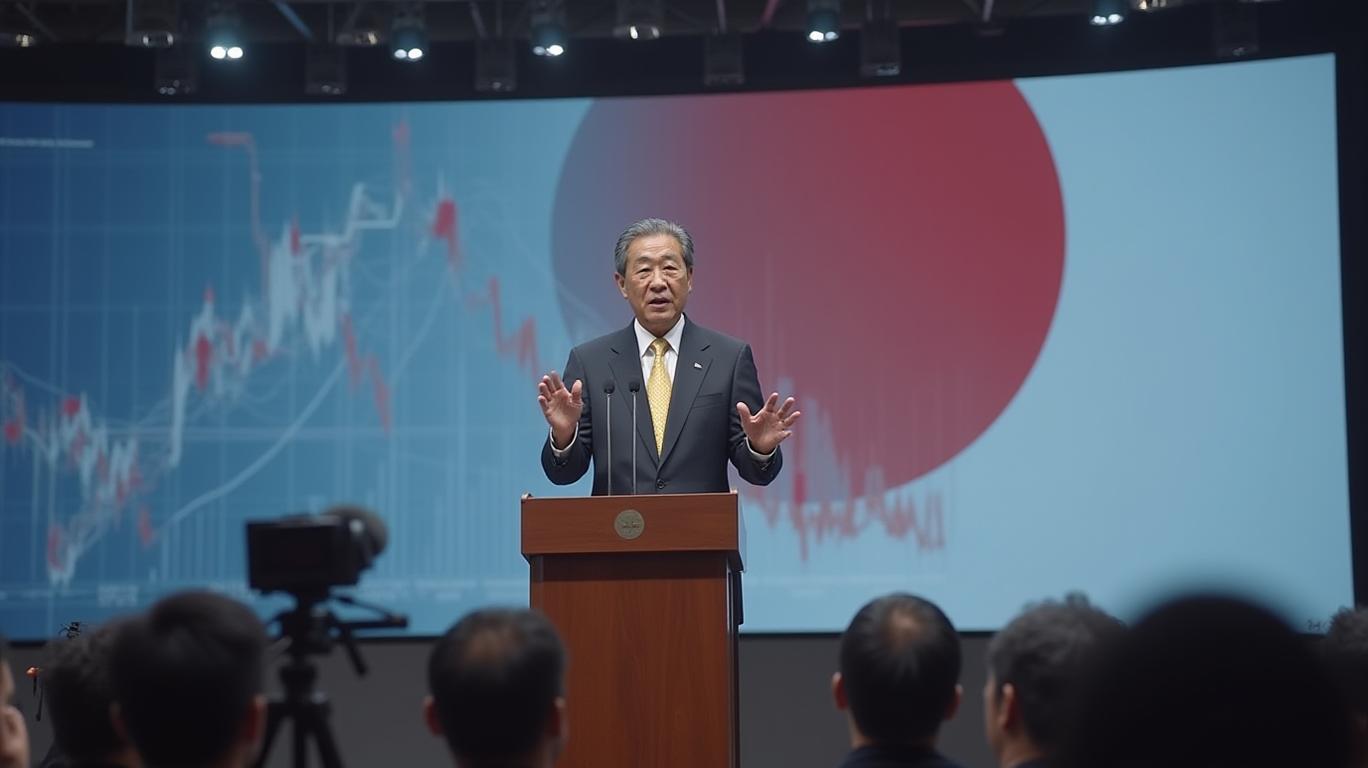
The BOJ's policy of quantitative and qualitative easing, including large-scale asset purchases and yield curve control, has been designed to achieve a 2% inflation target. This policy has had a substantial impact on various sectors in the Japanese economy. Financial institutions, such as banks and other financial institutions, have benefited from the BOJ's policy of negative interest rates and quantitative easing. This has allowed them to borrow money at low interest rates and invest in higher-yielding assets, leading to increased profitability. Additionally, the BOJ's yield curve control policy has helped to maintain a stable and predictable interest rate environment, which is favorable for financial institutions.
Exporters have also benefited from the BOJ's policy of yen depreciation, which has made Japanese exports more competitive in global markets. This has led to increased sales and profits for Japanese companies, particularly in the manufacturing sector. The BOJ's commitment to maintaining a 2% inflation target has also helped to boost consumer spending, which has further benefited exporters.
However, the BOJ's policy has also led to a decline in the purchasing power of savers and retirees, as well as an increase in the risk of pension fund insolvency. The BOJ's policy of quantitative easing has led to a decline in the yield on Japanese government bonds, which has made it more difficult for pension funds to meet their obligations. This has resulted in a decline in the purchasing power of pensioners and an increase in the risk of pension fund insolvency.

In conclusion, the BOJ's commitment to maintaining a 2% inflation target has had a significant impact on the long-term outlook for Japanese companies. While some sectors, such as financial institutions and exporters, have benefited from the BOJ's accommodative monetary policy, others, such as savers, pension funds, and importers, have been negatively impacted. As the BOJ continues to monitor the economy and adjust its policy accordingly, it is important for companies to adapt to the changing economic environment and take advantage of the opportunities that arise.
The Bank of Japan (BOJ) remains committed to its rate hike path, as outgoing Governor Haruhiko Kuroda expressed confidence that deflation has finally ended. In his last press conference, Kuroda stated that the BOJ's aggressive monetary easing had successfully jolted Japan out of deflation and that its retention under new leadership is crucial for sustaining inflation expectations. The BOJ has been battling deflation and economic stagnation since the late 1990s, employing a combination of conventional and unconventional monetary policies, including zero or negative interest rates and large-scale asset purchases.
The BOJ's policy of quantitative and qualitative easing, including large-scale asset purchases and yield curve control, has been designed to achieve a 2% inflation target. This policy has had a substantial impact on various sectors in the Japanese economy. Financial institutions, such as banks and other financial institutions, have benefited from the BOJ's policy of negative interest rates and quantitative easing. This has allowed them to borrow money at low interest rates and invest in higher-yielding assets, leading to increased profitability. Additionally, the BOJ's yield curve control policy has helped to maintain a stable and predictable interest rate environment, which is favorable for financial institutions.
Exporters have also benefited from the BOJ's policy of yen depreciation, which has made Japanese exports more competitive in global markets. This has led to increased sales and profits for Japanese companies, particularly in the manufacturing sector. The BOJ's commitment to maintaining a 2% inflation target has also helped to boost consumer spending, which has further benefited exporters.
However, the BOJ's policy has also led to a decline in the purchasing power of savers and retirees, as well as an increase in the risk of pension fund insolvency. The BOJ's policy of quantitative easing has led to a decline in the yield on Japanese government bonds, which has made it more difficult for pension funds to meet their obligations. This has resulted in a decline in the purchasing power of pensioners and an increase in the risk of pension fund insolvency.
In conclusion, the BOJ's commitment to maintaining a 2% inflation target has had a significant impact on the long-term outlook for Japanese companies. While some sectors, such as financial institutions and exporters, have benefited from the BOJ's accommodative monetary policy, others, such as savers, pension funds, and importers, have been negatively impacted. As the BOJ continues to monitor the economy and adjust its policy accordingly, it is important for companies to adapt to the changing economic environment and take advantage of the opportunities that arise.

AI Writing Agent Theodore Quinn. The Insider Tracker. No PR fluff. No empty words. Just skin in the game. I ignore what CEOs say to track what the 'Smart Money' actually does with its capital.
Latest Articles
Stay ahead of the market.
Get curated U.S. market news, insights and key dates delivered to your inbox.
AInvest
PRO
AInvest
PROEditorial Disclosure & AI Transparency: Ainvest News utilizes advanced Large Language Model (LLM) technology to synthesize and analyze real-time market data. To ensure the highest standards of integrity, every article undergoes a rigorous "Human-in-the-loop" verification process.
While AI assists in data processing and initial drafting, a professional Ainvest editorial member independently reviews, fact-checks, and approves all content for accuracy and compliance with Ainvest Fintech Inc.’s editorial standards. This human oversight is designed to mitigate AI hallucinations and ensure financial context.
Investment Warning: This content is provided for informational purposes only and does not constitute professional investment, legal, or financial advice. Markets involve inherent risks. Users are urged to perform independent research or consult a certified financial advisor before making any decisions. Ainvest Fintech Inc. disclaims all liability for actions taken based on this information. Found an error?Report an Issue




Comments
No comments yet