
Kroger's Strategic Expansion into Anna, Texas: A Blueprint for Suburban Retail Resilience


 Aime Summary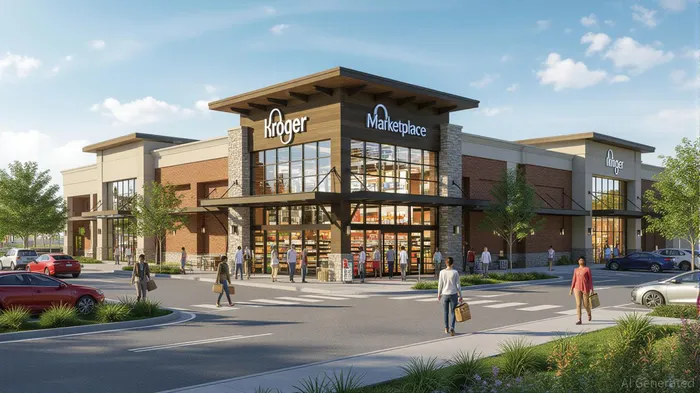
The retail real estate landscape in 2025 is witnessing a seismic shift toward suburban markets, driven by demographic tailwinds and evolving consumer behavior. Kroger's recent $40 million investment in a 123,000-square-foot Marketplace store in Anna, Texas—a city experiencing 12.28% annual population growth—epitomizes this trend. This move is not just a local win for the grocer but a macro-level signal of where capital should flow in the post-pandemic retail ecosystem.
Anna, Texas: A Case Study in Demographic-Driven Retail Demand
Anna's transformation from a small town to a population of 30,878 in 2025 (up 77.77% since 2020) is emblematic of the Sun Belt's suburban boom. With a median age of 32.2 and an average household income of $107,060, the city's demographic profile aligns with a generation of consumers prioritizing convenience, quality, and community-centric retail. Kroger's decision to anchor a 27-acre retail complex in Anna—complete with eight outparcels—capitalizes on this demand. The project, supported by an Economic Development Incentive Agreement, is projected to create 250–300 jobs, further fueling local spending power.
The broader Collin County context reinforces this opportunity. The county's population has grown by 132% since 2000, with 128 new residents added daily in 2025. This growth has driven a 2.3 million square feet net absorption in retail space over the past year, with vacancy rates hovering at 4.7%. For investors, Anna represents a microcosm of a national trend: suburban retail hubs are outperforming urban centers, with tenant demand 50% higher in 2025.
Suburban Grocery Hubs: The New Gold Standard in Retail Real Estate
Kroger's Anna expansion aligns with a broader industry pivot toward grocery-anchored retail. Grocery retail vacancy rates have plummeted to 3.5% in 2024, far below the overall retail sector average of 4.8%. This resilience is rooted in the essential nature of grocery spending and the strategic value of grocery anchors in driving foot traffic to adjacent tenants.
The shift is also structural. Retailers are shrinking store footprints by 20% in 2025 while investing in technology and experiential elements. Kroger's Anna store, with its focus on fresh produce, meat, and omnichannel capabilities, reflects this evolution. Smaller, efficient formats are not only cost-effective but also better suited to high-traffic suburban corridors, where consumers demand proximity and convenience.
National Investment Implications: Sun Belt Suburbs as High-Yield Corridors
The Anna project is part of a $160 million KrogerKR-- initiative across the Dallas-Fort Worth (DFW) metro area, a region that accounted for 36% of Texas' corporate relocations in 2024. DFW's retail construction pipeline—468,000 square feet completed in Q1 2025 alone—highlights the metro's appeal. For investors, this underscores a critical insight: secondary markets in the Sun Belt (Dallas, Phoenix, Nashville) are outpacing primary coastal markets in rent growth and occupancy stability.
The CBRE 2025 U.S. Retail Market Outlook notes that suburban retail foot traffic has surpassed 2019 levels, with dwell times averaging 39 minutes. This indicates a shift from transactional to experiential retail, where grocery anchors serve as community hubs. The Anna project's mixed-use potential—combining retail, dining, and services—positions it to capture this trend.
Risks and Rewards: Navigating the Suburban Retail Landscape
While the fundamentals are strong, investors must remain mindful of macroeconomic headwinds. Inflationary pressures and interest rate uncertainty could dampen discretionary spending. However, grocery retail's inelastic demand and the demographic-driven growth of Sun Belt suburbs mitigate these risks.
For example, the repositioning of vacated big-box spaces into mixed-use developments is gaining traction. In Anna, the 27-acre project could evolve into a live-work-play environment, enhancing long-term asset value. Similarly, data-driven tenant performance metrics (e.g., Placer.ai analytics) are helping investors identify high-performing locations, reducing the risk of overpaying for speculative assets.
Conclusion: A Strategic Play for the Future of Retail
Kroger's Anna expansion is more than a store opening—it's a strategic bet on the future of retail real estate. By anchoring a suburban hub in a high-growth, low-density market, the grocer is tapping into a demographic and economic sweet spot. For investors, this signals an opportunity to capitalize on the convergence of population growth, shifting retail formats, and the enduring value of physical retail in suburban corridors.
As the retail sector continues to decentralize, Anna, Texas, and similar markets will serve as bellwethers for the next phase of retail real estate investment. The key takeaway? Prioritize assets in Sun Belt suburbs where grocery anchors, mixed-use potential, and demographic momentum create a compelling value proposition.

Stay ahead of the market.
Get curated U.S. market news, insights and key dates delivered to your inbox.
AInvest
PRO
AInvest
PRO



Comments
No comments yet