
Kroger's Store Closures: A Strategic Pivot to Logistics and Mixed-Use Real Estate
Kroger (KR) is embarking on a bold restructuring of its retail footprint, closing approximately 60 stores—2% of its total U.S. locations—through mid-2026. While these closures underscore short-term challenges, they represent a calculated shift toward repurposing underperforming real estate into logistics hubs and mixed-use developments. Combined with its e-commerce partnerships, this strategy positions KrogerKR-- to capitalize on growing last-mile delivery demand and urbanization trends, offering long-term investment potential despite near-term financial headwinds.
Repositioning Real Estate: From Stores to Logistics and Mixed-Use Assets
Kroger's closure plan is not merely cost-cutting but a strategic real estate pivot. By exiting underperforming locations—often in declining mall areas or overlapping markets—the company can redeploy assets into high-growth sectors. The provided data highlights two critical avenues:
- Industrial Logistics Hubs:
The $600 million Crossings project in New Jersey exemplifies this shift. A former mall was transformed into a mixed-use development anchored by industrial facilities like a Walmart warehouse and Maersk logistics center. These hubs serve as critical nodes for last-mile delivery, aligning with Kroger's Ocado partnership, which automates grocery fulfillment.
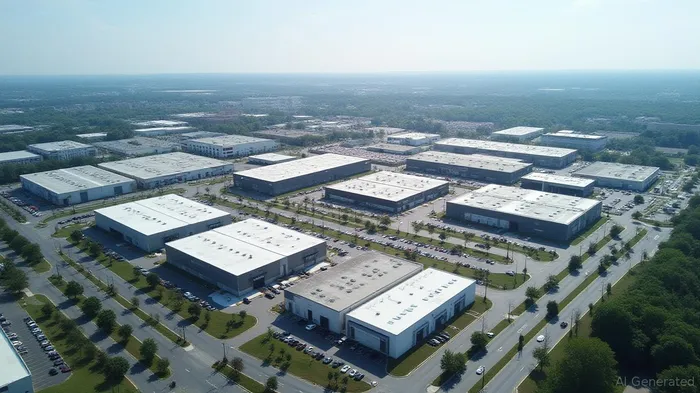
Why It Matters: Industrial real estate demand is surging as e-commerce penetration hits 20% of U.S. retail sales. Kroger's repurposed properties can command premium rents while supporting its own supply chain efficiency.
- Mixed-Use Developments:
In Forest Acres, South Carolina, Kroger is anchoring a $150 million mixed-use project combining a 120,000-square-foot grocery store, residential units, and a six-acre park. Such developments cater to urbanization trends, where convenience and community amenities drive consumer loyalty.
Financial Synergies: Kroger's capital expenditure budget of $3.6–$3.8 billion in 2025 includes funding for these projects. While closures caused a $100 million impairment charge, the long-term revenue streams from logistics and mixed-use assets could offset this over time.
E-Commerce Growth: Ocado's Role in Last-Mile Dominance
Kroger's partnership with Ocado Systems is central to its e-commerce ambitions. The British robotics firm's automated fulfillment centers—already operational in Monroe, Ohio, and plans for 14 more by 2026—enable same-day delivery and undercut Walmart's lead in grocery delivery.
Key Synergy: Repurposed real estate can house these fulfillment centers, reducing last-mile costs. For instance, the Cold Spring, Kentucky, expansion (delayed but still critical) includes a drive-thru pharmacy and fuel station—features that enhance customer convenience and data capture for targeted e-commerce campaigns.
Near-Term Risks vs. Long-Term Rewards
Critics point to execution risks:
- Union Opposition: The UFCW Local 400 union has protested closures in rural areas, citing job losses.
- Project Delays: The Cold Spring project faces zoning hurdles, and material shortages (e.g., electrical switchgear) could prolong timelines.
- Stock Performance: Kroger's shares have underperformed the S&P 500 over the past three years, reflecting investor skepticism about its turnaround.
However, the broader thesis holds: Kroger is systematically divesting low-margin real estate while investing in high-margin logistics and tech-driven retail. With a 3.2% identical-store sales growth rate in Q1 2025 and Ocado's scalability, Kroger is well-positioned to grow its e-commerce market share from its current 15% penetration.
Investment Thesis
- Buy: For long-term investors, Kroger's P/E ratio of 16.2 (vs. industry average 22.4) reflects undervaluation. Its dividend yield of 1.8% offers downside protection.
- Hold: Short-term traders may wait for clearer visibility on Ocado's rollout and real estate divestment proceeds.
Kroger's pivot to logistics and mixed-use real estate is a shrewd response to a retail landscape where physical stores must evolve to remain relevant. By leveraging its real estate portfolio and Ocado's automation, Kroger is building a moat in last-mile delivery—a critical edge in the grocery wars. While the path is bumpy, the destination is compelling.
In conclusion, Kroger's store closures are not an admission of defeat but a strategic reset. Investors who focus on its long-term vision for real estate and tech-driven retail may find this a bargain in a sector ripe for consolidation.

Stay ahead of the market.
Get curated U.S. market news, insights and key dates delivered to your inbox.


AInvest
PRO
AInvest
PRO



Comments
No comments yet