
Kroger's Store Closures: A Catalyst for Discount Retail and REIT Opportunities?
The retail sector is undergoing a seismic shift. Kroger's recent announcement of closing 60 stores—roughly 2% of its nationwide footprint—signals a broader industry reckoning with inefficiency, rising costs, and evolving consumer habits. While this move may seem like a defensive retreat, it creates opportunities for investors in two critical areas: discount retailers like Walmart and Aldi, and real estate investment trusts (REITs) with the agility to capitalize on undervalued retail assets. Let's dissect why this shift matters and where to allocate capital.
The Kroger Closures: A Strategic Retreat or a Sector-Wide Trend?
Kroger's decision to shutter underperforming stores isn't just about cutting losses. The closures are part of a $3.6–$3.8 billion reinvestment plan into “Marketplace”-format stores—larger, tech-enhanced locations aimed at boosting customer experience and profitability. This strategy reflects a sector-wide shift toward cost efficiency and asset rationalization, driven by:
- Rising operational costs: Wages, supply chain expenses, and inflation squeeze margins.
- E-commerce pressure: Shoppers increasingly prefer convenience, forcing retailers to invest in omnichannel infrastructure.
- Competitive threats: Discount retailers like Aldi and Walmart are eroding market share with leaner, lower-cost models.
But the closures also leave a trail of vacated properties—a potential goldmine for real estate investors.
Real Estate: Where Flexibility Wins
The retail real estate landscape is bifurcating: grocery-anchored centers remain resilient, while traditional single-tenant stores struggle. Kroger's closures create an asset class opportunity for REITs with flexible lease terms and expertise in multi-tenant, mixed-use properties.
Why Grocery-Anchored REITs Outperform
- Stable Income Streams: Grocery stores (e.g., Walmart, Aldi) are “essential retailers,” driving foot traffic and supporting smaller tenants like pharmacies and quick-service restaurants.
- Resilience in Downturns: These properties held occupancy rates of 98% in 2024, even as broader retail vacancy rates hit record highs.
- Flexible Leases: Multi-tenant centers often use modified gross leases, allowing landlords to adjust rents every 3–7 years—a stark contrast to single-tenant NNN leases tied to long-term corporate guarantees.
Top REITs to Watch
- Phillips Edison & Company (PE): Specializes in grocery-anchored centers, with 98% occupancy and a track record of repositioning underutilized spaces.
- CBL & Associates (CBL): Focuses on mixed-use retail and entertainment hubs, leveraging Kroger's vacated locations for adaptive reuse (e.g., dining or fitness spaces).
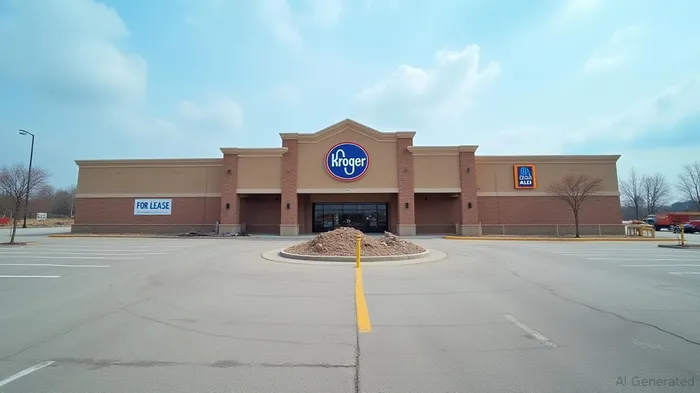
Discount Retailers: The Winners of Consolidation
While KrogerKR-- tightens its belt, discount retailers Walmart (WMT) and Aldi are expanding aggressively, leveraging Kroger's retreat to capture market share.
Walmart's Playbook: Tech-Driven Dominance
- Store Modernization: Walmart's “Store of the Future” initiative upgrades 150+ locations with AI-driven inventory systems and better e-commerce integration.
- Global Growth: A $6 billion Mexico investment targets untapped markets, while its Silicon Valley tech hub aims to disrupt logistics and retail media.
- Financial Resilience: Despite tariffs, Walmart's FY2025 net income rose 25% to $19.44 billion, supported by disciplined CapEx and retail media growth.
Aldi's Blitz: Cost Leadership and Scale
- Aggressive Expansion: Aldi plans to open 225+ stores by end-2025, converting 400 acquired Winn-Dixie/Harveys locations into its low-cost model.
- Price Power: Aldi's 90% private-label portfolio and streamlined operations allow it to undercut rivals—Southern California supermarkets lowered prices 3% in response.
- Undervalued by Markets: Aldi's $8.3 billion annual shopper savings and 2,400 U.S. stores (third-largest grocery chain) remain underappreciated in public equities.
Investment Thesis: Play Both Sides of the Equation
The Kroger closures create a two-pronged opportunity:
1. Buy REITs with Flexibility:
- Target: Multi-tenant grocery-anchored REITs like PE and CBL, which can reposition Kroger's vacated properties.
- Risk Mitigation: Diversified tenant portfolios reduce exposure to single-tenant defaults.
- Double Down on Discount Retailers:
- Walmart (WMT): Its scale, tech investments, and global footprint make it a defensive play in a consolidating sector.
- Aldi (indirect exposure): Invest in consumer staples ETFs (e.g., XLP) or regional REITs benefiting from Aldi's store openings.
Risks to Consider
- Economic Downturn: Grocery demand holds up in recessions, but discretionary spending in mixed-use centers could falter.
- Regulatory Headwinds: Antitrust scrutiny may limit further consolidation in the grocery sector.
- Supply Chain Volatility: Tariffs and inflation could pressure margins for all retailers.
Conclusion: The Tide Is Turning
Kroger's closures are a symptom of an industry in flux—one where cost efficiency and flexibility rule. Investors who pair exposure to grocery-anchored REITs with bets on discount retailers like Walmart stand to profit as the sector reshapes itself. The key is to avoid rigid, single-use retail assets and focus on players that can adapt to a post-Kroger world.
Action Items:
- Add PE and CBL to watchlists for real estate plays.
- Maintain a long position in WMT, with a 12–18-month horizon.
- Monitor Aldi's store count growth as a leading indicator of discount retail dominance.
The retail sector's consolidation is here. The question is: Will you be on the buying side—or the selling side?

Stay ahead of the market.
Get curated U.S. market news, insights and key dates delivered to your inbox.
AInvest
PRO
AInvest
PRO



Comments
No comments yet