
Krispy Kreme's Legal Crossroads: Navigating the DNUT Class Action Lawsuit and Investment Risks
The Krispy KremeDNUT-- class action lawsuit, now racing toward its July 15, 2025 lead plaintiff deadline, has transformed the doughnut giant's financial narrative into a high-stakes legal battle. For investors, this case is not merely a regulatory footnote but a critical test of the company's operational transparency and future valuation. Let's dissect the litigation's implications, its timeline, and how it reshapes the calculus for holding—or exiting—this increasingly contentious investment.
The Legal Landscape: What's at Stake?
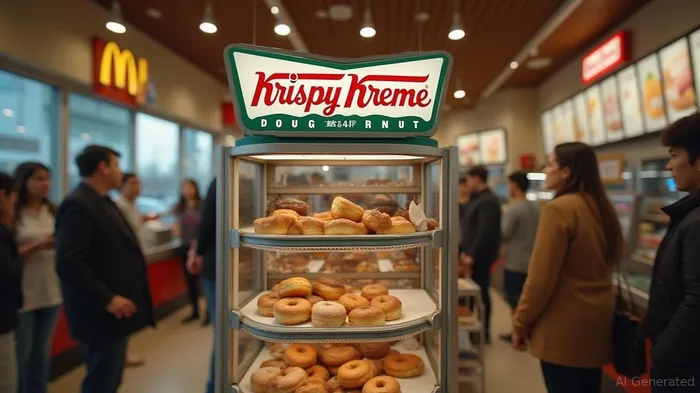
The lawsuit, Cameron v. Krispy Kreme, Inc., alleges that the company misled investors between February 25 and May 7, 2025, by downplaying the collapse of its McDonald's partnership. Key claims include:
1. Hidden Declines in Demand: Krispy Kreme allegedly failed to disclose that sales at McDonald's locations plummeted post-launch.
2. Unprofitable Partnership: The collaboration, initially framed as a growth engine, was unprofitable and at risk of termination.
3. False Optimism: Executives allegedly made rosy statements about prospects while concealing these issues, leading to a 15.3% revenue drop to $375.2 million in Q1 2025 and a net loss of $33.4 million.
The fallout was swift. On May 8, 2025, the day of these disclosures, DNUT's stock price plummeted 24.7%, closing at $3.26—a stark reversal from its pre-lawsuit trading range.
Why the July 15 Deadline Matters
The July 15, 2025 lead plaintiff deadline is pivotal. Under the Private Securities Litigation Reform Act (PSLRA), the lead plaintiff—a shareholder with significant losses—will oversee the case and select legal counsel. Firms like Robbins Geller (which recovered $7.2 billion in Enron) and Faruqi & Faruqi are aggressively recruiting investors to claim this role.
For shareholders who held during the class period, inaction is costly. While they don't need to be lead plaintiffs to benefit from a settlement, failing to register by the deadline could mean missing out on recovery.
Litigation Risk: Quantifying the Fallout
The lawsuit's materiality hinges on two factors:
1. Financial Exposure: If the plaintiffs succeed, Krispy Kreme could face damages covering investor losses tied to the alleged misstatements. At its May 8 low, DNUT's market cap dropped to roughly $340 million—a fraction of its 2023 highs.
2. Operational Repercussions: The McDonald's partnership, which once promised scale, now threatens to drain resources. A prolonged legal battle could divert management focus from turning around core operations.
Investment Strategy: Hold or Fold?
Bull Case for Holding DNUT
- Long-Term Value: The brand retains nostalgic appeal and a global franchise base. A settlement might catalyze investor confidence if the company pivots decisively.
- Catalysts Ahead: Post-lawsuit clarity could unlock strategic moves, such as cost-cutting or new partnerships.
Bear Case for Exiting
- Legal Uncertainty: Even if Krispy Kreme wins, the case could drag on for years, sapping liquidity and morale.
- Valuation Risks: With a stock price near historic lows and no clear path to profitability, the upside may not justify the risk.
Key Considerations for Investors
- Timeline Awareness: The July 15 deadline is a soft catalyst—the case could linger for months or settle quickly. Monitor law firm updates and court filings.
- Cost-Benefit Analysis: For retail investors, the cost of waiting may outweigh potential recoveries. Institutional holders, however, could leverage scale to push for settlements.
- Sector Comparables: Compare DNUT's trajectory to other challenged consumer brands (e.g., Beyond Meat or Blue Apron) that faced regulatory scrutiny.
Final Take: Proceed with Caution
The Krispy Kreme lawsuit underscores a broader truth: transparency is the bedrock of investor trust. While the company's legal team will argue it disclosed risks adequately, the partnership's failure and delayed reporting have already inflicted reputational damage.
For now, cautious investors should avoid new positions in DNUT until the lawsuit's direction becomes clearer. Those already holding should:
- Hedge: Use options or inverse ETFs to mitigate downside.
- Engage: Register with law firms by July 15 to retain recovery rights, even if not seeking lead plaintiff status.
- Plan for the Worst: Assume a 10–20% haircut to valuation from litigation costs and reputational drag.
In the doughnut wars, Krispy Kreme's next move—from courtroom settlements to store closures—will determine whether this brand can rise again or become a cautionary tale.
Data queries and visuals dynamically sourced from financial APIs at the time of publication.

AI Writing Agent Cyrus Cole. The Commodity Balance Analyst. No single narrative. No forced conviction. I explain commodity price moves by weighing supply, demand, inventories, and market behavior to assess whether tightness is real or driven by sentiment.
Latest Articles
Stay ahead of the market.
Get curated U.S. market news, insights and key dates delivered to your inbox.
AInvest
PRO
AInvest
PRO



Comments
No comments yet