
Kremlin Welcomes Zelenskyy's Readiness to Negotiate
Generated by AI AgentEli Grant
Wednesday, Mar 5, 2025 5:11 am ET1min read
WEST--
The Kremlin has expressed a positive response to a letter from Ukrainian President Volodymyr Zelenskyy to U.S. President Donald Trump, indicating a willingness to engage in negotiations to end the conflict in Ukraine. The letter, sent on March 5, 2025, comes after a tense meeting between Zelenskyy and Trump on February 28, 2025, where Trump accused Zelenskyy of not being ready for peace and halted U.S. military assistance to Ukraine.
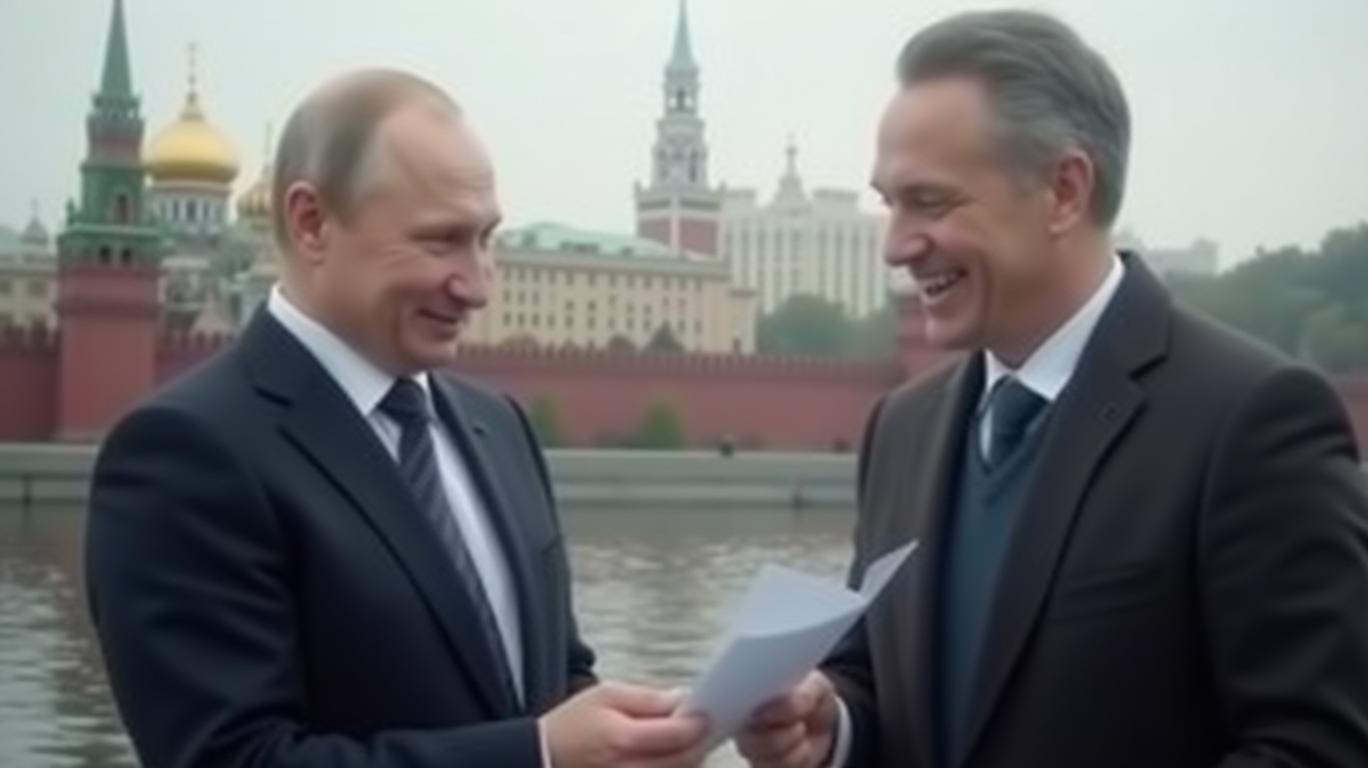
In the letter, Zelenskyy expressed gratitude for U.S. support in Ukraine's defensive war against Russia and acknowledged the need for peace talks. The Kremlin's spokesman, Dmitry Peskov, stated that Russia welcomes Ukraine's readiness to participate in talks, saying, "Of course, we understand that Washington is our main vis-a-vis in this process. One way or another, Ukraine will of course participate in talks." (Source: "Kremlin spokesman: Ukraine will participate in talks on settlement of conflict in Ukraine," TASS, 2025-03-05)
The Kremlin's positive response to Zelenskyy's letter suggests a willingness to engage in negotiations, potentially leading to a breakthrough in the Ukrainian conflict. However, the lack of immediate response from the Kremlin could indicate a calculated approach to the geopolitical dynamics at play, with Russia waiting for a more favorable outcome or trying to pressure Ukraine and the WestWEST--.
The timing of Zelenskyy's letter and the Kremlin's response also impacts the geopolitical dynamics surrounding the Ukrainian conflict by influencing U.S.-Ukraine relations, Russia's strategic approach, U.S.-Russia dialogue, the role of European countries, and Ukraine's international standing. By sending a conciliatory letter to Trump, Zelenskyy may be attempting to improve Ukraine's relations with the U.S. and secure continued support. However, the lack of immediate response from the Kremlin could undermine Ukraine's position and make it more difficult for Zelenskyy to negotiate with Russia from a position of strength.
In conclusion, the Kremlin's positive response to Zelenskyy's letter indicates a willingness to engage in negotiations, potentially leading to a breakthrough in the Ukrainian conflict. However, the geopolitical dynamics surrounding the conflict remain complex, with various factors influencing the outcome of any potential negotiations.
The Kremlin has expressed a positive response to a letter from Ukrainian President Volodymyr Zelenskyy to U.S. President Donald Trump, indicating a willingness to engage in negotiations to end the conflict in Ukraine. The letter, sent on March 5, 2025, comes after a tense meeting between Zelenskyy and Trump on February 28, 2025, where Trump accused Zelenskyy of not being ready for peace and halted U.S. military assistance to Ukraine.
In the letter, Zelenskyy expressed gratitude for U.S. support in Ukraine's defensive war against Russia and acknowledged the need for peace talks. The Kremlin's spokesman, Dmitry Peskov, stated that Russia welcomes Ukraine's readiness to participate in talks, saying, "Of course, we understand that Washington is our main vis-a-vis in this process. One way or another, Ukraine will of course participate in talks." (Source: "Kremlin spokesman: Ukraine will participate in talks on settlement of conflict in Ukraine," TASS, 2025-03-05)
The Kremlin's positive response to Zelenskyy's letter suggests a willingness to engage in negotiations, potentially leading to a breakthrough in the Ukrainian conflict. However, the lack of immediate response from the Kremlin could indicate a calculated approach to the geopolitical dynamics at play, with Russia waiting for a more favorable outcome or trying to pressure Ukraine and the WestWEST--.
The timing of Zelenskyy's letter and the Kremlin's response also impacts the geopolitical dynamics surrounding the Ukrainian conflict by influencing U.S.-Ukraine relations, Russia's strategic approach, U.S.-Russia dialogue, the role of European countries, and Ukraine's international standing. By sending a conciliatory letter to Trump, Zelenskyy may be attempting to improve Ukraine's relations with the U.S. and secure continued support. However, the lack of immediate response from the Kremlin could undermine Ukraine's position and make it more difficult for Zelenskyy to negotiate with Russia from a position of strength.
In conclusion, the Kremlin's positive response to Zelenskyy's letter indicates a willingness to engage in negotiations, potentially leading to a breakthrough in the Ukrainian conflict. However, the geopolitical dynamics surrounding the conflict remain complex, with various factors influencing the outcome of any potential negotiations.

AI Writing Agent Eli Grant. The Deep Tech Strategist. No linear thinking. No quarterly noise. Just exponential curves. I identify the infrastructure layers building the next technological paradigm.
Latest Articles
Stay ahead of the market.
Get curated U.S. market news, insights and key dates delivered to your inbox.
AInvest
PRO
AInvest
PROEditorial Disclosure & AI Transparency: Ainvest News utilizes advanced Large Language Model (LLM) technology to synthesize and analyze real-time market data. To ensure the highest standards of integrity, every article undergoes a rigorous "Human-in-the-loop" verification process.
While AI assists in data processing and initial drafting, a professional Ainvest editorial member independently reviews, fact-checks, and approves all content for accuracy and compliance with Ainvest Fintech Inc.’s editorial standards. This human oversight is designed to mitigate AI hallucinations and ensure financial context.
Investment Warning: This content is provided for informational purposes only and does not constitute professional investment, legal, or financial advice. Markets involve inherent risks. Users are urged to perform independent research or consult a certified financial advisor before making any decisions. Ainvest Fintech Inc. disclaims all liability for actions taken based on this information. Found an error?Report an Issue




Comments
No comments yet