
Kraft Heinz Slumps 1.62% with $0.37 Billion Volume (288th in Liquidity) as Energy Sector Divestments Grab Investor Attention
 Aime Summary
Market Snapshot
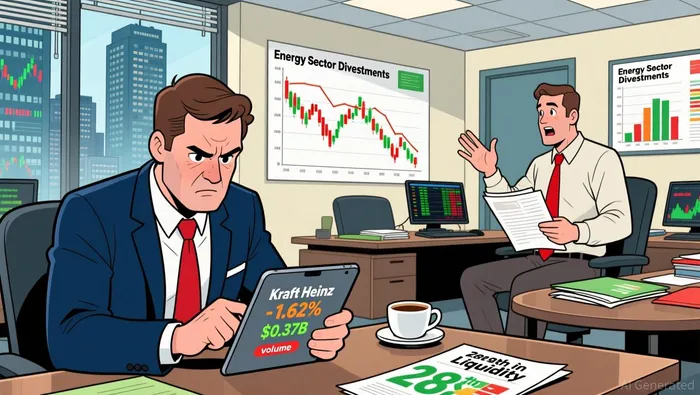
On December 2, 2025, , ranking 288th in terms of liquidity across U.S. markets. , underperforming broader market benchmarks. The drop occurred despite the company’s absence from direct mentions in the day’s news, which instead centered on unrelated renewable energy transactions. The volume, while substantial, did not reach levels typically associated with high-impact trading activity, suggesting the decline may reflect broader sectoral trends or macroeconomic factors rather than firm-specific news.
Key Drivers
The news articles provided focus on , a subsidiary of Eesti Energia, which finalized the sale of its Tolpanvaara onshore wind farm in Finland to TD Greystone Infrastructure Fund and . While the transaction does not directly involve KHCKHC--, the strategic implications of such divestments in the renewable energy sector may indirectly influence investor sentiment toward companies like KHC, which operate in traditionally slower-moving consumer goods industries.
, such as the Baltics and Poland, rather than expanding into peripheral regions like Finland. This reallocation of capital could signal to investors that energy companies are prioritizing operational efficiency over geographic diversification—a shift that might affect broader market risk appetite. For KHC, a company with a long-term focus on stable, low-growth markets, such strategic clarity in the energy sector could indirectly reinforce perceptions of its own risk profile.
The Tolpanvaara wind farm, , represents a significant but non-core asset for Enefit Green. The sale aligns with a broader pattern of energy firms divesting non-core renewables projects to infrastructure funds, which are better positioned to manage long-term operational risks. While this trend does not directly impact KHC’s operations, it highlights a sectoral shift toward capital-light strategies, which may resonate with investors seeking companies that prioritize disciplined capital allocation—a trait KHC has historically emphasized.
The timing of the transaction, , also raises questions about its relevance to short-term market dynamics. , , suggesting the deal’s execution was part of a multi-year strategy. This long-term orientation contrasts with KHC’s quarterly performance metrics, which may have contributed to the stock’s decline as investors priced in near-term challenges unrelated to the news. However, the broader narrative of energy firms streamlining operations could influence thematic investing trends, potentially affecting KHC’s valuation multiples in a sector-rotation context.
Finally, the lack of detailed financial impact metrics in the news (e.g., earnings contribution from the wind farm, debt repayment terms) limits the ability to assess the transaction’s materiality for Eesti Energia. This opacity may have contributed to the market’s muted reaction, as investors often require granular data to recalibrate expectations. For KHC, the absence of clear linkage to the news further suggests the decline was driven by other factors, such as macroeconomic data or sector-specific headwinds in the packaged foods industry.
In summary, while the Enefit Green divestment reflects strategic realignment in the energy sector, its direct relevance to KHC’s performance remains tenuous. The stock’s decline appears more attributable to broader market forces, but the news highlights a cross-sector trend of companies prioritizing core markets—a dynamic that could influence long-term investor behavior toward companies with similar strategic profiles.

Stay ahead of the market.
Get curated U.S. market news, insights and key dates delivered to your inbox.
AInvest
PRO
AInvest
PRO



Comments
No comments yet