
KOSPI Index Volatility: Why South Korea Is Struggling Amid AI Hype
 Aime Summary
- The KOSPI Index suffered a sharp 1.13% decline, mirroring losses in US technology stocks and occurring alongside geopolitical developments in the Strait of Hormuz.
- Extreme market volatility, driven by mechanical rebalancing flows from leveraged exchange-traded funds (ETFs), has made the KOSPI Index uninvestable for many foreign institutional investors.
- While semiconductor giants like Samsung and SK HynixSKHY-- reported record earnings driven by artificial intelligence demand, their stocks fell sharply due to unmet investor expectations.
- The primary reason for the market's current state is the structural risk created by leveraged products, which amplify daily price swings and deter traditional risk-averse capital.
- Investors must closely monitor memory pricing trends and data center orders to determine if the sector's rally can sustain its elevated valuations.
South Korean equities opened sharply lower, with the benchmark KOSPI Index decreasing 1.13 percent from the previous session and reaching an intraday low of 6,523.72 in early trading. The decline was primarily driven by losses in big technology companies on Wall Street, which negatively impacted sentiment in South Korea's tech-heavy market. This sell-off occurred amid reports of signs of progress regarding the Strait of Hormuz, suggesting that investors may be reassessing risk premiums or that the geopolitical easing failed to offset broader market weakness in the US tech sector. For global investors watching the broader Asian markets, this move highlights how tightly coupled South Korean equities remain to American technological sentiment, even when domestic macroeconomic factors appear stable.
Why Is the KOSPI Index Experiencing Such Extreme Volatility?
The KOSPI has experienced a near 40% tumble in just 27 trading days, a pace comparable to China's 2015 market crash. While bulls argue that Korea's business fundamentals are sound—with major conglomerates benefiting directly from the AI infrastructure boom—and that the index is cheap at 5.5 times forward earnings, the extreme volatility makes it uninvestable for many traditional managers. The primary driver of this instability is the outsized influence of leveraged exchange-traded funds (ETFs), which were turbocharged after the government approved single-stock products in late May. ETF providers are required to mechanically rebalance their books daily to maintain their leverage ratios, which inherently creates buy-high, sell-low flows that amplify stock moves rather than dampening them.
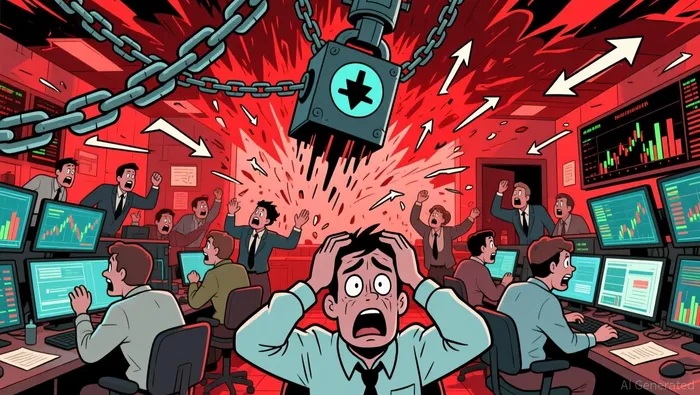
At the KOSPI's recent peak, a 5% move in a single heavy-weight stock like SK Hynix could trigger rebalancing flows accounting for 40% of the stock’s average daily volume. This mechanical pressure creates a feedback loop where price swings generate further trades, which in turn cause more price swings. This volatility is a killer for foreign institutional investors, who have been selling throughout the year to avoid excessive concentration and unpredictable drawdowns. For traditional portfolio managers, risk-adjusted returns are just as important as raw diversification; they are unlikely to increase exposures if the broader market continues to oscillate violently based on algorithmic trading flows rather than fundamental changes in corporate earnings.
Although the government plans to curb retail access to these instruments, it has fallen short of halting their operations, leaving the market stigmatized and structurally risky. The disconnect between the underlying strength of the Korean economy and the chaotic price action of its stock market has created a paradoxical environment. Companies are generating record profits, yet the vehicle used to access those profits—the KOSPI Index—is viewed as too dangerous for large-scale institutional allocation. This structural flaw threatens to isolate the South Korean market from global capital flows, regardless of how attractive the underlying valuations might appear on a price-to-earnings basis.
How Are Semiconductor Giants Impacting the KOSPI Index?
The semiconductor sector, which carries immense weight in the KOSPI, recently experienced a stark illustration of how high the market's expectations have become. Following reports of progress in Strait of Hormuz negotiations, South Korean stocks opened sharply lower, but the tech-heavy market was already primed for a correction. Samsung and SK Hynix reported record second-quarter operating profits driven by insatiable demand for high-bandwidth memory and server DRAM required for artificial intelligence accelerators. Samsung reported a record second-quarter operating profit of 89.5 trillion won on revenue of 171.5 trillion won, extending a streak of earnings fueled by AI memory products. The company even raised its full-year expectations, citing sustained investment in AI data centers that continues to drive strong orders.
Despite these historic financial results, the stocks suffered steep declines. SK Hynix jumped nearly 30% in some reports following the earnings release, but the initial reaction was heavily negative as results failed to satisfy analysts' increasingly ambitious expectations. The market reaction highlights how high the bar has become for memory and storage stocks following their massive surge on AI data-center demand. Strong historical results are no longer sufficient when investors have already priced in continued exponential growth and higher memory prices. While demand from data centers remains healthy, weaker consumer electronics and personal-computer markets could limit the sustainability of the current rally.
The broader market reaction underscores how strong historical results are no longer sufficient when investors are pricing in continued exponential growth. The discrepancy between solid earnings and negative price action signals a shift in market sentiment toward stricter performance thresholds. Investors are now closely watching memory pricing trends and data-center orders to determine if the sector's recent rally can support its elevated valuation expectations. The disappointment quickly spread across the industry, with peers like Western Digital and Micron also falling. In South Korea, the tech giants suffered steep declines, illustrating that the KOSPI's fate is deeply intertwined with the hyper-competitive and expectation-heavy global semiconductor supply chain.
What Are the Long-Term Implications for KOSPI Stock Investors?
The current environment in the KOSPI presents a complex landscape for retail and institutional investors alike. On one hand, the underlying businesses are generating unprecedented cash flows, supported by the global transition to artificial intelligence and advanced computing. Samsung warned that tight supplies of advanced memory chips could persist until at least 2028, signaling that the AI boom is far from peaking. This structural shortage of high-bandwidth memory and server DRAM required for next-generation AI accelerators provides a long-term tailwind for the sector's fundamentals. However, the vehicle through which investors access these gains remains fraught with structural inefficiencies.
The extreme volatility driven by leveraged ETFs acts as a deterrent for the very capital needed to sustain long-term market stability. Foreign institutional investors, who typically provide liquidity and depth to emerging markets, are increasingly avoiding the region due to the unpredictable nature of daily trading flows. This exodus leaves the market more susceptible to domestic retail sentiment and algorithmic trading, creating a self-reinforcing cycle of volatility. As the government attempts to introduce regulatory guardrails, the market remains in a transitional phase where the stigma of structural risk outweighs the appeal of cheap valuations.
Ultimately, the KOSPI is at a crossroads. The fundamental story of artificial intelligence and semiconductor dominance remains intact, but the market structure required to deliver those returns to investors is broken. Until the influence of mechanical rebalancing flows is curtailed or neutralized, the index will likely continue to oscillate violently. Investors must decide whether the potential upside from AI-driven earnings growth justifies the risk of navigating a market that is increasingly viewed as uninvestable by traditional standards. The coming quarters will be critical in determining whether regulatory interventions can restore confidence or if the market will continue to struggle under the weight of its own structural complexities.

Stay ahead of the market.
Get curated U.S. market news, insights and key dates delivered to your inbox.


AInvest
PRO
AInvest
PRO




Comments
No comments yet