
KOSPI Index Surges 18%: Why South Korean Stocks Are Rebounding
 Aime Summary
South Korea's stock market has delivered one of its most dramatic turnarounds in recent history. The Korea Composite Stock Price Index (KOSPI) surged nearly 18% in a single trading session, marking its largest single-day gain in 46 years. This massive rebound came after the benchmark index suffered its steepest monthly decline since the 2008 global financial crisis, shedding more than 22% in July alone. The volatility has left retail investors shaken and prompted regulatory authorities to intervene, temporarily halting the listing of high-risk leveraged products.
The sharp recovery highlights the intense sensitivity of South Korean equities to global technology trends. While the market had recently been battered by fears of slowing artificial intelligence spending and crowded trades, the sudden shift in sentiment was triggered by major corporate earnings reports from the United States. MicrosoftMSFT-- and AmazonAMZN-- both reported strong cloud computing growth, validating the sustained demand for high-bandwidth memory chips. This positive news spilled over into Asian markets, lifting South Korea's semiconductor heavyweights and pulling the broader index back from the brink.
What Drives the KOSPI Index Rebound?
The primary catalyst for the KOSPI index's historic rally was a surge in semiconductor shares, particularly in the memory chip sector. SK HynixSKHY--, a key supplier of high-bandwidth memory used in AI servers, surged nearly 30%, hitting its daily price limit. Samsung Electronics, another market bellwether, gained nearly 27%. Together, these two companies account for more than half of the KOSPI's weighting, meaning their performance dictates the direction of the entire benchmark.
The rally was directly linked to strong overnight performance in U.S. technology stocks. Microsoft reported fiscal fourth-quarter revenue that exceeded expectations, with its Azure cloud platform accelerating growth to 43%. Amazon followed suit with a reacceleration in its AWS segment. As major buyers of high-bandwidth memory, their robust cloud demand signals that supply constraints remain a bottleneck. This effectively validated the importance of the Korean memory sector, offsetting prior fears regarding Chinese competition and potential slowdowns in hyperscaler spending.
Market mechanics also played a significant role in the reversal. After a period of heavy selling and leveraged ETF liquidations that drove the index down, positioning in the market had become relatively attractive. Foreign investors, who had sold heavily in the preceding weeks, returned to buy a net 7.25 trillion won of KOSPI shares. JPMorgan noted that the leveraged ETF unwind was largely complete, and hedge fund de-leveraging had finished, creating a technical environment ripe for a short squeeze and rapid recovery.
Why Did the KOSPI Crash Before Rebounding?
To understand the magnitude of the rebound, it is necessary to examine the extreme volatility that preceded it. In July, the KOSPI suffered a severe rout driven by a combination of crowded AI trades, excessive retail leverage, and concerns over slowing capital expenditure by U.S. tech giants. During the worst of the sell-off, trading in KOSPI constituents was halted four times in a single month, setting a record for circuit-breaker suspensions.
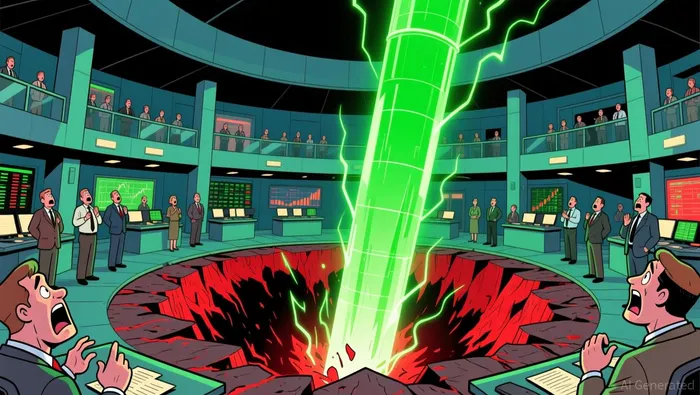
A major factor in the crash was the behavior of South Korean retail investors. During May and June, encouraged by a government market-reform campaign and the launch of single-stock leveraged exchange-traded funds, retail traders poured approximately 78 trillion won into KOSPI shares. These leveraged products offered amplified exposure to individual companies but exacerbated market swings as investors rushed to exit concentrated positions when sentiment turned. The subsequent liquidation of these positions created a downward spiral, driving Samsung and SK Hynix to significant losses despite their strong underlying earnings.
Samsung Electronics reported a more than 250-fold jump in semiconductor operating profit and announced multi-year supply agreements with major data-center operators. SK Hynix also reported record quarterly earnings with a 76% operating margin. However, investors had priced in such optimistic expectations for AI-driven demand. When concerns arose that hyperscaler spending might slow, the over-leveraged market collapsed. The July rout exposed how fragile the AI trade had become, with Samsung shares falling 21% and SK Hynix slumping 35% during the month.
What Does This Mean for KOSPI Stock Investors?
The extreme volatility in the KOSPI index underscores the interconnectedness of global equity markets and the pivotal role of technology sectors in driving broader index performance. For investors, the recent swings highlight the risks associated with concentrated exposure to the semiconductor industry and the dangers of excessive leverage in retail trading. While the long-term investment case for artificial intelligence remains intact, the path to higher valuations is likely to remain bumpy.
Regulatory authorities in South Korea have taken steps to stabilize the market and curb excessive speculation. Authorities temporarily halted new listings of single-stock leveraged ETFs in mid-July and have pledged additional measures to limit retail access to high-risk products. These interventions aim to rebuild investor confidence and prevent future liquidity crises caused by forced liquidations. Rebuilding trust may take time, particularly among traders who entered the market close to its highs or borrowed money to invest.
Looking ahead, investors will be closely watching the earnings reports and guidance from U.S. hyperscalers to gauge the sustainability of AI spending. The strong performance of Microsoft and Amazon suggests that demand for high-bandwidth memory remains robust, which should continue to support South Korean chipmakers. However, the market's sensitivity to global tech trends means that any shift in U.S. capital expenditure could trigger further volatility. Despite the recent recovery, the iShares MSCI South Korea ETF remains significantly below its 52-week high, indicating that there may still be room for further recovery as fundamentals improve and leverage is gradually reduced.
The current environment requires a balanced approach. While the underlying fundamentals of South Korea's semiconductor industry are strong, with companies like Samsung and SK Hynix reporting record profits, the market's structural vulnerabilities remain. Investors should be prepared for continued swings as the market digests the recent leverage unwind and adjusts to a new equilibrium. The rebound serves as a reminder of the power of global tech sentiment, but also the dangers of overextension in a highly correlated sector.

Stay ahead of the market.
Get curated U.S. market news, insights and key dates delivered to your inbox.


AInvest
PRO
AInvest
PRO




Comments
No comments yet