
Kosovo's Economic Prospects: Strategic Moves and Regional Dynamics
 Aime Summary
Why Is Kosovo’s Economic Strategy Important for Investors in 2026?
Kosovo’s economy, while small, holds promise due to its strategic location and demographic trends. With a young, growing population and a relatively open trade policy, the country is a key player in regional efforts to diversify supply chains and reduce dependency on larger economies. However, infrastructure and political stability remain major constraints.
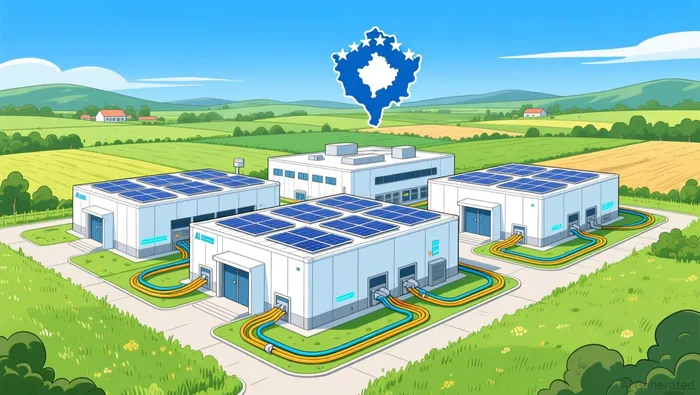
Recent investments in AI-ready data center infrastructure — as showcased by companies like VertivVRT-- — are part of a broader push to modernize Kosovo’s economic framework. These developments could reduce reliance on traditional energy sources and create more resilient digital ecosystems, particularly in a region where energy access is still inconsistent.
What Does 'Kosovo and EU Integration' Mean for Long-Term Stability and Trade?
One of the most notable developments this year is the proposal by Serbian and Albanian leaders to allow Western Balkan countries early access to the EU’s single market and Schengen travel zone. This initiative aims to bypass some of the political and institutional challenges associated with full EU membership, such as granting new voting rights or altering the structure of the European Parliament.
The proposal, backed by leaders like and , could provide a pragmatic first step toward deeper economic integration. While full EU membership remains a long-term goal, this interim approach could offer immediate benefits, such as increased trade access and higher levels of investment. However, it also requires that Kosovo and other regional countries continue to meet the EU’s political and economic reforms.
How Do Kosovo’s Infrastructure Developments Impact Trade and Investment in the Region?
Infrastructure has long been a key constraint for Kosovo’s growth. However, recent investments in scalable and energy-efficient systems — such as those highlighted at events like GITEX Africa Morocco 2026 — could provide a blueprint for regional development. These solutions emphasize modularity, energy efficiency, and long-term scalability, which are crucial in markets with limited access to traditional energy grids.
For investors, these developments signal a growing trend toward tailored infrastructure solutions that align with local needs. As Kosovo continues to attract attention for its strategic positioning, its ability to implement such solutions will be critical in attracting foreign investment and improving trade relations with neighboring countries.

Stay ahead of the market.
Get curated U.S. market news, insights and key dates delivered to your inbox.
AInvest
PRO
AInvest
PRO



Comments
No comments yet