
US-S. Korea $350B Pact Aims to Counter China, Strengthen Economic Resilience


 Aime Summary
The United States and South Korea have finalized a landmark economic and security agreement, marking a pivotal shift in their alliance. The deal, announced on November 14, includes a $350 billion investment by South Korea into U.S. industries, significant tariff reductions, and expanded defense cooperation, including the authorization for Seoul to build nuclear-powered submarines. According to reports, the agreement formalized during President Donald Trump's recent visit to South Korea, addresses trade tensions and bolsters strategic partnerships in a rapidly evolving global landscape.
At the core of the pact is South Korea's $150 billion investment in the U.S. shipbuilding sector, alongside $200 billion in "strategic investments" across other industries. 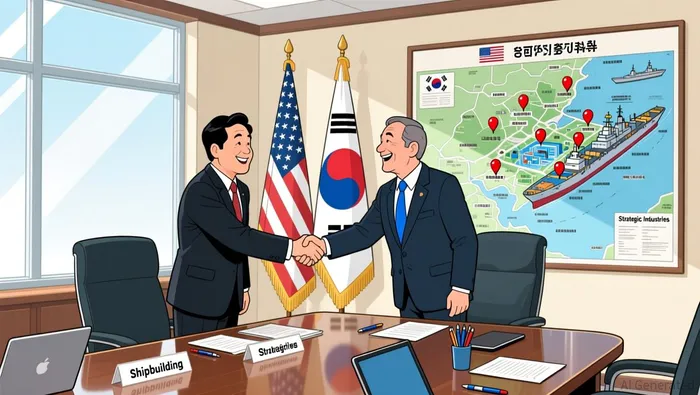 The U.S. has agreed to reduce 232 tariffs on South Korean automobiles, auto parts, lumber, and pharmaceuticals to 15% from the previous 25%. In return, South Korea will lift a cap on unmodified U.S. vehicle imports and collaborate to address non-tariff trade barriers.
Defense cooperation has also been expanded. South Korea has secured U.S. approval to construct nuclear-powered attack submarines, a long-standing strategic goal for Seoul. Additionally, the two nations agreed to advance joint efforts in uranium enrichment and spent nuclear fuel reprocessing, signaling a deepening trust in nuclear technology collaboration. South Korea also pledged to purchase $25 billion in U.S. military equipment by 2030 and increase defense spending to 3.5% of GDP, while the U.S. will provide $33 billion in support for troops stationed in South Korea.
South Korean President Lee Jae Myung emphasized that the investments would focus on commercially viable projects, addressing domestic concerns about financial risks. "The trade negotiations and security consultations... have been officially concluded," Lee stated, highlighting the agreement's significance for both economic stability and national security.
Meanwhile, South Korea is preparing to offset the impact of U.S. tariffs on its automakers. The government plans to boost subsidies for electric vehicles (EVs) by over 30% and introduce trade-in incentives to stimulate domestic EV adoption. These measures aim to counteract the financial strain on firms like Hyundai and Kia, which have seen profit margins shrink under Trump-era tariffs.
The agreement reflects broader efforts to strengthen economic resilience amid global competition, particularly from China. South Korea's $350 billion investment package is expected to create jobs and enhance U.S. industrial capacity, while the tariff reductions aim to make South Korean exports more competitive. The deal also aligns with U.S. goals to reinforce supply chain security and counterbalance China's influence in the region.

Stay ahead of the market.
Get curated U.S. market news, insights and key dates delivered to your inbox.


AInvest
PRO
AInvest
PRO



Comments
No comments yet