
Koma Inu: Shiba Ecosystem Dynamics And Coinbase Revenue Shifts
 Aime Summary
- The Shiba InuSHIB-- ecosystem relies on a multi-token model and Shibarium Layer 2 network to enhance transaction speed and reduce costs through proof-of-stake validation.
- Coinbase faces revenue pressure from declining crypto trading volumes driven by geopolitical volatility, yet demonstrates resilience through stablecoin interest income.
- Strategic diversification into stablecoin infrastructure offers a buffer against broader market downturns and cyclical trading fee reductions.
- Global trading volumes for digital coins dropped by double-digit rates sequentially and year-over-year due to conflicts involving Iran.
- Investors are monitoring these diversification moves as critical factors for long-term growth amidst a volatile market environment.
The Shiba Inu project operates as a decentralized ecosystem that utilizes a multi-token model to incentivize governance and liquidity provision. Its architecture integrates ShibaSwap for decentralized trading and Shibarium, a Layer 2 network, to enhance transaction speed and reduce costs through proof-of-stake validation. This structure aims to lower costs and increase throughput while maintaining decentralization through a community-driven leadership model.
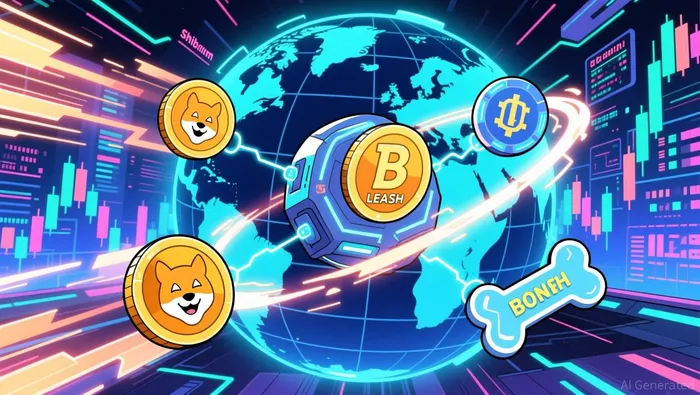
Shiba Inu functions as an Ethereum-based decentralized currency powering a suite of DeFi products. The ecosystem relies on community governance, where token holders vote on proposals to determine network direction. It utilizes a three-token model: SHIB for transactions, LEASH for scarcity, and BONE for governance. The primary platform, ShibaSwap, allows users to trade assets and provide liquidity without intermediaries.
Value accrues through staking, which locks tokens to secure the network, and burning, which permanently removes tokens from circulation to manage supply. To address scalability, the ecosystem employs Shibarium, a Layer 2 network that processes transactions off the main chain using a proof-of-stake consensus mechanism involving BONE validators. This setup is designed to maintain decentralization while significantly improving operational efficiency for users.
How Does Geopolitical Volatility Affect Exchange Revenue?
Coinbase Global reported a decline in share price despite highlighting a record share of global crypto trading volume. The broader cryptocurrency market experienced volatile geopolitical conditions, particularly due to conflicts involving Iran, which typically suppress demand for risky assets like cryptocurrencies. Consequently, global trading volumes for digital coins and tokens dropped by double-digit rates both sequentially and year-over-year.
As CoinbaseCOIN-- earns commissions from client trades, this reduction in volume directly impacts its revenue performance. During the recent quarter, crypto trading revenue fell by 22% to $599 million. The company's revenue is divided into three primary buckets: crypto trading, subscription and services, and other corporate categories.
The subscription and services segment, which includes stablecoin-related income, saw a smaller 12% decline to $555 million. This relative stability in subscription services suggests that while trading revenue is highly cyclical, the company's diversification into stablecoin infrastructure offers a buffer against broader market downturns.
What Role Do Stablecoins Play In Revenue Stability?
A key stabilizer for the exchange is a strategic partnership with Circle, which grants the platform 100% of the reserve interest income from USD Coin balances on its platform and 50% of interest generated externally. This stablecoin revenue declined modestly by 6% to $292 million, highlighting its lower volatility compared to direct trading fees.
The partnership with Circle Internet Group, the developer of the USD Coin stablecoin, allows the company to retain significant interest income. Stablecoin revenue, which is less sensitive to crypto price volatility than standard trading fees, dipped only 6% year-over-year to $292 million.
Investors are monitoring these diversification moves as critical factors for long-term growth amidst a volatile market environment. The company's financial performance is heavily influenced by global geopolitical conditions, which have led to volatility in risky assets like cryptocurrencies.
How Do Ecosystem Mechanics Support Long Term Viability?
The Shiba Inu project's reliance on a multi-token model helps distribute utility across different network functions. SHIB serves as the primary medium for transactions, while LEASH introduces scarcity mechanisms to manage supply dynamics. BONE tokens are designated for governance, allowing holders to vote on proposals that shape the network's future direction.
Shibarium processes transactions off the main chain using a proof-of-stake consensus mechanism involving BONE validators. This structure aims to lower costs and increase throughput while maintaining decentralization through a community-driven leadership model. The integration of these elements supports the ecosystem's ability to scale and remain competitive in the decentralized finance sector.
The ecosystem's architecture is designed to address scalability challenges inherent in Ethereum-based networks. By utilizing a Layer 2 network, the project can offer faster transaction speeds and reduced costs to its users. This approach is critical for maintaining user engagement and facilitating the widespread adoption of its DeFi products.
Market participants continue to analyze the interplay between broader macroeconomic factors and specific project fundamentals. The performance of major exchanges and the technical evolution of decentralized ecosystems provide insights into the resilience of the digital asset class. As geopolitical tensions persist, the diversification of revenue streams and the enhancement of network efficiency remain key themes for investors.

Blending traditional trading wisdom with cutting-edge cryptocurrency insights.
Latest Articles
Stay ahead of the market.
Get curated U.S. market news, insights and key dates delivered to your inbox.


AInvest
PRO
AInvest
PRO




Comments
No comments yet