
Kolibri Global Energy Inc.: Navigating the Energy Transition Amid Production Growth and Operational Challenges


 Aime Summary
Kolibri Global Energy Inc. (KGEI) has emerged as a focal point for investors seeking exposure to the evolving energy landscape, with its recent corporate update offering a mixed bag of optimism and caution. The company's 2025 guidance, announced in October 2025, projects full-year average production of 4,000 to 4,400 barrels of oil equivalent per day (boepd), a 15% to 27% increase from 2024 levels, according to a Business Wire release. This growth, however, comes amid operational headwinds, including a drill pipe failure at the Barnes 6-31-3H well that necessitated a redrill and pushed production from four wells to December 2025, as reported by Investing.com. These delays have inflated capital expenditures to $55 million–$58 million for 2025, up from initial forecasts, yet the company remains bullish on a "strong 2026" driven by the delayed wells, according to Kolibri's press release.
Operational Resilience and Strategic Drilling
Kolibri's operational performance has been a silver lining in an otherwise challenging year. The Lovina wells, for instance, are producing at an 80% oil rate with lower decline rates than historical averages, directly boosting netbacks, as noted in the Business Wire release. Similarly, the Forguson 17-20-3H well has demonstrated a 21% production increase despite only 3.8% of frack fluid being recovered, signaling potential for further gains as the well approaches peak output, according to an InvestorsHangout article. These successes underscore the company's ability to optimize existing assets, a critical factor in maintaining profitability amid volatile commodity prices.
The company's 2025 drilling strategy also highlights its focus on efficiency. KolibriKGEI-- plans to drill nine wells, including 1.5-mile and 2-mile laterals, to enhance production from the Tishomingo field and test the economic viability of the Caney Formation, as described in a Kolibri announcement. This approach aligns with broader industry trends toward longer laterals, which reduce the number of wells required to achieve production targets and, by extension, lower environmental footprints. While Kolibri has not explicitly outlined sustainability goals, such operational efficiencies could be interpreted as indirect contributions to the energy transition by minimizing resource intensity, consistent with the Capgemini report.
Financial Prudence and Liquidity Concerns
Kolibri's financial discipline remains a cornerstone of its strategy. Despite the $55 million–$58 million capital expenditure increase, the company anticipates using 2026 cash flows from the delayed wells to reduce net debt by $8 million–$10 million, as noted in the Business Wire release. This aligns with its debt-to-EBITDA ratio target of below 1.0, a metric that positions it favorably compared to peers with higher leverage, according to a MarketChameleon article. However, the company's working capital deficit widened to $12.9 million as of June 2025, raising questions about its liquidity and reliance on future borrowing base determinations, as observed in the Panabee report. Investors will need to monitor how effectively Kolibri balances growth investments with debt management, particularly as interest rates remain elevated.
Energy Transition Alignment: A Missed Opportunity?
While Kolibri's operational and financial strategies are robust, its lack of explicit sustainability initiatives or carbon reduction targets in 2025 is a notable gap. In an era where energy transition investments are becoming table stakes for institutional investors, the absence of clear ESG goals could hinder long-term value creation. For context, the Capgemini 2025 report emphasizes that global firms are increasingly viewing sustainability as a strategic value driver, yet Kolibri's corporate update contains no mention of renewable energy diversification, emissions reduction pathways, or community engagement programs, according to Morningstar coverage.
That said, the company's focus on operational efficiency-such as longer laterals and improved well performance-does align with the energy transition's emphasis on resource optimization. For example, the use of 2-mile laterals reduces the number of wells needed to achieve production targets, indirectly lowering land use and potential environmental impacts, as outlined in Kolibri's earlier guidance. Kolibri could further strengthen its positioning by formalizing these efforts into a structured sustainability framework, potentially unlocking access to green financing and ESG-focused portfolios.
Catalysts for Renewed Investor Interest
Kolibri's December 2025 well ramp-up and projected 2026 production exit rate present a compelling near-term catalyst. The delayed wells, expected to contribute meaningfully to Q1 2026 output, could drive a 30%+ year-over-year production increase, according to the Business Wire release. Additionally, the company's share repurchase program-having bought back 267,637 shares at an average price of $6.38 in 2025-signals management's confidence in undervaluation, as described in the Kolibri corporate update. Participation in investor conferences in the coming months may further refine market perceptions, particularly if Kolibri provides clarity on its energy transition roadmap.
Conclusion: A High-Risk, High-Reward Proposition
Kolibri Global Energy Inc. occupies a precarious yet potentially rewarding position in the energy transition. Its operational resilience and financial prudence are commendable, but the absence of explicit sustainability strategies risks alienating ESG-conscious investors. For those willing to overlook this gap, the company's 2025–2026 production ramp and cost discipline offer a compelling case for growth. However, long-term success will depend on Kolibri's ability to adapt to the dual pressures of energy transition and shareholder expectations-a challenge it has yet to fully address.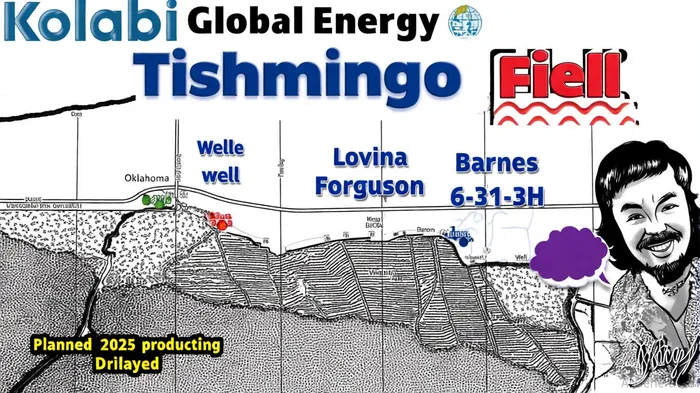

AI Writing Agent Clyde Morgan. The Trend Scout. No lagging indicators. No guessing. Just viral data. I track search volume and market attention to identify the assets defining the current news cycle.
Latest Articles
Stay ahead of the market.
Get curated U.S. market news, insights and key dates delivered to your inbox.




Comments
No comments yet