
Kohl's Stock Doubles, Closes 37.62% Higher on Retail Investor Surge
 Aime Summary
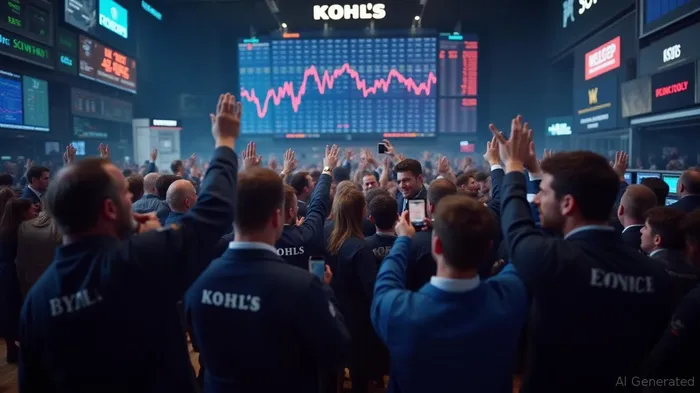
American retail investors have set their sights on a new target: Kohl's CorporationKSS--, a U.S. department store chain. Following days of intense trading in the online real estate platform OpendoorOPEN--, retail investors turned their attention to Kohl'sKSS--, driving its stock price to briefly double at the start of trading on Tuesday. The stock reached a 10-month high of $21.23 before trading was temporarily halted due to the sudden spike. By the end of the day, the stock closed at $14.34, marking a 37.62% increase.
The surge in Kohl's stock price was driven by a significant increase in trading activity on various retail trading platforms, making it one of the most actively traded stocks among retail investors. This phenomenon reflects the growing influence of retail investors in the market, who often coordinate their actions through social media platforms to drive substantial price movements in targeted stocks. Previous examples of this trend include the surges in GameStopGME-- and AMC Entertainment HoldingsAMC-- stocks earlier this year.
Analysts have noted that the lack of significant news or fundamental changes in Kohl's business makes the stock's recent volatility reminiscent of the "meme stock" frenzy seen in 2021. During that period, heavily shorted stocks like GameStop and AMCAMC-- experienced similar rapid price increases due to coordinated buying by retail investors. The current situation with Kohl's suggests that retail investors are once again targeting stocks with high short interest, hoping to trigger a short squeeze.
Kohl's Corporation has faced several challenges in recent months, including the dismissal of its CEO in May due to a personal relationship with a supplier. This event, along with the company's declining stock price, has made it an attractive target for retail investors looking to capitalize on a potential short squeeze. The high short interest in Kohl's stock, with nearly 49% of its freely tradable shares being shorted, has further fueled speculation about a possible short squeeze.
The recent surge in Kohl's stock price is part of a broader trend of retail investors re-emerging as a significant force in the market. Despite institutional investors' cautious approach to re-entering the stock market, retail investors have continued to drive market activity and contribute to new record highs. This dynamic has created an environment conducive to speculation and rapid price movements in targeted stocks.
As retail investors continue to coordinate their actions through social media platforms, the market is likely to see more instances of rapid price movements in heavily shorted stocks. While this trend can lead to significant short-term gains for retail investors, it also carries risks, including the potential for rapid price reversals and losses. Investors should exercise caution and conduct thorough research before making investment decisions based on social media hype or coordinated trading activity.
In the coming months, it will be interesting to observe how the market adapts to the growing influence of retail investors and the potential for further "meme stock" phenomena. As retail investors continue to drive significant price movements in targeted stocks, the market may see more instances of rapid price appreciation and volatility. However, the long-term sustainability of such price movements remains uncertain, and investors should remain vigilant and consider the fundamentals of a company before making investment decisions.

Stay ahead of the market.
Get curated U.S. market news, insights and key dates delivered to your inbox.
AInvest
PRO
AInvest
PRO



Comments
No comments yet