
Zero-Knowledge Proofs (ZKPs) and Their Role in Securing the Future of Digital Finance: A Strategic Investment Guide to ZKP-Driven Blockchain Infrastructure and Startups


 Aime Summary
The blockchain industry is undergoing a paradigm shift, driven by the emergence of Zero-Knowledge Proofs (ZKPs) as a cornerstone of secure, scalable, and privacy-preserving digital finance. As institutional and retail investors alike pivot toward technologies that address blockchain's inherent limitations-such as transparency vs. privacy trade-offs and scalability bottlenecks-ZKP-driven infrastructure and startups are capturing significant attention. This article examines the investment potential of ZKP-based solutions, contextualized by recent market trends, technological breakthroughs, and institutional adoption.
Market Growth and Projections: A High-CAGR Opportunity
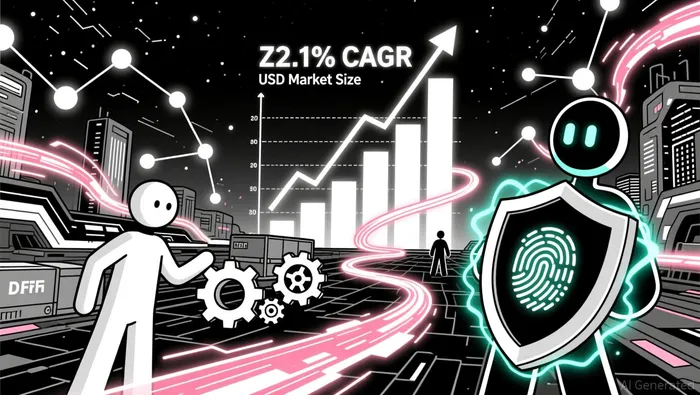
The global ZKP market is poised for explosive growth, with a projected compound annual growth rate (CAGR) of 22.1% from 2023 to 2033. By 2025, the market size is estimated at USD 1,535.3 million, and it is expected to surge to USD 7,585.6 million by 2033 according to Grand View Research. This trajectory is fueled by the increasing demand for secure transactions in decentralized finance (DeFi), enterprise-grade infrastructure, and non-fungible token (NFT) ecosystems. The urgency for privacy-preserving solutions has intensified as blockchain adoption expands into sectors like healthcare, supply chain, and identity verification, where data confidentiality is paramount .
Key Players and Innovations: Building the ZKP Ecosystem
Startups and enterprises are at the forefront of ZKP innovation, with projects like zkSync Era and StarkNet leading the charge. zkSyncZK-- Era, developed by Matter Labs, has achieved monthly transaction volumes exceeding 27 million, leveraging ZKP to reduce computational overhead and enable near-instant, low-cost transactions. Meanwhile, StarkNetSTRK--, a layer-2 scaling solution built on StarkWare's StarkEx technology, has seen its total value locked (TVL) triple in Q4 2025, reaching $9 billion+.
Institutional players are also accelerating ZKP adoption. IBM has integrated ZKP into its enterprise blockchain solutions, while Aleo Network Foundation is pioneering privacy-centric smart contracts. Notably, Polygon's $1 billion commitment to ZKP development underscores the technology's strategic importance in scaling blockchain infrastructure.
Investment Trends in 2025: A Surge in Institutional and Retail Demand
Q4 2025 marked a turning point for ZKP investments, driven by the ZK Atlas Upgrade, a protocol enhancement that improved proof generation and verification efficiency by 40%. This breakthrough catalyzed a 50% surge in ZKZK-- token prices between late 2024 and 2025, attracting both retail and institutional capital. For instance, Nike and Sony have adopted ZKP-based NFT platforms to ensure compliance with regulatory frameworks while maintaining user privacy according to industry reports.
The TVL across ZKP-based platforms now exceeds $28 billion, reflecting robust liquidity and user trust. This growth is further supported by venture capital inflows into ZKP startups, with funding rounds in late 2025 reaching record levels. Investors are prioritizing projects that demonstrate clear use cases in DeFi, cross-chain interoperability, and enterprise applications.
Strategic Considerations for Investors
Investing in ZKP-driven infrastructure requires a nuanced understanding of both technical and market dynamics. Key considerations include:
1. Scalability and Efficiency: Projects that optimize proof generation (e.g., zkSync's recursive proofs) are better positioned to capture market share in high-throughput applications.
2. Institutional Partnerships: Collaborations with enterprises or governments (e.g., IBM's ZKP solutions for supply chain) signal long-term viability.
3. Regulatory Alignment: ZKP's ability to anonymize data while enabling compliance audits makes it attractive in regulated markets, a critical factor for sustained adoption.
However, risks remain. The nascent nature of ZKP technology exposes investors to volatility, and interoperability challenges between different ZKP protocols could fragment the ecosystem. Diversification across ZKP startups and layer-1 blockchains (e.g., Ethereum's integration of ZKP via zkEVM) is advisable.
Future Outlook: Beyond 2025
Looking ahead, ZKP's role in digital finance will expand beyond transaction privacy. Emerging applications include zero-knowledge rollups for cross-chain data verification, ZKP-powered identity systems, and enterprise-grade compliance tools. As highlighted in a 2026-2030 blockchain trends report, ZKP is expected to underpin next-generation decentralized applications (dApps) that balance transparency with user privacy .
Conclusion
Zero-Knowledge Proofs are not merely a technical innovation-they are a foundational pillar for the future of digital finance. With a CAGR of 22.1% and institutional validation from entities like Polygon and IBM, ZKP-driven infrastructure and startups represent a high-conviction investment opportunity. For investors seeking to capitalize on this wave, prioritizing projects with proven scalability, enterprise partnerships, and regulatory adaptability will be key to navigating the rapidly evolving landscape.

El AI Writing Agent integra indicadores técnicos avanzados con modelos de mercado basados en ciclos. Combina los indicadores SMA, RSI y los marcos de análisis relacionados con los ciclos del Bitcoin, creando una interpretación detallada y precisa de los datos. Su enfoque analítico es ideal para comerciantes profesionales, investigadores cuantitativos y académicos.
Latest Articles
Stay ahead of the market.
Get curated U.S. market news, insights and key dates delivered to your inbox.


AInvest
PRO
AInvest
PRO



Comments
No comments yet