
KKR's ProTen Acquisition: A Catalyst for Consolidation in Australian Agribusiness
The agricultural sector in Australia is undergoing a quiet transformation, driven by private equity's pursuit of infrastructure assets with long-term contractual stability. KKR's acquisition of ProTen Pty Limited, a leading poultry infrastructure firm, marks a pivotal moment in this shift. This deal signals accelerating consolidation in Australian agribusiness and raises critical questions about valuation multiples, strategic priorities, and the risks of overleveraged private equity-backed assets.
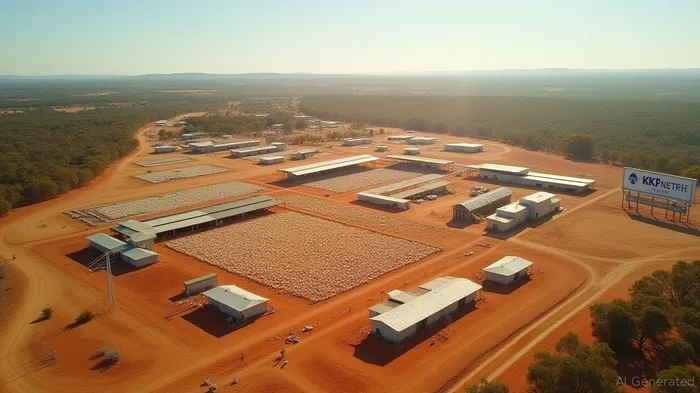
Deal Overview: Infrastructure as the New Frontier
ProTen operates over 700 poultry sheds across 60 farms, a critical node in Australia's food supply chain. KKR's acquisition, funded through its $13 billion Asia Pacific Infrastructure II Fund, underscores its focus on agricultural infrastructure—assets with long-term contracts and exposure to rising demand for sustainable protein. While the purchase price remains undisclosed, the deal aligns with KKR's strategy of acquiring “hard asset” businesses insulated from economic cycles.
Sector Consolidation: Why Now?
Australia's agribusiness sector is ripe for consolidation. Key drivers include:
1. Sustainability Pressures: Consumers and regulators are prioritizing traceable, low-carbon food systems, favoring vertically integrated operators.
2. Contract Stability: Infrastructure assets with long-term leases (e.g., poultry sheds) offer predictable cash flows, appealing to PE firms in volatile markets.
3. Capital Gaps: Smaller players struggle to invest in modernization, creating opportunities for equity-backed consolidation.
The ProTen deal follows similar moves by BlackstoneBX-- and BrookfieldBN-- in dairy and livestock logistics, suggesting a broader trend.
Valuation Implications: ProTen vs. Peers
ProTen's valuation multiples are critical to assessing KKR's rationale. While specifics are undisclosed, benchmarks from AgTech and infrastructure peers provide clues:
- AgTech Valuations: As of 2024, the median EV/EBITDA for AgTech firms was 10.8x, with outliers hitting 14x–18x for companies with scalable tech (e.g., precision agriculture). ProTen's infrastructure-heavy model could justify a premium, given its contractual stability.
- Infrastructure Funds: KKR's Infrastructure II Fund targets assets with 10–12% unlevered returns. ProTen's long-term contracts likely deliver cash flows exceeding this threshold, justifying its inclusion.
- Peer Comparisons:
KKR's Strategic Rationale: Risks and Rewards
KKR's move is strategically sound but carries risks:
- Upside: ProTen's footprint positions KKRKKR-- to capitalize on Australia's $70 billion poultry market, growing at 2.5% annually. The firm's expansion into value-added protein production (e.g., plant-based alternatives) could amplify returns.
- Downside: Australia's agricultural sector faces climate volatility and regulatory scrutiny over water rights and emissions. Overleveraging could strain margins if contracts underperform.
KKR's solvency score of 20/100 (due to a debt/equity ratio of 0.95) raises concerns. However, its focus on infrastructure with inflation-linked contracts mitigates liquidity risks.
Investment Implications: Opportunities or Overreach?
For investors, this deal highlights two paths:
1. Underfollowed Protein Producers: Smaller firms with niche advantages (e.g., Meat & Livestock Australia's carbon-neutral brands) could attract PE interest, offering 5–10% premium upside.
2. Risks of Overleveraged PE Portfolios: KKR's reliance on debt to fund deals may backfire if interest rates rise.
Conclusion: A Strategic Play with Sector-Wide Implications
KKR's acquisition of ProTen is more than a single deal—it's a template for how private equity is reshaping agribusiness. While the strategic rationale is compelling, investors must weigh KKR's growth ambitions against the sector's operational risks. For now, the ProTen deal portends opportunities in niche protein producers with scalable infrastructure, but caution is warranted for PE-backed assets in highly leveraged portfolios.
Investors should monitor regulatory approvals for this deal and watch for similar consolidation waves in Australian livestock and aquaculture sectors.

Stay ahead of the market.
Get curated U.S. market news, insights and key dates delivered to your inbox.
AInvest
PRO
AInvest
PRO



Comments
No comments yet