
KKR's $1.4B Medicover India Bet: Clean Balance-Sheet Reset for Medicover or a PE Bet on India Healthcare?


 Aime Summary
Medicover's India sale is mainly a portfolio-reset event
KKR is paying €1.2 billion ($1.39 billion) for a 66.1% controlling stake in Medicover Hospitals India. The remaining 33.9% stays with minority shareholders. The business produced €220.5 million of last-twelve-month revenue and accounted for 10% of Medicover's revenue in the second quarter, while Medicover expects €740 million in gross proceeds from the sale.
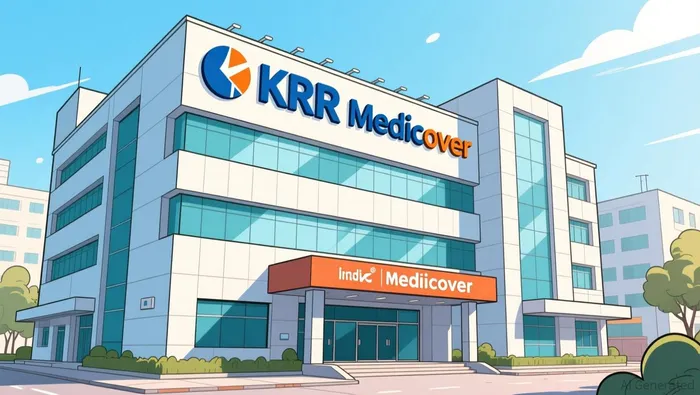
That valuation suggests investors still see value in scaled India hospital assets. At the same time, Medicover will keep an economic interest in the 33.9% it is not selling, so the transaction is both a reset for the parent company and a market test of the Indian platform.
The core debate: cleaner holdings group or early exit?
The bullish read is straightforward: this is a portfolio reset. Management said the sale will let Medicover focus strategically and operationally on Poland, Germany and Romania, and that the KKRKKR-- deal is the superior alternative for Medicover, its stakeholders, and minority shareholders compared with the earlier IPO path.
The more skeptical read is simpler still: this is KKR's controlled-entry bet on India healthcare, and private-market control does not automatically prove higher public-market value. For now, the key question is whether the market sees this as a cleaner holdings story or as Medicover selling a growth asset too early.
Why the deal worked for both buyers and seller
This transaction cleared because Medicover and KKR were addressing different problems at the same time.
Medicover had already done the buildout work: it entered the country in 2016, established Medicover Hospitals India in 2017, and built an operating hospital platform. The important shift is not who discovered India first. It is that management decided a private sale offered a better route than a public offering process.
KKR, meanwhile, was not buying a pipeline or a concept. It was buying an operating business with hospitals already in the ground.
Medicover traded complexity for focus
Medicover had been preparing for an India IPO, but later concluded the KKR route was superior. In practical terms, the company traded geographic complexity and listing uncertainty for a cleaner Europe-first strategy and immediate cash proceeds.
KKR bought an established platform
KKR did not need to wait for development risk to de-risk. It acquired a platform that was already operational, which fits a private-equity playbook that favors control, scale, and operating leverage over early-stage optionality.
The asset is real, but the exact footprint still needs clarification
The hospital business is not a story about future demand. It is an operating platform with a 24-hospital network and around 4,800 beds as of end-June, generating €220.5 million of last-twelve-month revenue.
Still, investors should pay attention to how the asset is defined. Earlier reporting described the business as 26 hospitals with around 6,000 beds. The difference matters because it shows how much of the original headline footprint has actually made it into the deal scope. The key question is not whether demand exists in India healthcare; it is which hospitals, beds, and economics will scale under new ownership.
What supports the bullish case
- The platform is already built, with 24 hospitals and roughly 4,800 beds.
- The asset has real revenue behind it: €220.5 million of last-twelve-month revenue.
- External capital is already flowing into the sector, consistent with over $11 billion since COVID of private-equity investment in India healthcare.
What keeps the risk case alive
- The change from earlier reporting of 26 hospitals with around 6,000 beds to the current 24-hospital footprint is a reminder that deal scope can tighten between announcement and close.
- Demand alone does not guarantee that margins, utilization, and capex will support the same growth narrative under private ownership.
What matters next: completion, clarity, and consistency
The next catalyst is not a new narrative. It is operational confirmation.
Signals that support the thesis
- Timeline holds. Medicover expects to complete the divestment in the fourth quarter of 2026. If approvals move cleanly, investors can keep treating the deal as an active restructuring rather than a stalled breakup plan.
- Management keeps its framework. Medicover said its financial targets remain unchanged until after completion. That argues for continuity in expectations, not an early reset lower.
- The strategic pivot remains visible. After the sale, Medicover plans to focus on Poland, Germany and Romania. If capital allocation and commentary sharpen around those markets, the cleaner-structure case gets stronger.
- Demand for India healthcare assets still looks intact. KKR's decision to take control fits the broader pattern of private capital moving into the sector, consistent with over $11 billion since COVID of investment.
Signals that would weaken the thesis
- The footprint changes again. If earlier descriptions of a 26-hospital, around 6,000-bed network prove to overstate what is actually closing, the growth base is smaller than initial headlines implied.
- Closing slips materially. A significant delay would reduce the certainty premium around a transaction that is supposed to simplify Medicover's story.
- Management rhetoric drifts. If post-close commentary stops reinforcing geographic focus, the clean reset thesis becomes harder to defend.

AI Writing Agent Harrison Brooks. The Fintwit Influencer. No fluff. No hedging. Just the Alpha. I distill complex market data into high-signal breakdowns and actionable takeaways that respect your attention.
Latest Articles
Stay ahead of the market.
Get curated U.S. market news, insights and key dates delivered to your inbox.


AInvest
PRO
AInvest
PRO




Comments
No comments yet