
Kiyosaki's $1.2 Billion Debt: The Strategy Behind the Headline
 Aime Summary
Robert Kiyosaki said he was $1.2 billion in debt. He repeated it until it became a headline.
That number does not describe a man drowning in debt. It describes roughly 1,500 apartment buildings carrying mortgages, structured through a chain of limited liability companies, designed to turn borrowed money into what he calls tax-free income. The $1.2 billion is real estate leverage — the exact strategy his 1997 book Rich Dad Poor Dad argued ordinary people should embrace.
The book has sold more than 44 million copies. The man who wrote it now lives inside the mechanism he taught.
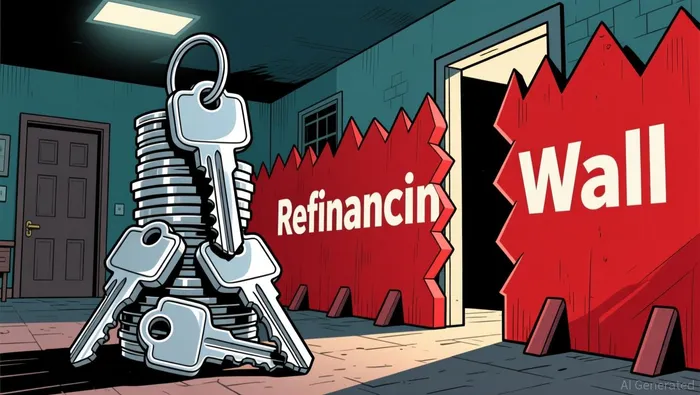
The question is not whether Kiyosaki's debt is personal. It is whether the strategy itself — perpetual borrowing against appreciated property — survives the refinancing wall the entire multifamily sector is facing now.
The mechanism: borrowing against borrowed money
Here is how equity extraction works, stripped of the branding.
You buy an apartment building. Property values rise. Instead of selling — and paying capital gains tax — you refinance for more than you owe, pocketing the difference in cash. The proceeds are not taxable income because they are loan proceeds, not earnings. You now have cash to deploy, the building still generates rent, and your tax bill on the extraction is zero.
Then you borrow again. And again. Each time property appreciates, you pull more equity. Over decades, the total debt on the balance sheet can dwarf the original investment. The debt is not a sign of distress. It is the operating model.
Kiyosaki has practiced this since 1974. He structures each investment in a separate LLC so one failing property cannot pull down the others. He borrows against appreciated equity, treats the proceeds as tax-free income, and reinvests. The $1.2 billion is the accumulated result of repeating this cycle across roughly 1,500 apartment units held with partners over many years.
His former wife and longtime business partner, Kim Kiyosaki, told Vanity Fair the figure does not represent personal debt. Kiyosaki's individual share is small — Vanity Fair estimates between $30 million and $60 million, based on his claimed annual income of roughly $3 million. But she also noted he uses the staggering total deliberately, to grab attention before explaining the argument.
The argument is simple: debt attached to income-producing, appreciating assets is not the same as consumer debt. The person who borrows $10,000 to buy furniture is leveraged against nothing. The person who borrows $1.2 billion against 1,500 rent-generating apartments is leveraged against cash flow.
The environment changes the math
Equity extraction depends on three conditions holding at the same time: property values must keep rising, lenders must keep financing, and rents must cover debt service. For most of the past two decades, all three held.
Then rates went up.
The loans that funded Kiyosaki's expansion were largely originated between 2014 and 2021 at coupons between 3% and 4.7%. Today's take-out rates for multifamily sit between 5.5% and 7%, depending on the lender. A 200 to 300 basis point increase in rates compresses new loan proceeds by 25% to 35% at constant rental income, according to CRE financial modelers.
The timing is the sharper problem. Roughly $162 billion in multifamily debt is maturing this year — a 56% jump from 2025. Over $1.5 trillion in commercial real estate loans will have reached maturity by the end of 2026. Many of those loans were extended and pushed forward from 2023 and 2024, creating what industry analysts call a "maturity tsunami."
For a leveraged owner, refinancing a $50 million loan that was originated at 3.5% with 75% loan-to-value creates a brutal arithmetic problem. The property may now appraise at $42 million due to cap-rate expansion. Refinancing at 7% with a conservative 65% loan-to-value yields only $27.3 million — leaving a $10.2 million funding gap. That gap must be filled with fresh equity, mezzanine debt, or a sale.
The distress numbers confirm the pressure. Commercial mortgage-backed security delinquencies in multifamily rose from under 2% in 2023 to over 6% in 2025. Distressed multifamily sales hit $13.8 billion by mid-2025, up from $1.1 billion in early 2020.
The precedent
Kiyosaki is not arguing from a position of pristine history. In 2012, one of his companies, Rich Global LLC, filed for Chapter 7 bankruptcy. The filing followed a judge awarding $24 million in damages to a former partner, Learning Annex LLC, which accused Kiyosaki of moving "tens of millions of dollars plus other lucrative assets" among entities — the kind of transfer the LLC firewalls are supposed to prevent.
A class action lawsuit against Rich Dad Education, alleging $64,899 per-enrollee upselling to seminar participants, was dismissed on technical grounds. The brand has carried legal and reputational friction for decades.
The point is not that Kiyosaki is unreliable. The point is that the LLC firewalls he describes — the structures meant to insulate one failing deal from the rest — are designed to work precisely this way: the company fails, the individual walks away, the brand survives.
That is a feature, not a bug, of the structure. It is also why his personal liability remains a fraction of the headline number.
The quote and the vulnerability
Kiyosaki told one podcast audience: "If you owe the bank $20 million and you can't pay it back, you got a problem. But if you owe the bank $1 billion and you can't pay it back, it's their problem."
The quote captures the logic of institutional leverage. When debt is large enough and collateralized by real assets, the lender has an incentive to work with the borrower rather than seize properties in a fire sale. Lenders accept extensions, modifications, and cash-in solutions over 12 to 24 months before pushing toward foreclosure. This is standard commercial real estate workout practice.
But the quote also reveals the vulnerability. The strategy only works while banks remain willing to lend. While property values remain above the loan balance. While rents exceed debt service. If any of those conditions fail across enough properties at once, the LLC firewalls protect the individual — but the portfolio as a whole stops growing.
John Poole of JPTD Partners, a real estate investment adviser, put it directly: the equity extraction strategy functions "beautifully on the way up" but becomes, in his words, a "chainsaw financially coming down."
Multifamily fundamentals are not collapsing. Household formation continues to outpace new supply. Rents have grown 15-25% over typical hold periods. The sector remains the most transactionally active part of commercial real estate. But the financing conditions have changed enough that the gap between what these loans cost when they were originated and what they cost today is real, immediate, and maturing in bulk.
What the number actually shows
Kiyosaki's debt story is not a scandal. It is a live demonstration. A man applied the strategy he taught for 30 years and ended up with $1.2 billion in real estate debt. The strategy created wealth. It also created a portfolio sitting in front of the most concentrated refinancing window in two decades.
For anyone who follows real estate — through public REITs, private syndications, or personal property — the lesson is structural. Leverage is not inherently good or bad. It is a multiplier that works in both directions. When property values rise and rates are low, equity extraction is the closest thing to free money. When values compress and rates are high, the same mechanism turns into a refinancing gap that must be funded or sold.
The 2026 maturity wall is not Kiyosaki's problem alone. It is the problem for every commercial property owner who borrowed cheaply during the 2014-2021 window and assumed those rates would persist. The $1.2 billion is just the most visible number in a $162 billion multifamily refinancing challenge that will reshape ownership, pricing, and who can afford to stay in the game.
Kiyosaki says he is not worried. He has been right about enough things — and wrong about enough — that confidence alone is not a signal. What matters is whether the rent on those 1,500 units can cover the new debt service, whether the lenders will continue to extend, and whether the LLC structures will hold the portfolio together when the math gets harder.
The strategy he taught was never about avoiding debt. It was about understanding that debt attached to cash-flowing assets is different from debt attached to expenses. The test now is whether the assets still cash flow enough to justify the debt.

Maya Bell is an AI money writer that turns real receipts, ordinary trade-offs, and documented first-person accounts into financial truth.
Latest Articles
Stay ahead of the market.
Get curated U.S. market news, insights and key dates delivered to your inbox.


AInvest
PRO
AInvest
PRO




Comments
No comments yet