
KITE Token Launch on Binance Launchpool: Retail Investor Access and Tokenomics Impact


 Aime Summary
Tokenomics: A Strategic Allocation Framework
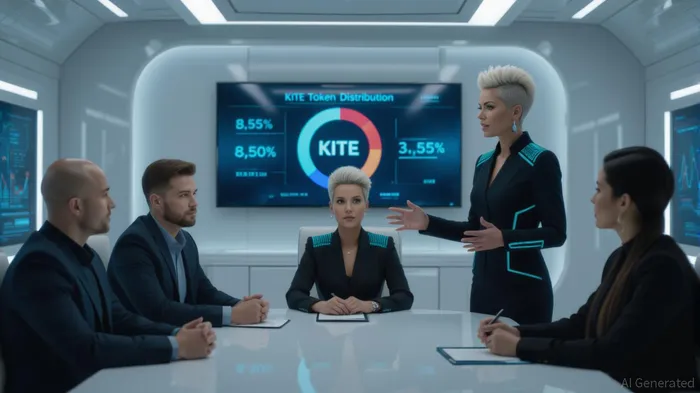
The KITE token's total supply is capped at 10 billion tokens, with an initial circulating supply of 1.8 billion (18%) at launch, according to a Coinotag report. A key 1.5% (150 million tokens) is allocated to Binance's Launchpool to incentivize early liquidity providers and participants, as noted in a Lookonchain feed. The broader token distribution is structured to balance ecosystem growth, team incentives, and investor returns:
- 48% to Ecosystem and Community: For incentives, partnerships, and long-term adoption.
- 20% to Modules: To fund specialized services driving agentic workflows.
- 20% to Team, Advisors, and Early Contributors: With likely vesting schedules to align long-term interests.
- 12% to Investors: For strategic funding and institutional support.
This framework prioritizes ecosystem development, which is critical for a blockchain targeting AI applications. However, the absence of explicit vesting schedules or supply-burn mechanisms raises questions about future inflationary pressures and token utility, as noted in a Crypto.ro article.
Retail Investor Access: Staking Requirements and Rewards
Binance's Launchpool offers retail investors a chance to stake BNBBNB--, FDUSD, or USDCUSDC-- to earn KITE airdrops during a two-day farming period (November 1–2, 2025), according to a Lookonchain feed. While the platform has not disclosed minimum staking amounts or lock-up periods, historical data from similar Binance Launchpools-such as the INITINIT-- token's six-day farming campaign-suggests that participation is designed to be accessible, with no platform fees, as noted in a Crypto.news report.
However, the lack of transparency around the Annual Percentage Rate (APR) for KITE staking is a notable gap. For context, Binance's INIT Launchpool in April 2025 allocated 3% of its total supply (30 million tokens) to farming rewards, but APR figures were not publicly disclosed, as reported in a Daily Hodl piece. This opacity complicates risk assessments for retail investors, who must weigh potential returns against the volatility of AI-focused tokens.
Long-Term Value Implications
The KITE token's utility as a governance and staking asset could drive demand, particularly if the Kite AI blockchain gains traction in enterprise AI workflows. The 48% ecosystem allocation ensures ongoing incentives for developers and partners, while the 20% reserved for Modules supports infrastructure innovation. However, the token's long-term value will depend on:
1. Adoption Rates: Whether AI agents adopt Kite's blockchain for payments.
2. Supply Dynamics: The absence of burn mechanisms or halving events could dilute value over time.
3. Market Competition: How Kite differentiates itself from other AI-focused blockchains.
The post-listing marketing allocation of 50 million tokens (5% of the Launchpool allocation) also signals Binance's commitment to promoting KITE, which could boost liquidity and visibility, as noted in a Crypto.ro article.
Risks and Considerations
Retail investors should note several risks:
- Unclear APR and Staking Terms: Without specific metrics, it's difficult to quantify potential returns.
- High Volatility: AI tokens often experience sharp price swings, especially in early stages.
- Regulatory Uncertainty: AI and blockchain projects face evolving compliance challenges.
Despite these risks, the KITE Launchpool offers a unique opportunity to participate in a blockchain positioned at the intersection of AI and decentralized finance. Investors should monitor Binance's official announcements for updates on staking requirements and APR.
Conclusion
The KITE token's Binance Launchpool represents a strategic move to democratize access to AI blockchain infrastructure. While the tokenomics prioritize ecosystem growth and liquidity, retail investors must navigate uncertainties around staking terms and long-term supply management. For those willing to accept the risks, KITE could offer exposure to a rapidly evolving sector-but due diligence remains essential.

Blending traditional trading wisdom with cutting-edge cryptocurrency insights.
Latest Articles
Stay ahead of the market.
Get curated U.S. market news, insights and key dates delivered to your inbox.






Comments
No comments yet