
KITE's Post-Listing Price Trajectory: Navigating Short-Term Volatility and Long-Term Institutional Potential


 Aime Summary
Short-Term Volatility: A Confluence of Catalysts
Vyome Holdings' stock has exhibited pronounced price swings in 2025, dropping from $14.06 in August to $5.15 by November despite positive clinical milestones. This volatility stems from a mix of corporate developments, market sentiment, and macroeconomic conditions.
The dual-listing on Nasdaq and SGX-Nasdaq was positioned as a strategic move to enhance liquidity and attract institutional investors, particularly from Asia. However, the anticipated diversification of investor bases has yet to fully materialize. While entities like GIC and Temasek were cited as potential beneficiaries of the dual-listing model, no concrete evidence of direct institutional ownership or fund allocations emerged in 2025 according to the earnings call transcript. This gap between strategic intent and realized institutional participation has left the stock vulnerable to short-term speculative trading.
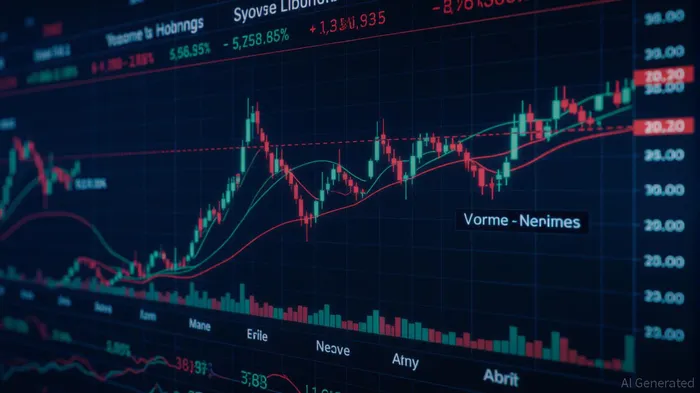
Compounding this dynamic is the biotech sector's inherent sensitivity to clinical data. Vyome's Phase 2 results for VT-1953-a drug candidate for malignant fungating wounds-showed statistically significant improvements according to clinical data, yet the market's reaction was muted. Technical indicators, including rising volume on declining prices and mixed signals from moving averages, suggest a tug-of-war between bulls and bears. Meanwhile, the broader market environment, characterized by a VIX spike to 52.3 amid tariff-related uncertainties, has amplified KITE's volatility.
Long-Term Institutional Interest: Promise vs. Reality
The dual-listing's potential to attract long-term institutional capital remains a key narrative for Vyome. The company's 100% common stock structure and extended cash runway through 2026 are designed to appeal to investors prioritizing capital efficiency and reduced dilution risks. However, the absence of verifiable institutional ownership data in 2025 according to the earnings call transcript raises questions about the depth of this interest.
While the SGX-Nasdaq bridge theoretically opens doors to Asian institutional investors, including sovereign wealth funds like GIC and Temasek according to market analysis, no press releases or fund disclosures confirmed such commitments in 2025. This lack of transparency complicates assessments of KITE's institutional appeal. Analysts remain divided: some highlight the dual-listing's structural advantages according to analysts, while others caution that institutional adoption hinges on concrete milestones, such as successful Phase 3 trials or partnership announcements according to market research.
Balancing Act: Macroeconomic Headwinds and Corporate Resilience
Vyome's financial prudence-evidenced by its extended cash runway and disciplined capital allocation-positions it to navigate near-term uncertainties. Yet, the broader economic landscape remains a wildcard. The U.S. economy's resilience in consumer spending contrasts with Q1 2025's negative GDP, driven by import surges ahead of tariff hikes according to economic analysis. Such macroeconomic duality creates a challenging backdrop for biotech stocks, where growth is often tied to long-term innovation rather than immediate economic cycles.
For KITEKITE--, the path to stabilization may depend on two factors: (1) the successful execution of its clinical pipeline, particularly Phase 3 trials for VT-1953, and (2) macroeconomic clarity that reduces the VIX's influence on investor behavior according to market outlook. Analysts have floated a $30 price target according to market analysis, but this hinges on regulatory progress and a more stable economic environment.
Conclusion: A High-Risk, High-Reward Proposition
KITE's post-listing trajectory reflects the dual-edged nature of biotech investing. Short-term volatility is inevitable given the sector's data-driven nature and macroeconomic turbulence. However, the company's dual-listing strategy and clinical progress offer a foundation for long-term growth-if institutional interest materializes and key milestones are met. Investors must weigh these opportunities against the risks of sector-specific volatility and the absence of confirmed institutional backing. For now, KITE remains a speculative bet, best suited for those with a high-risk tolerance and a long-term horizon.

Blending traditional trading wisdom with cutting-edge cryptocurrency insights.
Latest Articles
Stay ahead of the market.
Get curated U.S. market news, insights and key dates delivered to your inbox.




Comments
No comments yet