
KITE Binance Listing: Strategic Implications for Small-Cap Crypto Assets in a Fragmented Market
 Aime Summary
Liquidity Boost: A Double-Edged Sword
Binance's decision to list KITE with multiple fiat and stablecoin pairs immediately enhanced its liquidity profile. The Seed Label, typically reserved for projects with high growth potential but limited market penetration, suggests that Binance views KITE as a candidate for broader retail and institutional interest according to reports. Pre-listing, BingX's Xpool campaign allowed users to stake assets for KITE points, effectively creating a secondary market for early accumulation. This dual-layered approach-pre-listing incentives and post-listing trading pairs-aims to mitigate the liquidity challenges that often plague small-cap tokens.
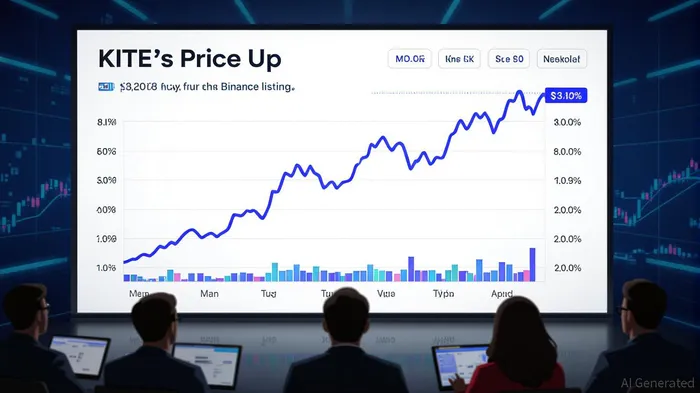 However, liquidity gains come with risks. Data from the first two hours of trading revealed a $263 million volume spike, followed by a sharp price decline from $0.11 to $0.095, a classic "buy the rumor, sell the news" pattern. Such volatility highlights the fragility of liquidity in assets lacking robust fundamentals or institutional backing. Unlike established projects like Microsoft-backed Nebius Group, which saw a 417% return in 2025, KITE's valuation remains speculative, with a market cap of $167 million and a fully diluted valuation (FDV) of $929 million according to market data. For investors, this duality-liquidity as both an opportunity and a trap-demands cautious positioning.
Market Psychology: Retail-Driven Dynamics and Behavioral Biases
The psychological impact of Binance's listing is evident in KITE's price trajectory. The initial surge in volume and subsequent pullback reflect the herd behavior typical of retail-driven markets. As noted by on-chain analysts, small-cap tokens often experience "liquidity events" where short-term inflows create artificial momentum, only to reverse as traders capitalize on the news according to market analysis. This pattern is exacerbated by the lack of institutional oversight, which leaves retail investors vulnerable to FOMO (fear of missing out) and FUD (fear, uncertainty, doubt).
Moreover, the absence of revenue streams or clear use cases for KITE amplifies its exposure to sentiment shifts. Unlike stablecoins or utility tokens with tangible applications, KITE's value proposition remains opaque, making it a high-risk bet for those seeking long-term growth. This aligns with broader trends in the crypto sector, where AI and blockchain assets face valuation challenges despite occasional strong fundamentals according to market reports. For investors, understanding these behavioral dynamics is critical to navigating the emotional volatility of small-cap markets.
Institutional Adoption: A Long-Term Horizon
While KITE's immediate listing has not yet attracted institutional capital, broader trends suggest a growing appetite for digital assets. Tether's recent investment in Parfin to expand USDTUSDT-- adoption in Latin America, for instance, highlights the role of stablecoins in institutional infrastructure. Similarly, Singapore's Equity Market Development Programme (EQDP), which allocates $5 billion to boost SMID-cap liquidity, offers a parallel for how regulatory frameworks can catalyze institutional interest in niche markets.
For KITE, institutional adoption hinges on two factors: regulatory clarity and project maturity. Binance's Seed Label may serve as a bridge, offering a controlled environment for institutional investors to assess the token's potential. However, without a clear roadmap or revenue model, KITE's appeal to institutional players remains limited. As fund managers note, small-cap assets require not just liquidity but also governance structures and use cases that align with institutional risk appetites.
Conclusion: A High-Velocity Entry Point in a Bullish Climate
The KITE Binance listing exemplifies the opportunities and risks inherent in small-cap crypto assets. For investors, the token represents a high-velocity entry point in a market characterized by rapid liquidity shifts and behavioral extremes. While the immediate post-listing volatility may deter risk-averse participants, those with a short-term horizon and tolerance for speculation could capitalize on the liquidity-driven momentum.
However, the absence of institutional support and the token's reliance on retail sentiment underscore the need for rigorous due diligence. As the crypto market continues to evolve, projects like KITE will serve as test cases for whether small-cap assets can transition from speculative gambits to legitimate components of diversified portfolios. For now, the Binance listing is a milestone worth monitoring, but not a guarantee of sustained success.

Blending traditional trading wisdom with cutting-edge cryptocurrency insights.
Latest Articles
Stay ahead of the market.
Get curated U.S. market news, insights and key dates delivered to your inbox.






Comments
No comments yet