
KITE's Binance Listing and Its Implications for Altcoin Market Dynamics


 Aime Summary
Strategic Entry Points and Market Structure
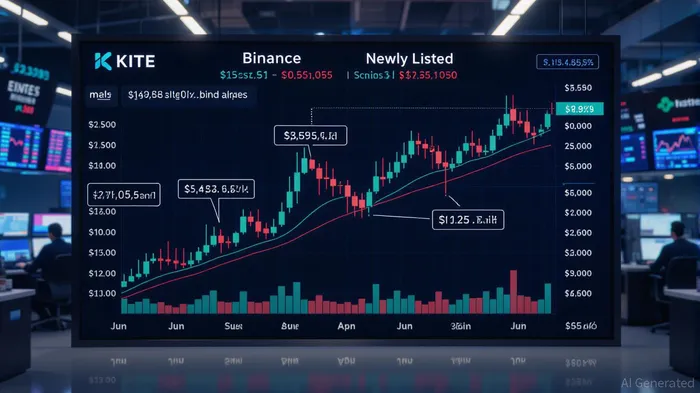
Binance's decision to list KITE with the "Seed Label" underscores its role as a high-risk, high-reward asset. The token debuted on November 3, 2025, at $0.11, only to drop to $0.095 within hours, reflecting immediate volatility typical of early-stage projects, according to a Lookonchain feed. This volatility is amplified by Binance's broader strategy: in the same week, the exchange delisted six low-volume pairs (e.g., INIT/BNB, IOTX/BTC) while introducing new USDCUSDC-- pairs like DASH/USDC and ZEC/USDC to enhance liquidity, as reported by a BitcoinSistemi article. For retail investors, this signals a market prioritizing depth and accessibility, but also one where thin order books can exacerbate price swings.
The KITE listing also leveraged Binance's HODLer Airdrop program, distributing 7.5 million tokens to eligible BNBBNB-- holders-a tactic designed to incentivize participation and liquidity, according to a Cryptoninjas report. Such airdrops often create short-term entry points for retail investors, who may trade tokens immediately post-vesting, further fueling volatility.
On-Chain Risks and Liquidity Concentration
While KITE's first hours saw $263 million in trading volume across Binance, Upbit, and Bithumb, according to a CoinDesk report, on-chain data reveals concerning patterns. A Columbia University study flagged up to 60% of Polymarket's trading activity as wash trading, with interconnected wallet clusters generating artificial volume, according to a CoinTribune report. Though not directly tied to KITE, this highlights systemic risks in altcoin markets, where liquidity can be manipulated to inflate perceived demand.
Post-listing, KITE's wallet activity suggests concentration among large holders. BingX's Xpool staking program, which allows users to earn KITE points before the token generation event, indicates growing retail participation but lacks transparency on institutional ownership, according to a PR Newswire report. For institutional investors, the absence of clear data on major wallet holders raises red flags about liquidity concentration and potential dumping risks.
Regulatory and Macroeconomic Considerations
The SEC's recent suspension of QMMM Holdings due to suspected stock manipulation serves as a cautionary tale for crypto projects like KITE, as reported by a Seeking Alpha article. While KITE's blockchain-based nature complicates direct regulatory action, the broader scrutiny of market integrity could pressure Binance to enforce stricter compliance measures. This is particularly relevant for tokens with Seed Labels, which are often deemed speculative and prone to regulatory intervention.
For macroeconomic context, KITE's market cap of $167 million and fully diluted valuation (FDV) of $929 million suggest a high-growth trajectory, but one contingent on sustained adoption of its AI-powered payments platform, according to the Lookonchain feed. Institutional investors may find entry points attractive if the token demonstrates use-case traction, but macro risks-such as interest rate hikes or sector-wide corrections-could amplify downside volatility.
Strategic Recommendations for Investors
Retail Investors:
- Entry Points: Consider buying dips during the first few weeks post-listing, leveraging Binance's airdrop-driven liquidity. However, set strict stop-loss thresholds given the Seed Label's risk profile.
- Risk Mitigation: Diversify altcoin exposure to avoid overconcentration in high-volatility tokens.
Institutional Investors:
- Due Diligence: Monitor on-chain wallet activity for signs of wash trading or large holder dumping. Tools like Etherscan or blockchain analytics platforms can provide early warnings.
- Leverage Staking: BingX's Xpool program offers a low-risk way to accumulate KITE pre-listing, though post-listing liquidity risks remain.
Conclusion
KITE's Binance listing exemplifies the dual-edged nature of altcoin investing in 2025. While the token's integration with AI-driven payments and Binance's promotional efforts create compelling upside, the risks of liquidity concentration, regulatory scrutiny, and market manipulation cannot be ignored. For both retail and institutional investors, strategic entry requires a balance of technical analysis, on-chain vigilance, and macroeconomic awareness. As Binance continues to reshape its market structure, tokens like KITE will serve as barometers for the broader altcoin ecosystem's resilience and innovation.

Blending traditional trading wisdom with cutting-edge cryptocurrency insights.
Latest Articles
Stay ahead of the market.
Get curated U.S. market news, insights and key dates delivered to your inbox.






Comments
No comments yet