
KITE's Binance Listing: On-Chain Tokenomics and Early-Liquidity Implications for Altcoin Investors


 Aime Summary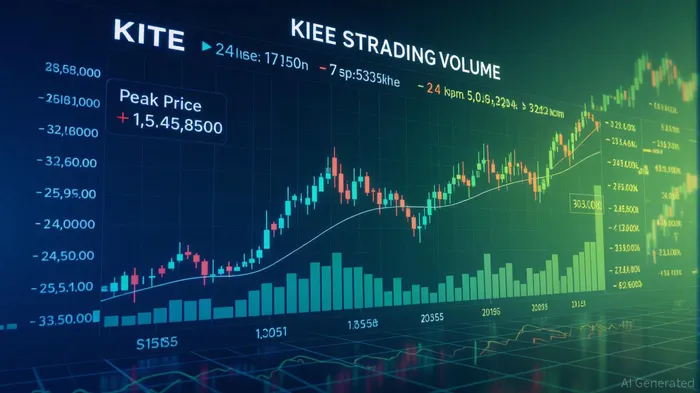
The token's performance in the immediate aftermath of the listing was striking. Within the first two hours of trading, KITEKITE-- achieved a market capitalization of $159 million and a fully diluted valuation (FDV) of $883 million, with combined trading volume across exchanges reaching $263 million, according to a CoinDesk report. By November 6, 2025, the 24-hour trading volume had surged to $292 million, according to Gate.io analysis, while the token's price fluctuated between an all-time high of $0.1333 and a stabilization point near $0.085, as reported in a CoinMarketCap update. This volatility, though typical for new listings, raises questions about the sustainability of such momentum and the role of speculative activity in driving early liquidity.
From a tokenomics perspective, KITE's distribution model appears balanced. According to its whitepaper, 48% of the total supply is allocated to the community, 12% to investors, and 20% to the team and early contributors, as noted in the CoinDesk report. This structure contrasts with the UNI token's post-governance upgrade dynamics, where insider sales of over $200 million in 2025 coincided with a 44% price surge, illustrating the risks of concentrated holder activity, as reported in a Coinotag report. While KITE's on-chain data does not yet reveal specific metrics on holder concentration or active addresses, its initial allocation suggests a lower risk of whale-driven manipulation compared to tokens with more centralized distributions.
However, the marketing allocation of 50 million tokens over six months introduces a potential liquidity risk. If these tokens are released into the market without clear vesting schedules, they could exert downward pressure on the price, particularly if institutional or retail investors perceive oversupply. This scenario mirrors the challenges faced by projects with aggressive token buyback programs, where market psychology often overshadows fundamentals.
The broader implications for altcoin investors are twofold. First, KITE's Seed Label designation on Binance-a framework for early-stage assets-signals the exchange's confidence in the token's utility and adoption potential. This visibility could attract retail and institutional capital, bolstering liquidity in the short term. Second, the token's integration with PayPal's AI-powered payments infrastructure positions it as a candidate for long-term adoption, provided it can demonstrate real-world use cases beyond speculative trading.

In conclusion, KITE's Binance listing represents a calculated blend of strategic tokenomics and market-driven liquidity. While the initial volume surge and balanced distribution model are encouraging, investors must remain vigilant about the risks associated with marketing-driven token releases and the potential for speculative bubbles. As the project matures, on-chain analytics-particularly metrics on holder concentration and active addresses-will become critical for assessing its long-term viability. For now, the KITE token exemplifies the dual-edged nature of innovation in the crypto space: a promise of disruption paired with the inherent volatility of early-stage assets.

Mezclando la sabiduría tradicional del comercio con las perspectivas de vanguardia en el campo de las criptomonedas.
Latest Articles
Stay ahead of the market.
Get curated U.S. market news, insights and key dates delivered to your inbox.


AInvest
PRO
AInvest
PRO



Comments
No comments yet