
Kirkland's Retail Rebranding: Can Strategic Store Closures Revive a Struggling Home Goods Giant?
The home goods retail sector faces relentless pressure from shifting consumer preferences, rising operational costs, and the lingering aftershocks of global supply chain disruptions. Among the companies navigating this landscape is Kirkland's, Inc., which has embarked on a radical transformation plan involving store closures and rebranding initiatives. While these moves aim to streamline operations and boost profitability, they come amid mounting financial risks that could derail the company's recovery. For investors weighing exposure to the sector, Kirkland's strategy presents a high-stakes gamble between potential upside and existential threats.
The Store Closure Strategy: Cutting Fat or Starving Growth?
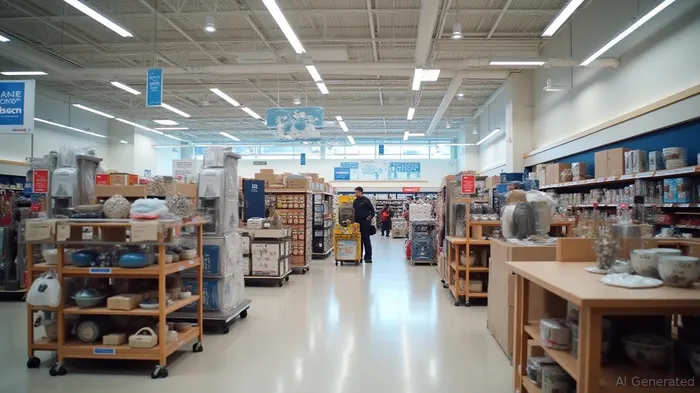
Kirkland's has aggressively reduced its physical footprint over the past year. By the end of fiscal 2024 (February 2025), the company had closed 15 stores, trimming its total locations to 317. In the first quarter of fiscal 2025 alone, it shuttered three stores, further reducing the count to 314 (as of May 2025). Management has framed these closures as part of a “transformation strategy” to eliminate underperforming assets and prioritize stores that align with its new vision: rebranding locations under licensed banners like Bed Bath & Beyond Home and Overstock.
The company's rationale is clear: reduce costs, improve margins, and leverage stronger brand equity. By converting underperforming Kirkland's stores into well-known brands, the company aims to attract new customers and boost foot traffic. However, this pivot carries risks. Closing stores risks alienating loyal customers, while rebranding could dilute the company's own brand identity. Moreover, the 6% of stores identified for closure or conversion (roughly 19 locations) signals further reductions, which could strain liquidity if sales decline further.
Financial Risks: Liquidity Strains and Debt Overhang
Kirkland's financial health raises red flags. Despite a narrowed operating loss of $14.0 million in fiscal 2024 (down from $24.4 million in 2023), the company's cash reserves are perilously low: $3.8 million as of February 2025. Debt burdens loom large, with $43.0 million owed under its revolving credit facility and an additional $17.0 million to Beyond, Inc. (parent of Bed Bath & Beyond).
The company's inventory piled up by 10.5% in fiscal 2024, reflecting aggressive stockpiling or weak demand—a precarious position for a retailer reliant on turnover. Compounding these issues is the “going concern” uncertainty flagged in its financial statements, citing risks from tariff policies, macroeconomic pressures, and non-compliance with debt covenants. While recent moves—such as converting $8.5 million of Beyond debt to equity and securing $8.0 million in additional financing—provide temporary relief, investors must assess whether Kirkland's can secure the remaining $5.0 million pledged by Beyond to fund conversions and working capital.
Opportunities: Rebranding as a Lifeline?
The rebranding strategy could be Kirkland's best shot at survival. By partnering with established brands like Bed Bath & Beyond, it gains access to their customer base and supply chain advantages. The capital-light approach—converting existing stores rather than building new ones—minimizes upfront costs while testing demand for repositioned locations.
Importantly, the shift aligns with a broader industry trend: retailers leveraging licensed brands to reduce risk and tap into proven consumer preferences. If successful, this could stabilize sales and improve margins, particularly in markets where Kirkland's standalone stores have struggled.
Investment Analysis: Proceed with Caution
For investors, the calculus hinges on balancing Kirkland's strategic potential against its financial fragility. Bullish arguments include:
1. Cost discipline: Store closures and rebranding may reduce occupancy and operating expenses, improving EBITDA.
2. Brand synergy: Bed Bath & Beyond's name recognition could drive foot traffic and sales in converted locations.
3. Debt restructuring: Successful negotiations with Beyond and lenders could alleviate liquidity pressures.
Bearish concerns, however, are significant:
1. Sales volatility: E-commerce sales fell 12.9% in fiscal 2024, signaling broader customer disengagement.
2. Execution risk: Rebranding requires seamless transitions, which could falter if inventory or supply chain issues persist.
3. Macro headwinds: The home goods sector remains exposed to inflation, trade tariffs, and shifting consumer spending toward online alternatives.
Verdict: A High-Reward, High-Risk Bets
Kirkland's story is a classic “turnaround play,” offering potential upside for investors willing to bet on a strategic pivot. However, the company's survival depends on executing its rebranding plan flawlessly, securing sufficient funding, and navigating macroeconomic headwinds.
Recommendation:
- Aggressive investors: Consider a small position if the company secures the $5.0 million Beyond financing and shows signs of sales stabilization (e.g., comparable store growth).
- Conservative investors: Wait for clearer evidence of margin improvements, debt reduction, and positive cash flow trends before engaging.
The home goods sector is ripe for consolidation, and Kirkland's gamble could pay off—if it can avoid becoming another casualty of retail's ruthless evolution.

Stay ahead of the market.
Get curated U.S. market news, insights and key dates delivered to your inbox.


AInvest
PRO
AInvest
PRO



Comments
No comments yet