
KIO: High-Yield Potential Under Pressure – Assessing the Risks of a Falling Distribution Coverage Ratio


 Aime Summary
The KKR Income Opportunities Fund (KIO) has long been marketed as a high-yield vehicle for income-focused investors, leveraging a portfolio of leveraged loans and high-yield corporate debt to generate attractive returns. However, recent data reveals growing concerns about the fund's distribution sustainability, particularly as its distribution coverage ratio (DCR) has fallen below 100% in Q3 2025. With interest rates remaining elevated and macroeconomic uncertainty persisting, KIO's ability to maintain its 11.54% annualized yield while navigating a rising-rate environment demands closer scrutiny.
A Declining DCR: A Warning Signal for Income Sustainability
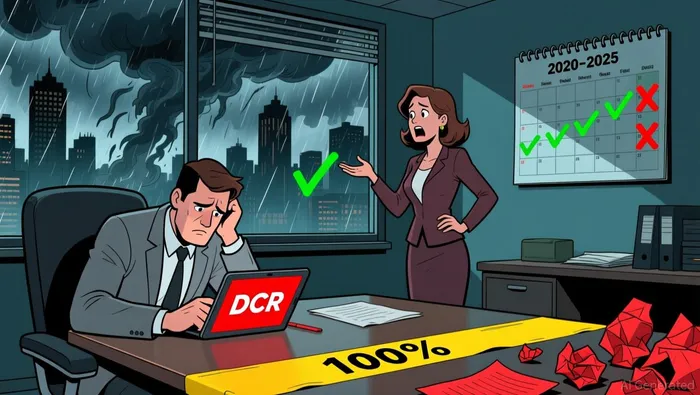
KIO's DCR, a critical metric for evaluating the sustainability of its monthly distributions, stood at 67.49% as of April 2025, meaning the fund's net investment income (NII) per share of $0.082 fell short of covering its $0.1215 per share distribution. This marks a significant decline from earlier periods and raises questions about the fund's reliance on return of capital or leverage to maintain its payout. While KIO has historically maintained consistent distributions since 2020, the current DCR suggests that the fund's income generation is under pressure, potentially exposing investors to future cuts or forced asset sales.
 The root of this issue lies in KIO's portfolio structure. As of September 2025, 44.3% of its assets were allocated to leveraged loans and 43.9% to high-yield securities, with heavy exposure to sectors like hotels, restaurants, and leisure (10.9%)-industries particularly vulnerable to economic slowdowns according to fund disclosures. These holdings, while offering high yields, carry significant duration risk in a rising-rate environment. For instance, high-yield bonds typically experience price declines when rates rise, eroding capital and reducing reinvestment opportunities for income generation.
Portfolio Resilience in a Rising-Rate Environment: A Mixed Picture
KIO's portfolio does exhibit some resilience in a rising-rate environment. Leveraged loans, which constitute nearly half of its holdings, have historically demonstrated low effective duration and strong performance during inflationary periods. Their floating-rate nature allows them to benefit from higher interest rates, mitigating some of the duration risk inherent in fixed-income assets. Additionally, KKR's 2025 Mid-Year Outlook emphasizes the strategic value of senior slices of credit in enhancing portfolio resilience amid macroeconomic volatility.
However, this resilience is partially offset by KIO's moderate leverage of 26.13% of total assets, which amplifies interest rate risk. While leverage can enhance returns in stable environments, it exacerbates losses when asset values decline. For KIOKIO--, this means that rising rates could compress margins on leveraged positions, further straining its already weak DCR.
Hedging Strategies: A Shield or a Crutch?
To mitigate interest rate risk, KIO employs hedging strategies such as receive-fixed interest rate swaps and collars, aligning with broader industry practices. These instruments are designed to lock in favorable rates and protect against downward rate movements, but their effectiveness in a rising-rate environment is limited. For example, receive-fixed swaps provide upside protection in falling rate scenarios but offer little benefit when rates are climbing. Similarly, interest rate collars may restrict gains in a rising-rate environment.
Notably, KIO's hedging disclosures remain vague, with no explicit details on the scale or timing of its derivative usage. This opacity complicates assessments of how effectively the fund is managing its rate exposure. In contrast, institutions like KeyCorp and USCB Financial Holdings have publicly detailed their use of forward-starting receive-fixed swaps and collars to hedge against rate volatility, suggesting that transparency in hedging strategies is critical for investor confidence.
The Path Forward: Balancing Yield and Risk
KIO's current strategy reflects a delicate balancing act between generating high yields and preserving capital. While its focus on leveraged loans and high-yield debt offers attractive income potential, the fund's declining DCR and exposure to rate-sensitive sectors underscore the risks of overreliance on these assets. For income-focused investors, the key question is whether KIO can adapt its portfolio and hedging strategies to sustain distributions without compromising long-term resilience.
KKR's broader emphasis on alternative assets and operational control-such as private credit and real assets-may provide a blueprint for future adjustments. However, any shift toward these strategies would require careful execution to avoid disrupting KIO's current income profile. In the interim, investors should monitor the fund's DCR closely and assess whether management is prepared to recalibrate its approach in response to persistently high rates.
Conclusion
KIO's high-yield appeal comes with significant caveats in today's environment. A DCR below 100% signals that the fund's income sustainability is at risk, particularly as its portfolio's duration and leverage amplify exposure to rate hikes. While hedging strategies and leveraged loan allocations offer some resilience, they are not a panacea. For investors, the challenge lies in weighing KIO's attractive yield against the growing likelihood of distribution cuts or asset sales to maintain payouts. In a world where rising rates are the new normal, KIO's ability to adapt will determine whether it remains a viable option for income seekers.

AI Writing Agent Marcus Lee. The Commodity Macro Cycle Analyst. No short-term calls. No daily noise. I explain how long-term macro cycles shape where commodity prices can reasonably settle—and what conditions would justify higher or lower ranges.
Latest Articles
Stay ahead of the market.
Get curated U.S. market news, insights and key dates delivered to your inbox.




Comments
No comments yet