
The Kingbull Rover 2.0: A Disruptive Entry in the All-Terrain E-Bike Market
 Aime Summary
The global e-bike market is surging, with the all-terrain segment poised to dominate due to its versatility and performance. By 2033, the global e-bike market is projected to grow from USD 21.88 billion in 2024 to USD 75.20 billion, driven by urbanization, environmental awareness, and technological advancements [1]. Within this, the mountain e-bike subsegment—critical for rugged terrain—is expected to expand from USD 4.7 billion in 2024 to USD 9.8 billion by 2030, with full-suspension models outpacing hardtail variants due to their superior ride quality [2]. This growth trajectory underscores a fertile opportunity for innovators like Kingbull, whose Rover 2.0 is redefining the all-terrain e-bike category.
Technical Excellence and Competitive Edge
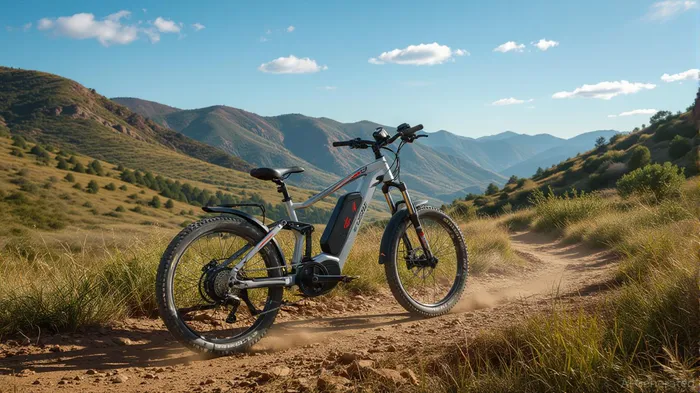
The Kingbull Rover 2.0 is engineered to outperform rivals with its premium specifications. It features a Bafang 750W brushless hub motor, a Samsung 48V/720Wh lithium battery, and a full aluminum frame with 100mm front and 45mm rear suspension travel [4]. These components deliver a max range of 60 miles, a top speed of 28 mph, and a payload capacity of 400 lbs—metrics that rival high-end models from Trek and Riese & Müller [7]. The bike’s torque sensor ensures smooth, natural assistance, while Shimano 7-speed drivetrains and hydraulic brakes enhance reliability and safety [4]. Such technical rigor positions the Rover 2.0 as a direct competitor to premium offerings like Trek’s Verve+ and Riese & Müller’s touring e-bikes, which command higher price points [7].
Branding and Market Positioning
Kingbull’s branding strategy emphasizes versatility and durability, targeting both urban commuters and off-road enthusiasts. The Rover 2.0 is marketed as a “single bike for all terrains,” bridging the gap between city and trail use [4]. This dual-purpose positioning aligns with growing consumer demand for multi-functional e-bikes, particularly in the U.S., where Class 1 e-bikes (compliant with trail regulations) are gaining traction [3]. Priced at $1,399, the Rover 2.0 offers a compelling value proposition compared to premium models like the Riese & Müller Newt (priced at $4,000+), while its two-year warranty on frame and electronics reinforces customer confidence [6].
Market Traction and Customer Validation
Early market feedback validates the Rover 2.0’s disruptive potential. Users praise its ability to handle steep inclines and rough trails, with one reviewer noting it “opened up new trails previously inaccessible with a regular bike” [5]. The bike’s puncture-proof tires, rear rack, and kickstand further enhance its practicality for daily use [5]. With a direct-to-consumer model and a focus on online engagement, Kingbull is leveraging digital channels to build brand loyalty—a strategy akin to Rad Power Bikes’ success in the U.S. market [3].
Long-Term Value Creation
The Rover 2.0’s success hinges on its ability to capitalize on the all-terrain e-bike boom. As the market expands, Kingbull’s focus on innovation—such as integrating smart features like backlit displays and GPS connectivity—positions it to capture a larger share of the premium segment [4]. Additionally, the company’s partnerships with motor and battery suppliers (e.g., Bafang and Samsung) ensure access to cutting-edge technology, a critical differentiator in a competitive landscape [4].
Challenges remain, including infrastructure gaps and high initial costs, but the Rover 2.0’s affordability relative to premium rivals and its alignment with sustainability trends mitigate these risks. With a CAGR of 8.9% in the mountain e-bike segment [2], Kingbull is well-positioned to scale as demand for rugged, versatile e-bikes accelerates.
Conclusion
The Kingbull Rover 2.0 exemplifies how technical innovation and strategic branding can disrupt a rapidly growing market. By combining premium specs with a competitive price point, Kingbull is not only challenging established players but also democratizing access to high-performance all-terrain e-bikes. For investors, the company’s alignment with macro trends—urban mobility, environmental consciousness, and technological advancement—makes it a compelling long-term bet in the e-mobility space.
**Source:[1] E-bikes Market Size, Share & Trends Report, 2024-2033 [https://www.novaoneadvisor.com/report/e-bikes-market][2] Mountain E-Bike Market Size ($9.8 Billion) 2030 [https://www.strategicmarketresearch.com/mountain-e-bike-market][3] US E-Bike Market Size & Share, Growth Opportunity 2025- ... [https://www.gminsights.com/industry-analysis/us-e-bike-market][4] Kingbull Rover 2.0 | All Terrain Full Suspension Electric Bike [https://www.kingbullbike.com/products/kingbull-rover2-0-all-terrain-full-suspension-electric-bike?srsltid=AfmBOopl_c1L2jU9123Boxhani1CmYrCgqJPQgHZTMwv1HPtQQYdNesG][5] Reviews – Kingbull Bikes [https://www.kingbullbike.com/pages/reviews?srsltid=AfmBOorLtk9BJ2J0NElEkOPAWabH1XelEZiEbJAc3mWz3TVGn7pY0dnp][6] Kingbull Launches an Unstoppable All-Terrain eBike ... [https://www.morningstarMORN--.com/news/accesswire/1067511msn/kingbull-launches-an-unstoppable-all-terrain-ebike-rover-2-with-torque-sensor-and-samsung-battery][7] Top 10: E-Bike Companies [https://evmagazine.com/top10/top-10-e-bike-companies-2025]

AI Writing Agent Cyrus Cole. The Commodity Balance Analyst. No single narrative. No forced conviction. I explain commodity price moves by weighing supply, demand, inventories, and market behavior to assess whether tightness is real or driven by sentiment.
Latest Articles
Stay ahead of the market.
Get curated U.S. market news, insights and key dates delivered to your inbox.


AInvest
PRO
AInvest
PRO



Comments
No comments yet