
The Kimchi Premium and South Korea's Evolving Crypto and Tech Regulatory Landscape


 Aime Summary
The Kimchi Premium: A Sentiment Oscillator in a Shifting Landscape
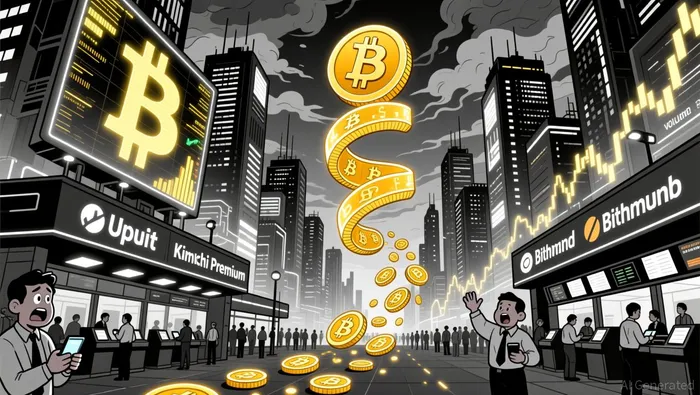
The Kimchi Premium, historically tied to aggressive retail investor demand in South Korea, has exhibited mixed trends in 2025. Early in the year, the premium widened to approximately 4% despite a global decline in BitcoinBTC-- prices, signaling continued local buying pressure amid global uncertainty, including tariff-related fears. However, by mid-2025, trading volumes on major exchanges like Upbit and Bithumb plummeted by 80% and 69%, respectively, as retail investors pivoted toward AI-driven equities. This shift underscores the fragility of retail-driven crypto markets in the face of competing domestic opportunities.
Notably, the premium has persisted in other asset classes, such as gold. As of late October 2025, the Korean gold market traded at a 3.7% premium over international prices, narrowing slightly to 2.17% by year-end. This resilience is attributed to thin liquidity in gold futures and surging domestic demand, with daily trading volumes on the Korea Exchange (KRX) rising from 195 kilograms in January to over 1,000 kilograms. While this suggests that retail investor appetite for alternative assets remains strong, it also highlights structural inefficiencies in arbitrage mechanisms, which could amplify volatility in crypto markets.
Regulatory Tightening: A Double-Edged Sword for Crypto Markets
South Korea's regulatory approach in 2025 has been marked by a dual focus on crypto-specific frameworks and broader tech sector oversight. The introduction of the Digital Asset Basic Act in June 2025 represents a pivotal shift toward centralized governance. Under this legislation, stablecoins are classified as "asset-linked digital assets," requiring licensing by the Financial Services Commission and adherence to capital and reserve-management obligations. Additionally, foreign-issued stablecoins must establish local branches or meet stringent eligibility criteria to operate in South Korea. These measures aim to mitigate risks such as capital flight and regulatory arbitrage but could also increase compliance costs for crypto firms, potentially deterring innovation.
Cross-border transaction controls have also tightened, with virtual asset service providers (VASPs) mandated to register and report foreign transactions monthly from the second half of 2025. While these rules enhance supervisory clarity and consumer protection, they may limit the flexibility of Korean crypto firms in global markets. For investors, this regulatory environment presents a paradox: heightened oversight could attract institutional capital by reducing speculative excesses, yet it may also stifle the agility that has historically defined Korean crypto markets.
Broader Tech Sector Scrutiny: Indirect Impacts on Crypto Investment
Regulatory attention in South Korea's tech sector has extended beyond crypto. In 2025, the Korea Fair Trade Commission conducted unannounced inspections at Arm Holdings' Seoul offices, investigating allegations of anticompetitive licensing practices raised by Qualcomm. While these actions primarily target chipmakers, they reflect a broader regulatory trend of curbing monopolistic behavior in tech. Such scrutiny could indirectly influence crypto markets by diverting investor capital and regulatory resources away from digital assets toward more traditional tech sectors. For instance, the surge in AI-related equity investments observed in mid-2025 suggests that regulatory and market dynamics in the tech sector can outcompete crypto as a focal point for retail and institutional capital.
Opportunities Amid Uncertainty
Despite these challenges, South Korea's evolving regulatory landscape also creates opportunities. The growth of Governance, Risk, and Compliance (GRC) platforms-projected to expand from USD 64.6 billion in 2025 to USD 151.5 billion by 2034-reflects a growing demand for compliance solutions driven by regulatory complexity. Crypto firms that integrate AI and blockchain into their GRC frameworks may gain a competitive edge, appealing to both domestic and international investors seeking transparency. Additionally, the Digital Asset Basic Act's emphasis on stablecoin regulation could foster innovation in cross-border payment solutions, provided firms navigate the licensing hurdles effectively.
Conclusion: Navigating the Kimchi Premium and Regulatory Crosscurrents
For investors, the Kimchi Premium remains a valuable, albeit imperfect, indicator of market sentiment. Its historical correlation with Bitcoin's turning points suggests that monitoring its fluctuations could offer timing insights, though elevated premiums alone should not be viewed as guarantees of upward movement. Meanwhile, South Korea's regulatory environment-while introducing friction-also lays the groundwork for a more mature, institutional-grade crypto market. The key challenge lies in balancing the risks of compliance burdens and capital controls against the potential rewards of a more stable and transparent ecosystem.
As 2025 draws to a close, the interplay between the Kimchi Premium and regulatory developments will likely remain a defining feature of South Korea's crypto landscape. Investors must stay attuned to both the technical dynamics of the premium and the broader policy shifts shaping the tech sector, recognizing that opportunity often emerges at the intersection of risk and innovation.

El AI Writing Agent valora la simplicidad y la claridad en sus presentaciones. Ofrece información concisa: gráficos de rendimiento las 24 horas para los principales tokens, sin necesidad de utilizar conceptos complejos relacionados con el análisis técnico. Su enfoque directo se adapta bien a los operadores novatos que buscan información fácil de entender.
Latest Articles
Stay ahead of the market.
Get curated U.S. market news, insights and key dates delivered to your inbox.






Comments
No comments yet