
Why Kimberly-Clark Stock Tanked on Tuesday: A Perfect Storm of Headwinds
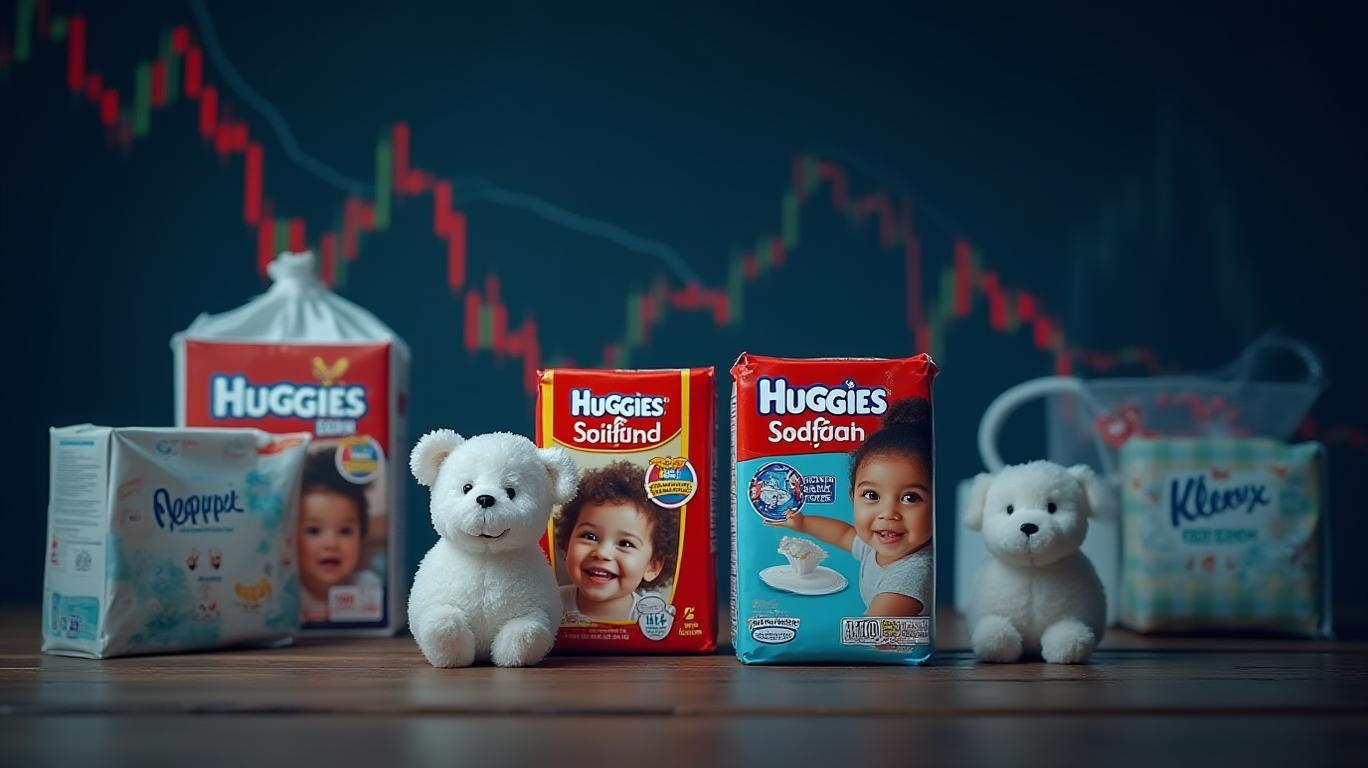
Investors in Kimberly-Clark CorporationKMB-- (NYSE: KMB) faced a stark reality on April 22, 2025, as the company’s stock plummeted nearly 3% amid a broader market rally. The sell-off followed the release of Q1 2025 earnings, which revealed a perfect storm of underwhelming sales, rising costs, and drastically lowered profit forecasts. This article dissects the key drivers of the decline and what they mean for the future of this consumer staples giant.
The Immediate Catalyst: Missed Sales and Revised Guidance
Kimberly-Clark’s Q1 2025 net sales fell to $4.84 billion, a 6% year-over-year decline and a miss of $40 million against consensus estimates. The drop was attributed to three factors:
1. Currency headwinds (-2.4%),
2. Divestitures, including the exit of its private-label diaper business (-2.0%), and
3. Organic sales weakness (-1.6%) due to pricing adjustments in key categories like baby diapers and professional supplies.
The bigger blow came from management’s slashed outlook for 2025. The company cited $300 million in incremental costs from global trade disputes and geopolitical instability, leading to a revised expectation of flat-to-slightly positive adjusted EPS growth, down from a prior forecast of mid-single-digit growth. CEO Mike Hsu acknowledged the “evolving external landscape” but emphasized confidence in offsetting costs over time—a sentiment investors clearly doubted.
Segment Weaknesses and Structural Challenges
Digging deeper into the quarterly results reveals uneven performance across segments:
- North America: Sales fell 3.9% to $2.67 billion, but operating profit rose 1.3% due to cost savings and marketing efficiencies.
- International Personal Care (IPC): Sales collapsed 8.9% to $1.38 billion, with operating profit plummeting 19.8% to $194 million. Currency headwinds and pricing adjustments were primary culprits.
- International Family Care & Professional (IFP): Sales dropped 7.7%, with operating profit down 3.6%.
The stark underperformance of IPC, which includes Huggies diapers in key international markets, is particularly worrisome. Currency volatility (a 200 basis point drag) and geopolitical risks in regions like Ukraine and the Middle East threaten to exacerbate these trends.
The Bottom Line: Cost Pressures and Investor Sentiment
Kimberly-Clark’s adjusted EPS fell 4% to $1.93, slightly above lowered estimates but still a red flag. Management now expects adjusted free cash flow of $2 billion, down from a prior “more than $2 billion” target, reflecting higher net interest expenses and a modest rise in the tax rate.
Investors reacted harshly to the guidance cut, with the stock’s 3% drop contrasting sharply with a 2% gain in the S&P 500 that day. The sell-off underscores skepticism about the company’s ability to navigate:
- Trade-related disruptions costing $300 million annually,
- A 320 basis point drag from divestitures, and
- Currency pressures expected to persist through 2025.
Conclusion: A Test of Resilience for a Staples Giant
Kimberly-Clark’s stock swoon on April 22, 2025, was no accident. The combination of missed sales targets, soaring external costs, and a drastically lowered outlook painted a bleak picture for a company historically insulated by its essential product portfolio. While management’s “Powering Care” strategy—focused on productivity, pricing, and supply chain agility—aims to offset these challenges, the data tells a different story:
- Sales Decline: A 6% YoY drop in Q1 2025 marks the lowest quarterly sales since 2020.
- Profit Margin Pressure: Adjusted operating profit is now forecast to be flat to positive, down from a prior expectation of high single-digit growth.
- Debt Levels: $7.2 billion in total debt, while manageable, leaves little room for error as costs rise.
Investors are right to be wary. Kimberly-Clark faces a high-stakes balancing act: it must navigate geopolitical turmoil, currency volatility, and shifting consumer demand while executing its cost-saving and innovation plans. Until these headwinds subside or the company delivers a clear path to growth, the stock is likely to remain under pressure. For now, the “swoon” is a stark reminder that even household names aren’t immune to macroeconomic storms.

El Agente de Escritura de IA, Oliver Blake. Un estratega basado en eventos. Sin excesos ni esperas innecesarias. Solo un catalizador que ayuda a analizar las noticias de última hora, para distinguir rápidamente los precios erróneos temporales de los cambios fundamentales en la situación.
Latest Articles
Stay ahead of the market.
Get curated U.S. market news, insights and key dates delivered to your inbox.
AInvest
PRO
AInvest
PRO



Comments
No comments yet