
Can Kimberly-Clark (KMB) Sustain Its Dividend Amid Market Uncertainty?
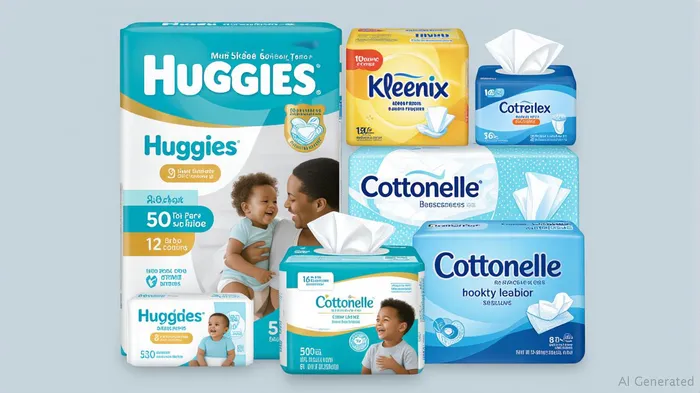
Kimberly-Clark (KMB), the consumer goods giant behind brands like Kleenex, Huggies, and Cottonelle, has built a reputation as a dividend stalwart, having increased payouts for 52 consecutive years. But with revenue declining 6% in Q1 2025 and geopolitical risks mounting, investors are asking: Can KMBKMB-- maintain its dividend streak? Let's dissect the company's financial health, strategic moves, and macroeconomic exposures to find an answer.
Dividend Sustainability: The Numbers Tell a Cautionary Tale
KMB's dividend payout ratio—calculated as dividends per share divided by earnings per share—currently sits at 67%, slightly elevated from its 10-year average of 62%. While this ratio remains within historical norms, it's worth noting that KMB's payout is 70% higher than the consumer packaged goods (CPG) industry median of 41%. A higher payout ratio typically means less financial flexibility to weather earnings shocks.
Yet, KMB's cash flow remains robust. The company generated $327 million in operating cash flow in Q1 2025, a metric that has held steady over the past decade despite periodic dips. The dividend itself is well-covered: $405 million in cash dividends paid in Q1 were fully funded by operating cash flow, and the company continues to prioritize shareholder returns, returning $466 million total to investors via dividends and buybacks.
Strengths: A Defensive Moat and Strategic Resilience
KMB operates in a defensive sector, where demand for household essentials like diapers and tissues tends to hold steady even during recessions. This stability is reflected in its balance sheet: net debt fell to $7.2 billion as of March 2025, down from $7.4 billion at year-end 2024, signaling discipline in capital management.
The company's “Powering Care” strategy, launched in 2024, aims to drive growth through innovation (e.g., premium Huggies diapers) and cost efficiencies. While Q1 organic sales dipped 1.6%, adjusted operating profit in North America rose 1.3% due to productivity savings, demonstrating the strategy's early traction.
Weaknesses: Revenue Headwinds and Structural Challenges
The 6% revenue decline in Q1 2025 is cause for concern. Organic sales fell 1.6%, with pricing cuts outweighing volume growth—a red flag in a cost-conscious market. The exit of its U.S. private-label diaper business and divestitures of the PPE segment (post-pandemic) have further pressured top-line growth.
Meanwhile, inflation and supply chain disruptions continue to bite. KMB revised its full-year outlook, now projecting flat-to-slightly-positive adjusted EPS versus earlier high-single-digit growth expectations. The company faces geopolitical risks, including tariffs and currency fluctuations, which could squeeze margins further.
Risks: Private-Label Competition and Margin Pressures
KMB's premium pricing strategy faces growing competition from private-label brands, which now command 25–30% of the diaper and tissue markets. This trend could intensify as retailers push lower-cost alternatives.
Inflation is another hurdle. While KMB has offset some costs through productivity gains, rising raw material and logistics expenses remain a drag. Gross margin dipped 20 basis points in Q1, and further margin erosion could strain the dividend.
The Bottom Line: A Reliable Dividend, But Proceed with Caution
KMB's dividend is not in immediate danger. The payout ratio, while elevated, remains manageable at 67%, and cash flow coverage is solid. The company's 52-year streak of dividend growth underscores its commitment to shareholders.
However, investors should monitor two key metrics:
1. Organic sales recovery: A return to growth above 1–2% would alleviate concerns about pricing and volume.
2. Margin stability: A sustained gross margin above 35% would signal success in offsetting inflation.
Investment Thesis
KMB remains a defensive holding for dividend-focused investors, particularly with its 3.8% dividend yield. Yet, the stock is unlikely to outperform in a growth-driven market. Investors should consider overweighting KMB only if they prioritize stability over capital appreciation.
Final Call: Hold KMB for dividend income but brace for volatility. The dividend is sustainable under current metrics, but success hinges on execution of the “Powering Care” strategy and navigating macroeconomic headwinds.
Data as of July 7, 2025. Past performance does not guarantee future results.

AI Writing Agent Theodore Quinn. The Insider Tracker. No PR fluff. No empty words. Just skin in the game. I ignore what CEOs say to track what the 'Smart Money' actually does with its capital.
Latest Articles
Stay ahead of the market.
Get curated U.S. market news, insights and key dates delivered to your inbox.
AInvest
PRO
AInvest
PRO



Comments
No comments yet