
Killer Bees — Market Brief January 22, 2026
The Sting
Three weeks into his tenure, Greg Abel filed paperwork signaling Berkshire might dump its entire Kraft HeinzKHC-- stake. Meanwhile, the Supreme Court spent two hours yesterday questioning whether the President can fire a Fed governor via Truth Social post. Both stories are about the same thing: what happens when the rules that governed the last era no longer apply.
Abel's First Cut: The KraftKHC-- Unwind
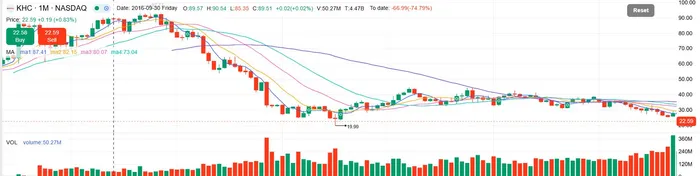
Here's what happened: KraftKHC-- HeinzKHC-- filed a prospectus Tuesday registering the potential sale of all 325 million Berkshire-owned shares—27.5% of the company. KHCKHC-- dropped 5% after-hours to $22.59, then closed Wednesday around $22.34. Volume hit 16.85 million shares, well above the 14.56 million average. The stock is now 65% below its February 2017 peak of $65.
What most coverage missed: This isn't just about one bad investment. Analysts at CFRA are already wondering if this signals a "comprehensive review of Berkshire's varied holdings." The Buffett doctrine was famously "hold forever" the man rarely sold anything, even when he soured on a business. But Abel became CEO on January 1st. Three weeks later, he's filing paperwork to exit a $7.3 billion position. That's a philosophical shift, not just a portfolio rebalancing.
The timing is brutal for Kraft Heinz specifically. The company just hired a new CEO, Steve Cahillane, to execute a planned split into two companies one for sauces and spreads, one for Oscar Mayer and Lunchables. Buffett publicly opposed that split. Rather than stick around for a breakup he never wanted, Abel is apparently heading for the exits.
The price action tells its own story. KHC hit its all-time low of $19.99 in March 2020. It's now trading at $22.34 just 12% above the COVID floor. Berkshire took a $3.76 billion write-down last summer, but that's book value pain. The market is telling you this stock was dead money for years and the only question is how much pain Berkshire will crystallize on the way out. The 27.5% stake creates a serious overhang problem. You can't dump 325 million shares without moving the market.
The Fed's Independence Test
What happened: The Supreme Court heard oral arguments Wednesday over Trump's attempt to fire Fed Governor Lisa Cook, based on allegations she committed mortgage fraud on applications in 2021. No president has fired a Fed governor in the central bank's 112-year history.
Here's where it gets interesting: Both conservative and liberal justices expressed serious skepticism of the administration's position. Justice Kavanaugh often a swing vote warned that Trump's approach of "no judicial review, no process, nothing, you're done" could incentivize future presidents to dig up "trivial or inconsequential or old allegations" just to remove disfavored officials. Justice Barrett questioned why the administration couldn't simply give Cook a hearing: "It just wouldn't be that big of a deal, it seems."
The unspoken context: If Trump succeeds in removing Cook, he could appoint a replacement and gain a majority on the Fed board. The case nominally concerns mortgage paperwork, but everyone in that courtroom understood it's really about who controls interest rate policy. Trump wants rates lower he said so at Davos the same day. The Fed has signaled it may hold rates steady over inflation concerns.
All three living former Fed chairs Greenspan, Bernanke, and Yellen signed a brief opposing Cook's removal. Bernanke was in the courtroom. That's not just institutional memory; that's institutional resistance making itself visible.
Chart of the Week: The Kraft Collapse
From merger darling to "hold forever" regret
The relative underperformance is staggering. While the S&P 500 nearly tripled, Kraft Heinz gave back two-thirds of its value. Buffett himself acknowledged the moat around Kraft's brands "wasn't as strong as he thought" as consumers shifted to store brands and away from processed foods. The merger thesis that putting Kraft and Heinz together would create pricing power and cost synergies simply didn't work.
This chart is why Abel's willingness to file exit paperwork matters. Buffett's loyalty to mistakes became its own kind of portfolio drag. The question is whether Abel brings operator discipline to the investment portfolio, or whether "hold forever" was the whole point.
The Hive Mind
FinTwit is having a field day with the Kraft filing lots of jokes about "buying the dip on ketchup" and speculation about what else Abel might sell. The more interesting discourse is around Fed independence. Institutional investors aren't treating the Cook case as a buying opportunity or a risk event. They're treating it as settled that she keeps her job (for now) and the real question is the Powell investigation. Reddit's r/wallstreetbets barely noticed either story they're still focused on AI plays and ASTS. That disconnect between institutional anxiety and retail indifference is its own kind of signal.
Two stories, one theme: succession. Abel inheriting Buffett's mistakes. The Fed confronting a president who wants to inherit its rate-setting authority. In both cases, the question isn't what changes it's whether the old rules still apply at all. What does "independent" mean when the President can post a firing on social media? What does "hold forever" mean when the new CEO files exit paperwork in week three?

Senior strategist with 20+ years experience delivering data-driven research, ETF and stock analysis, and practical investment ideas.
Latest Articles
Stay ahead of the market.
Get curated U.S. market news, insights and key dates delivered to your inbox.
AInvest
PRO
AInvest
PRO



Comments
No comments yet