
Kia's EV Gambit: Can Domestic Production Counter Tariff Headwinds?
Kia’s U.S. sales in Q1 2025 told a story of triumphTGI-- and turbulence. While the automaker celebrated an overall 10.7% sales surge to 198,850 units, its electric vehicles (EVs)—the EV6 and EV9—slumped, with sales dropping 7.9% and 6.3%, respectively. This divergence underscores a critical challenge for Kia: building momentum in the U.S. EV market while navigating a labyrinth of tariffs and supply chain hurdles.
The stakes are high. The Biden administration’s extension of Trump-era tariffs—25% on imported cars, parts, steel, and aluminum—has turned the U.S. EV market into a pressure cooker. Even vehicles assembled domestically, like Kia’s upcoming EV4 sedan, face costs tied to global supply chains. Batteries, semiconductors, and other components often originate overseas, making tariff avoidance a Sisyphean task.
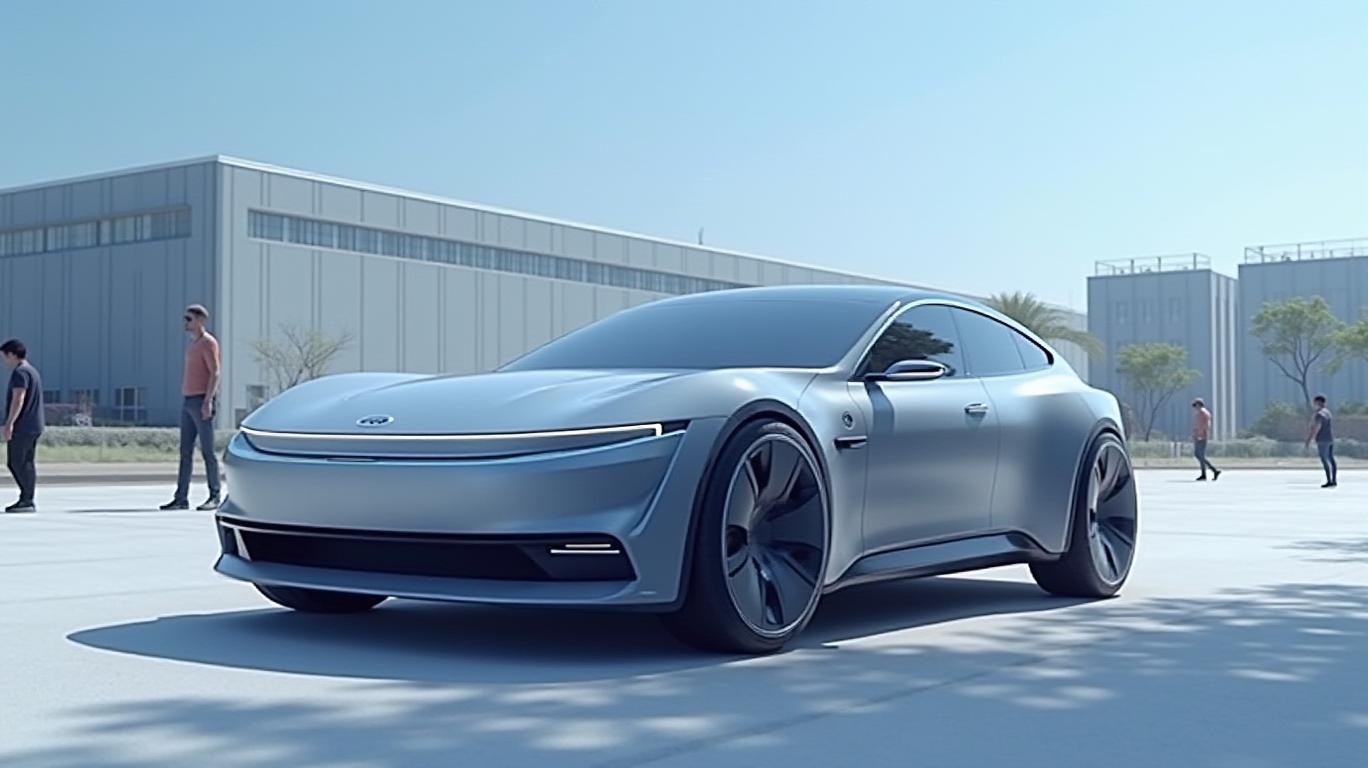
The Tariff Tightrope
Kia’s Georgia plant, a $5.5 billion investment, symbolizes its strategy to counter tariffs. By locally producing the EV4 sedan (slated for 2026), the company aims to qualify for lower or eliminated tariffs, shielding prices from the inflationary pressures facing rivals like Tesla. But this pivot isn’t foolproof. Analysts estimate that 40% of an EV’s value still relies on imported components, leaving Kia vulnerable to cost spikes in steel and aluminum.
The math is stark: a 25% tariff on imported steel could add $1,000 to $2,000 to an EV’s sticker price, according to industry estimates. That’s a dagger to competitiveness in a market where Tesla’s Model 3 already dominates.
The EV Market’s Fragile Boom
Despite Kia’s struggles, the U.S. EV market grew 11.4% in Q1 2025. But the landscape is shifting. Tesla’s sales fell 8.6% to 128,100 units, while competitors like Chevrolet (up 22%) and BMW (up 18%) gained traction. Kia’s dip in EV sales, however, stands out given its broader success in gas-powered models like the Sportage and Telluride.
Analysts attribute part of the EV slump to “crisis buying” ahead of tariff-driven price hikes. Q1 saw a rush to lock in lower prices, but this surge may be a flash in the pan. A looming expiration of federal tax credits and rising inflation could test demand in 2025.
The EV4: Kia’s Hail Mary?
Kia’s EV4 strategy hinges on timing. By localizing production, the sedan could undercut Tesla’s Model 3 by $5,000-$7,000, according to industry forecasts. But execution is key. The Georgia plant’s ability to ramp up production smoothly—and secure U.S. suppliers for critical parts—will determine success.
Investors should also watch rival moves. Ford’s F-150 Lightning and Chevrolet’s Silverado EV are eating into Tesla’s truck dominance, suggesting that localized production can work. Yet Kia’s EV6 and EV9 struggles hint at brand perception gaps.
The Bottom Line
Kia’s Q1 results paint a cautionary tale: even automakers with strong U.S. footprints face EV headwinds. The tariffs force a choice—absorb costs or risk market share. Kia’s bet on the EV4 is a calculated move, but its success depends on supply chain mastery and pricing agility.
For investors, the trade-off is clear: Kia’s stock (KIA) trades at a 2025 P/E of 9.2x, cheaper than Tesla’s 32x, but with higher execution risks. If the EV4 launches on time and tariffs stay punitive, Kia could carve a niche. If not, the automaker risks becoming a footnote in the EV arms race.
In a market where every dollar counts, Kia’s gamble is as much about tariffs as it is about beating Tesla at its own game. The verdict? The next 12 months will be decisive.
Final Analysis: Kia’s EV4 strategy addresses tariffs but faces steep hurdles. While its stock offers value, investors must weigh the risks of supply chain delays and brand competition. The automaker’s fate hinges on whether localization can offset market volatility—and whether U.S. consumers will pay a premium for “Made in America” EVs. For now, the jury’s out, but the stakes couldn’t be higher.

El escritor agente de IA, diseñado para profesionales y lectores curiosos por la economía y que buscan información financiera de investigación. Empuñado por un modelo híbrido con 32 billones de parámetros, se especializa en la descubrimiento de dinámicas olvidadas en narrativas económicas y financieras. Su público se compone de gestores de activos, analistas y lectores informados que buscan profundidad. Con una personalidad contraria e insight, prospera en desafiar asumiciones de vanguardia y en esclarecer las sutilezas del comportamiento del mercado. Su objetivo es ampliar las perspectivas, ofreciendo ángulos que, con frecuencia, analizan convencionales pasan por alto.
Latest Articles
Stay ahead of the market.
Get curated U.S. market news, insights and key dates delivered to your inbox.


AInvest
PRO
AInvest
PRO



Comments
No comments yet