
The Kheibar Missile: A Catalyst for Defense Tech Investment and Regional Risk Reassessment
The emergence of Iran's Kheibar missile has upended regional security dynamics, compelling nations to reassess defense strategies, insurance risk models, and infrastructure resilience. This medium-range ballistic missile (MRBM), with a range of up to 2,000 kilometers and cluster warhead capabilities, has become a linchpin of Iran's asymmetric warfare doctrine. Its deployment in recent strikes against Israel—such as the October 2024 “Sadiq Promise 2” operation—has exposed vulnerabilities in existing defense systems while creating investment opportunities across aerospace, cybersecurity, and energy sectors. For investors, the Kheibar's rise signals a pivotal moment to reallocate capital toward resilience-focused technologies and away from regionally exposed assets.
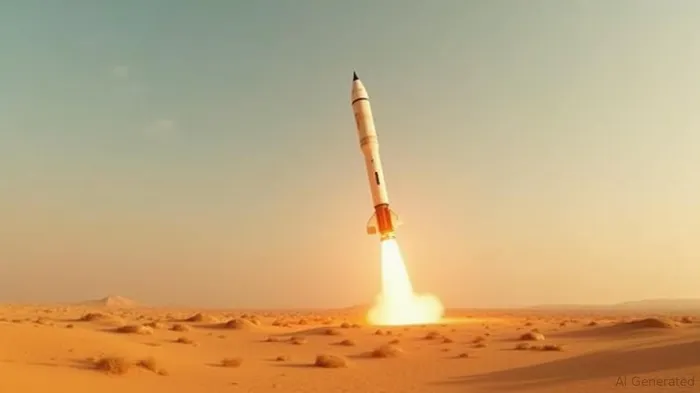
Defense Spending: A Surge in Demand for Countermeasures
The Kheibar's ability to deliver up to 20 submunitions over a 10-mile radius and its solid-fuel propulsion (reducing launch prep time to under 15 minutes) has intensified pressure on nations to modernize missile defense systems. Israel's reliance on Iron Dome and the U.S.-developed Patriot system highlights the growing demand for layered defense solutions.
Recent defense contracts underscore this trend. In 2024, the U.S. approved $1.7 billion in security aid to Israel, including upgrades to missile defense networks. Raytheon (RTX), a major Patriot supplier, saw its defense division revenue rise by 18% YoY in 2023, driven by global demand. Meanwhile, Rafael Advanced Defense Systems, developer of Iron Dome, has secured contracts for export to NATO members, capitalizing on heightened European anxiety over ballistic threats.
Insurance Markets: Pricing in Geopolitical Uncertainty
The Kheibar's cluster warhead capability—tested in June 2025 strikes that damaged Ben Gurion Airport—has reshaped risk assessments for insurers. Assets in the Eastern Mediterranean, including energy infrastructure and commercial real estate, now face elevated premiums or exclusion clauses.
Reinsurers like Munich Re and Swiss Re are recalibrating policies to account for “area-saturation attacks”, where submunitions scatter explosives over large zones. This has spurred demand for cybersecurity and physical hardening solutions to protect critical infrastructure. For example, energy firms operating in the Gulf—a chokepoint for global oil supplies—are investing in drone detection systems and fortified storage facilities to mitigate Kheibar-like threats.
Cybersecurity: Protecting the “Digital Guidance” of Defense Systems
The Kheibar's reliance on satellite navigation (GNSS) and maneuverable reentry vehicles (MaRVs) creates a new vector for cyberattacks. Disrupting guidance systems could divert missiles or render them ineffective, making cybersecurity a linchpin of defense resilience.
Firms like Palo Alto Networks (PANW) and CrowdStrike (CRWD), which specialize in critical infrastructure protection, are well-positioned to capitalize on this shift. Analysts at Goldman Sachs estimate the global defense cybersecurity market could grow to $25 billion by 2027, fueled by mandates like the U.S. Defense Cyber Protection Act.
Energy Infrastructure: The Cost of Vulnerability
The Kheibar's 1,450 km range places key energy hubs—such as Saudi Arabia's Ras Tanura refinery and Iran's own South Pars gas field—in its crosshairs. Investors in energy stocks like ExxonMobil (XOM) or TotalEnergies (TTE.F) should demand clarity on how these firms are hardening assets against ballistic threats.
Investment Strategy: Pivot to Resilience
- Aerospace & Defense: Prioritize firms with exposure to missile defense modernization, such as L3Harris (LHX) (radar systems) and Northrop Grumman (NOC) (satellite tech).
- Cybersecurity: Invest in companies like Booz Allen Hamilton (BAH), which partners with militaries on threat detection, or Zscaler (ZS) for cloud-based protection.
- Infrastructure Resilience: Look to engineering firms like Bechtel or Aecom (ACM), which specialize in fortifying critical assets.
- Avoid: Reduce exposure to regionally concentrated assets, such as Gulf-based real estate or energy pipelines without robust defense plans.
Conclusion
The Kheibar missile is not just a weapon but a geopolitical catalyst. Its capabilities have exposed the fragility of existing defense paradigms while creating a multi-year tailwind for industries addressing risk mitigation. Investors who pivot toward resilience-focused technologies—rather than clinging to regionally vulnerable assets—will position themselves to capitalize on this seismic shift in global security dynamics.
As the saying goes: “In times of chaos, the wise invest in armor.” The Kheibar era demands nothing less.

Stay ahead of the market.
Get curated U.S. market news, insights and key dates delivered to your inbox.


AInvest
PRO
AInvest
PRO



Comments
No comments yet