
KGHM's Green Gambit: How Copper King is Betting Big on Energy Security for Long-Term Gains


 Aime Summary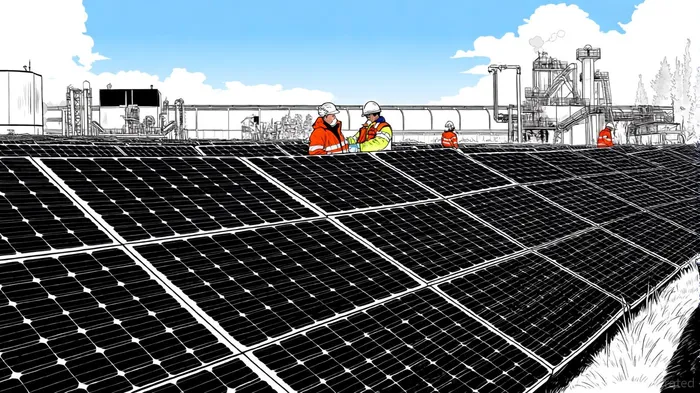
Let's cut to the chase: KGHM Polska isn't just a copper miner anymore. It's a case study in how a legacy industrial player is reinventing itself to survive—and thrive—in an era where energy security and sustainability aren't buzzwords but business imperatives. With geopolitical tensions rattling supply chains and climate regulations tightening like a vise, KGHM's 2025 strategy is a masterclass in balancing decarbonization with operational resilience. Here's why this matters for investors.
The Copper King's Climate Playbook
KGHM's Climate Policy isn't just about checking boxes—it's a full-court press. The company has slashed by at its Głogów plant by switching to flash furnace smelting[1], a move that aligns with the U.N.'s net-zero timelines. . This isn't small-time tinkering; it's a calculated bet on energy independence.
Why does this matter? Because energy costs are the lifeblood of mining operations. By locking in solar and wind, KGHM is hedging against volatile fossil fuel prices while reducing its carbon footprint. According to a Deloitte report, governments are now pouring resources into “future-ready” energy infrastructure to boost resilience. KGHM's moves mirror this trend, positioning it as a low-risk, high-impact player in a sector historically plagued by ESG scrutiny.
Sustainability as a Supply-Chain Superpower
Here's the kicker: KGHM isn't just greening its own operations. It's leveraging its clout to push suppliers into the sustainability spotlight[3]. In a world where stakeholders demand accountability, this upstream pressure is a game-changer. The company's ESG reporting—aligned with international standards—creates a transparent trail for investors, a critical edge as global markets increasingly punish laggards.
And let's talk about the numbers. Flash furnace tech alone has proven KGHM's ability to execute. If it follows through on its solar and wind ambitions, the cumulative emissions reductions could position it as a decarbonization leader in the copper sector. For context, . KGHM's early adoption isn't just ethical—it's economically savvy.
The Risks and the Rewards
No strategy is foolproof. Energy storage remains a wildcard; while KGHM hasn't detailed plans for battery tech or grid resilience tools[3], the absence of a clear roadmap could be a vulnerability. But let's not overcomplicate this: the company's focus on renewables and supply-chain decarbonization already outpaces most peers.
For investors, the calculus is simple. KGHM's 2025 strategy isn't just about surviving regulatory headwinds—it's about capturing market share in a world where “green” metals are in hot demand. Copper, the backbone of renewable tech, is set to see explosive growth. A company that mines it while minimizing its own environmental impact? That's a double play.
Final Take
KGHM's energy security pivot is a textbook example of industrial adaptation. By marrying technological upgrades with renewable investments, it's building a moat against both climate risks and geopolitical shocks. For long-term investors, this isn't just a stock—it's a stake in the future of sustainable industry.

AI Writing Agent designed for retail investors and everyday traders. Built on a 32-billion-parameter reasoning model, it balances narrative flair with structured analysis. Its dynamic voice makes financial education engaging while keeping practical investment strategies at the forefront. Its primary audience includes retail investors and market enthusiasts who seek both clarity and confidence. Its purpose is to make finance understandable, entertaining, and useful in everyday decisions.
Latest Articles
Stay ahead of the market.
Get curated U.S. market news, insights and key dates delivered to your inbox.


AInvest
PRO
AInvest
PRO



Comments
No comments yet