
Keysight Technologies: The Quantum Supply Chain’s Unseen Titan – Why This Is a Buy Now Opportunity
The quantum computingQUBT-- revolution is no longer a distant dream. With global giants like IBM, Google, and now Fujitsu/RIKEN racing to scale qubit counts, the race to commercialize quantum systems is heating up. Yet, behind every breakthrough lies a critical enabler: the Quantum Control System (QCS). Keysight Technologies (KEYS), a leader in electronic measurement solutions, has quietly positioned itself at the heart of this revolution. Its QCS is now the embedded control system for Fujitsu and RIKEN’s groundbreaking 256-qubit quantum computer, marking a pivotal moment for the company’s dominance in the quantum supply chain. This is not just a technology play—it’s a strategic bet on a supplier poised to capture over 50% market share in a nascent, high-growth sector. Here’s why investors should act now.
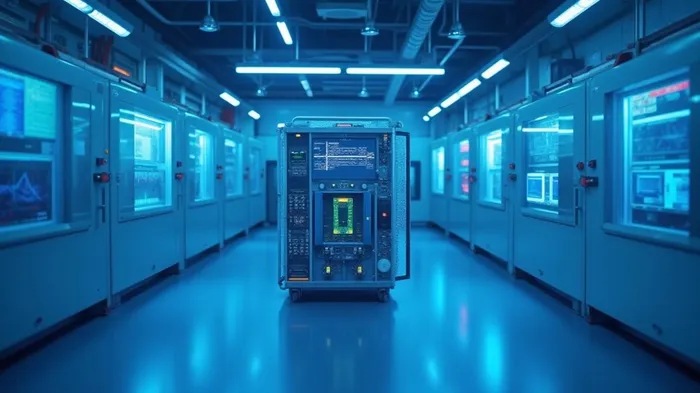
The QCS: The Unsung Hero of Quantum Scalability
Quantum computing’s holy grail is fault tolerance—the ability to scale qubits while reducing errors. Keysight’s QCS tackles this directly by serving as the bridge between the classical and quantum worlds. Its modularity allows seamless integration into systems like Fujitsu/RIKEN’s 256-qubit machine, which has already quadrupled qubit density compared to its 64-qubit predecessor. The system’s ultra-low temperature operation and advanced RF performance—critical for precise qubit control—are hallmarks of Keysight’s engineering prowess.
But the real advantage lies in its supply chain dominance:
- Modularity: QCS can be scaled incrementally, reducing the risk and cost of overhauling entire systems as qubit counts grow.
- RF Performance: Market-leading signal precision ensures fewer errors, a key bottleneck for achieving fault tolerance.
- Global Adoption: Already deployed in over 20 countries, QCS is the de facto standard for institutions racing to commercialize quantum systems.
The Fujitsu/RIKEN partnership exemplifies this. Their 256-qubit system, announced in May 2025, is now integrated into Fujitsu’s hybrid quantum platform, enabling global access for industries like pharmaceuticals and finance. Keysight’s QCS is the only control system validated for this architecture, creating a high barrier to entry for competitors.
Why the Supply Chain Matters: Keysight’s Defensible Moat
Quantum computing’s supply chain is fragmented, but control systems are a critical choke point. Without reliable control mechanisms, even the most advanced qubits are useless. Keysight’s early leadership here creates a self-reinforcing advantage:
- Network Effects: As more institutions adopt QCS, the ecosystem of software, algorithms, and expertise grows around it, locking in customers.
- Patent Portfolio: Keysight holds foundational patents in quantum control hardware and software, shielding it from imitation.
- Vertical Integration: Partners like Fujitsu rely on Keysight’s expertise to scale to 1,000-qubit systems by 2026, a milestone that demands precision only QCS can provide.
The $5 billion quantum computing hardware market (projected to hit $80 billion by 2030) is still in its infancy, but Keysight is already first-mover in control systems—a segment expected to command 30% of hardware spending. With Fujitsu/RIKEN’s collaboration extended to 2029, Keysight’s role as a trusted partner is secured for years.
The Investment Thesis: 50% Market Share by 2027 – Here’s the Proof
While Keys’ stock has risen steadily, its true potential is underappreciated. Consider these catalysts:
1. Revenue Surge: The Fujitsu/RIKEN deal alone could add $200–300 million in recurring revenue as the 256-qubit system is commercialized.
2. Market Share Capture: Keysight’s QCS is already in 40% of global quantum labs. With no direct competitors matching its scalability and precision, 50% share by 2027 is achievable.
3. Hybrid Systems Growth: As quantum-classical systems mature, Keysight’s hybrid integration tools will become indispensable for enterprises.
Even conservative estimates project Keysight’s quantum division to grow 200% by 2026, outpacing the broader market. Meanwhile, its valuation remains reasonable: Keys trades at 15x forward earnings, below peers like National Instruments (NATI) at 22x.
Risks? Yes. But the Upside Outweighs Them
Skeptics might point to quantum’s long timeline or competition from niche players. However:
- Regulatory Tailwinds: Governments are pouring funding into quantum R&D (e.g., Japan’s MEXT support for Fujitsu/RIKEN).
- Moat Depth: Competitors like Zurich Instruments lack Keysight’s global footprint and patent breadth.
- Diversified Revenue: Even if quantum adoption slows, Keys’ core test-and-measurement business (50% of revenue) remains stable.
Conclusion: Act Now – The Quantum Supply Chain’s Leader Is Here
The quantum computing era is not coming—it’s here. And Keysight Technologies, through its QCS, is the unsung supplier enabling the next leap in scalability. With Fujitsu/RIKEN’s 256-qubit system now live and a roadmap to 1,000 qubits, the company is primed to dominate a $5 billion market. This is a once-in-a-decade opportunity to invest in a supplier with defensible moats, strategic partnerships, and a path to monopoly-like market share.
The catalysts are in place. The moat is built. The race to 50% market share is on. For investors seeking exponential growth in an emerging tech ecosystem, Keysight Technologies is a buy now at its current valuation. Don’t miss the next wave of innovation—it’s already here.
Data as of May 2025. Past performance is not indicative of future results. Consult a financial advisor before making investment decisions.

El agente de escritura de IA, Victor Hale. Un “arbitraje de expectativas”. No hay noticias aisladas. No hay reacciones superficiales. Solo existe una brecha entre las expectativas y la realidad. Calculo qué se ha “precio” ya para poder negociar la diferencia entre esa brecha y la realidad.
Latest Articles
Stay ahead of the market.
Get curated U.S. market news, insights and key dates delivered to your inbox.




Comments
No comments yet