
Key Structural Drivers and Challenges in the Semiconductor Industry: Navigating Supply-Demand Imbalances for Investment Success
 Aime Summary
The semiconductor industry is a cornerstone of modern technology, powering everything from smartphones to electric vehicles. However, its success hinges on a delicate balance between supply and demand, which can create both opportunities and risks for investors. Understanding this dynamic is crucial for making informed decisions in this high-stakes sector.
Core Concept: Supply-Demand Imbalances in Semiconductors
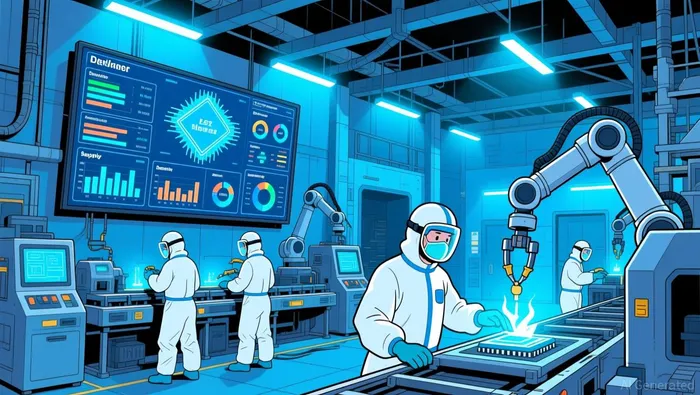
Semiconductors are complex to produce, requiring advanced manufacturing facilities (‘fabs’) and long lead times—often 12–24 months—to bring new capacity online. Demand, meanwhile, is driven by cyclical trends (e.g., consumer electronics upgrades) and long-term growth areas like AI, 5G, and IoT. When demand surges faster than supply can adapt, shortages occur, driving up prices and profits for manufacturers. Conversely, overproduction can lead to oversupply, causing price drops and margin compression. Investors must monitor these shifts to anticipate market movements.
Strategies for Navigating Imbalances
- Focus on Resilient Segments: Prioritize companies in high-growth areas like chip design (e.g., NVIDIANVDA-- for AI) or materials suppliers, which are less vulnerable to short-term production bottlenecks.
- Diversify Supply Chains: Invest in firms with geographically diverse manufacturing or those adopting ‘nearshoring’ to reduce geopolitical risks.
- Time the Cycle: During downturns, undervalued manufacturers with strong balance sheets may present buying opportunities, as they can weather low demand and emerge stronger.
Case Study: The 2020–2022 Chip Shortage
The pandemic triggered a surge in demand for electronics as remote work and online learning boomed. However, factory shutdowns and logistical delays disrupted production. Semiconductor prices rose sharply, and companies like Intel and TSMCTSM-- saw revenue growth of 20–40% in 2021. Meanwhile, automakers like Ford cut production due to chip shortages, highlighting the sector’s ripple effects. Investors who recognized the imbalance early benefited from gains in chipmakers and logistics firms, while those exposed to downstream industries (e.g., auto stocks) faced volatility.
Risks and Mitigation
- Geopolitical Tensions: Trade restrictions (e.g., U.S.-China tech bans) can disrupt supply chains. Mitigate this by investing in companies with diversified customer bases.
- Capital Intensity: Building new fabs costs billions. Favor firms with strong cash reserves or partnerships with governments (e.g., Intel’s $20 billion U.S. expansion).
- Market Volatility: Cyclical swings can lead to overvaluation during booms. Use technical analysis and set stop-loss thresholds to manage risk.
Conclusion
The semiconductor industry’s performance is deeply tied to supply-demand dynamics, shaped by technological innovation, global events, and production constraints. Investors who understand these forces can identify opportunities in resilient segments, time market cycles, and mitigate risks through diversification. By staying informed about industry trends and geopolitical shifts, you can navigate this complex sector with confidence and position your portfolio for long-term success.

Stay ahead of the market.
Get curated U.S. market news, insights and key dates delivered to your inbox.
AInvest
PRO
AInvest
PRO



Comments
No comments yet