
Key Drivers in the Financial Market: Interpreting Central Bank Policy Shifts
 Aime Summary
Central banks play a pivotal role in shaping the financial markets. From adjusting interest rates to implementing stimulus programs, their decisions ripple through economies and influence investor behavior. Understanding how to interpret central bank policy shifts can empower investors to make informed decisions and navigate market volatility. This article breaks down the mechanics of central bank policies, their impact on the stock market, and actionable strategies for investors.
Core Concept: Central Bank Policies and Market Dynamics
Central banks, such as the U.S. Federal Reserve or the European Central Bank, manage monetary policy to control inflation, stabilize employment, and foster economic growth. Their primary tools include:1. Interest Rates: Adjusting the cost of borrowing for banks, businesses, and consumers.2. Quantitative Easing (QE): Purchasing financial assets to inject liquidity into the economy.3. Reserve Requirements: Regulating how much cash banks must hold, influencing lending capacity.
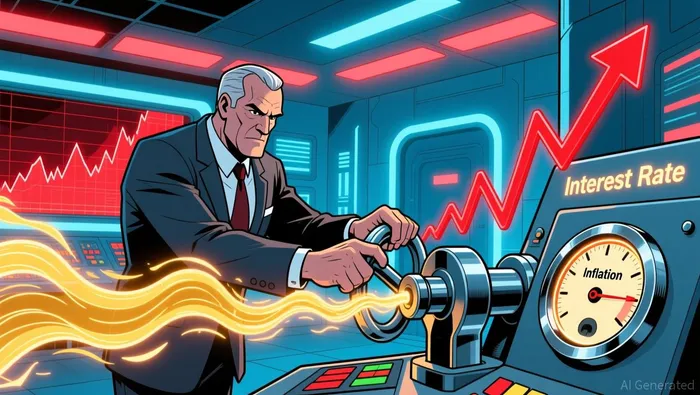
When central banks raise interest rates, borrowing becomes more expensive, often slowing economic activity and reducing inflation. Conversely, lowering rates stimulates spending and investment. These actions directly affect corporate profits, consumer spending, and asset prices—key drivers of stock market performance.
Application in Investing: Strategies for Policy Shifts
Investors can adapt their strategies based on central bank signals. For example:- Pro-cyclical Investing: During rate cuts or QE programs, growth stocks (e.g., tech or consumer discretionary sectors) often outperform, as cheaper capital fuels innovation and expansion.- Defensive Positioning: When rate hikes are imminent, investors may shift to sectors less sensitive to borrowing costs, such as utilities or healthcare.- Bond Market Arbitrage: Changes in monetary policy affect bond yields, creating opportunities to balance portfolios between stocks and fixed-income assets.
In 2008, the U.S. Federal Reserve slashed interest rates to near zero and launched multi-trillion-dollar asset-purchase programs to stabilize the economy. This aggressive stimulus boosted corporate liquidity and investor confidence. The S&P 500, down 37% in 2008, rebounded by 2009 and entered a decade-long bull market. Investors who recognized the Fed’s dovish stance and allocated to equities or high-yield bonds during this period captured significant gains.
Risks and Considerations
While central bank policies are powerful tools, they are not without risks:- Policy Lag: The effects of rate changes or stimulus programs can take months or years to materialize, leading to short-term market volatility.- Over-Reliance on Stimulus: Prolonged low-rate environments can create asset bubbles, as seen in the 2020-2022 market surge and subsequent correction.- Global Spillovers: Policy shifts in one region (e.g., the Fed’s tightening) can impact emerging markets or trade-dependent economies.
To mitigate risks, investors should:1. Diversify: Balance portfolios across sectors and geographies to reduce exposure to policy-driven volatility.2. Monitor Leading Indicators: Track inflation data, employment reports, and central bank communications to anticipate shifts.3. Avoid Timing the Market: Focus on long-term goals rather than reacting to short-term policy changes.
Conclusion
Central bank policies are a cornerstone of financial market dynamics. By understanding how interest rates, stimulus programs, and regulatory actions influence economic conditions, investors can align their strategies with broader trends. While these policies are not foolproof, combining them with disciplined research and risk management can help investors navigate uncertainty. In a world where central banks wield immense influence, staying informed is the first step toward making smarter investment decisions.

Stay ahead of the market.
Get curated U.S. market news, insights and key dates delivered to your inbox.


AInvest
PRO
AInvest
PRO



Comments
No comments yet