
Key Drivers and Challenges in the Energy and Petrochemical Industries: Understanding Demand Erosion and Structural Overcapacity
 Aime Summary
The energy and petrochemical industries are vital to the global economy, but they face significant challenges that can impact stock market performance. Two critical concepts—demand erosion and structural overcapacity—play a pivotal role in shaping these industries. Understanding them can help investors make informed decisions and navigate market volatility.
What Are Demand Erosion and Structural Overcapacity? Demand erosion occurs when the demand for a product or service declines over time. This can happen due to market saturation, technological advancements, or shifts in consumer behavior. For example, as electric vehicles gain popularity, demand for traditional gasoline may erode. Structural overcapacity, on the other hand, happens when the supply of a product exceeds demand due to over-investment or inefficiencies. This often leads to price competition and reduced profitability.
How These Concepts Impact the Market
When demand erodes, companies may struggle to maintain revenue, leading to lower stock prices. Structural overcapacity exacerbates this by creating a 'supply glut,' where producers are forced to cut prices to remain competitive. 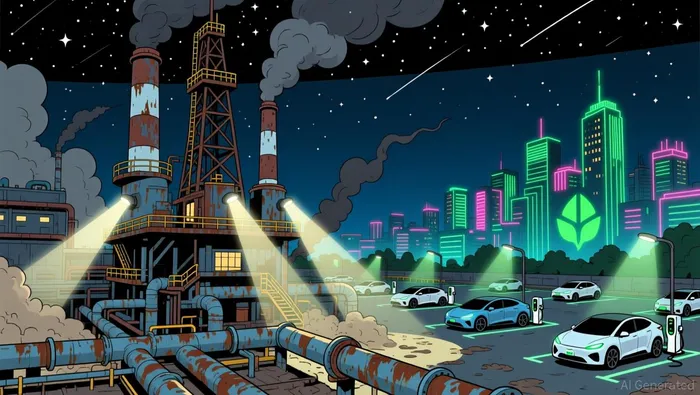 For instance, in 2020, the global pandemic caused a sharp drop in oil demand (demand erosion), while many oil producers continued producing at full capacity, creating a severe oversupply (structural overcapacity). This led to historic price drops, including the infamous negative oil prices in April 2020.
Strategies for Investors 1. Focus on Adaptability: Invest in companies that are pivoting to new markets or technologies. For example, petrochemical firms diversifying into renewable energy or bio-based materials may outperform those stuck in traditional models. 2. Monitor Supply-Demand Dynamics: Track industry reports and regulatory changes that could signal shifts in demand or production capacity. For instance, policies promoting electric vehicles could accelerate demand erosion for oil. 3. Diversify Portfolios: Balance energy and petrochemical holdings with sectors less vulnerable to supply-demand imbalances, such as technology or healthcare.
Case Study: The Oil Industry in 2020 In early 2020, the coronavirus pandemic caused a 30% drop in global oil demand, while production remained high. This created a perfect storm of demand erosion and structural overcapacity. Companies like ChevronCVX-- and BPBP-- saw their stock prices plummet by over 50%. However, firms that quickly cut production costs or shifted to alternative energy sources, such as Total (now TotalEnergies), began to recover faster as markets stabilized. This example highlights the importance of agility in volatile industries.
Risks and Mitigation While these concepts offer insights, they also carry risks. Overestimating demand recovery or underestimating supply adjustments can lead to poor investment choices. To mitigate this, conduct thorough research on company-specific strategies and industry trends. Additionally, use stop-loss orders or limit orders to manage downside risk in volatile markets.
Conclusion Demand erosion and structural overcapacity are powerful forces shaping the energy and petrochemical sectors. By understanding these dynamics, investors can identify opportunities in companies adapting to change and avoid those vulnerable to market shifts. As the world transitions to cleaner energy and new technologies, staying informed will be key to navigating these industries successfully.

Stay ahead of the market.
Get curated U.S. market news, insights and key dates delivered to your inbox.
AInvest
PRO
AInvest
PRO



Comments
No comments yet