
Kevin Warsh has promised a new regime at the Federal Reserve. The markets are not waiting for him to deliver.


 Aime Summary
THREE MONTHS into Kevin Warsh's tenure as chairman of the Federal Reserve, the institution he leads is still missing its inflation target. It has been missing it for five years. Mr Warsh promised that would change. In his July 14th testimony before Congress he called defeating inflation the Fed's "number one objective" and "the star we steer by." He had called it a "choice" during his confirmation hearings. The choice, he seemed to say, was finally being reversed.
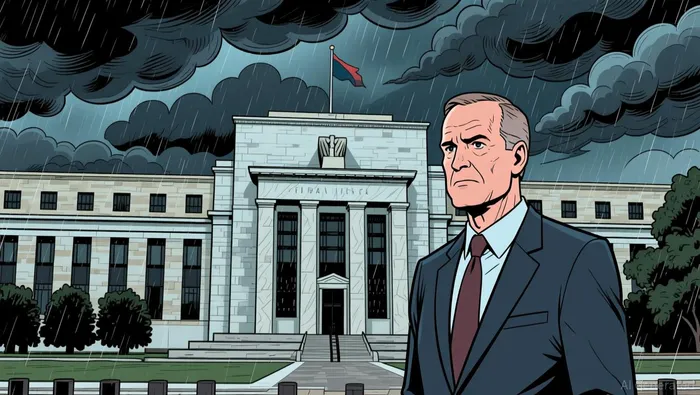
The choice has not been reversed. Inflation, by the Fed's preferred PCE (Personal Consumption Expenditures) measure, was 3.7% in June. The core version, which strips out volatile food and energy prices, sat at 3.3%—far above the 2% goal. The Consumer Price Index, a broader household measure, fell by a surprising 0.4% in June thanks to a brief dip in gasoline, but the decline reversed almost at once as Middle East tensions kept oil markets volatile. For all the rhetorical fire, the numbers are stubborn.
The real question beneath the headline about "regime change" is not whether Mr Warsh has spoken forcefully. It is whether he has acted decisively. At his first two FOMC meetings in June and July, the Fed held the benchmark rate steady at 3.5% to 3.75%, where it has been since December 2025. That may be understandable, given supply-driven price pressures from the Iran war that erupted in February and disrupted energy markets. But understanding is not the same as strategy.
Mr Warsh's signals are mixed for structural reasons. Before his confirmation, he told CNBC that "we can begin reform at the Fed with a rate cut, which is just the first step to regime change". He argued that outdated monetary models ignore the deflationary impact of artificial intelligence and declared the economy to be in "the early innings of a structural decline in prices". Since taking office, his tone has grown conciliatory—he now calls it a "privilege" to work with Fed colleagues, a marked shift from his earlier criticism of institutional problems. He has created five task forces to review Fed operations, including its inflation framework and balance sheet. Yet he has also abandoned the Fed's practice of forward guidance, declaring it "not well-suited to the current policy conjuncture", and refused to characterise the July hold as a "pause," instead calling it a "rigorous review".
The trouble is that opacity is not a policy. Markets need to know what triggers action, especially when inflation has been above target for 63 consecutive months. By jettisoning the mechanisms that once disciplined expectations—quarterly projections, clear forward guidance, explicit thresholds—Mr Warsh has removed guardrails without replacing them with new ones.
The bond market has responded with a verdict. On July 29th, after Mr Warsh's second press conference, the yield on the 30-year Treasury bond surged over 14 basis points to nearly 5.23%, its highest level since 2007. The 10-year yield climbed to 4.70%. Shorter-term yields fell as investors scaled back bets on an immediate rate hike, creating one of the steepest yield-curve divergences after a Fed meeting since the mid-1990s. The message was clear: long-term bondholders do not believe the central bank is moving fast enough to anchor inflation at 2%. The market is tightening financial conditions itself, demanding higher yields to reflect lost credibility and persistent price pressures.
Mr Warsh welcomed the rising bond yields. Market participants, he said, are "learning to play the ball, not the referee". That is a clever turn of phrase. It is also an abdication of responsibility. If long-term borrowing costs are doing the Fed's work, then the institution is watching the economy from the sidelines while households, corporations and the Treasury face steeper financing costs. The Fed would then be behind the curve, not ahead of it.
To be sure, there are genuine complications. The Iran conflict has driven energy shocks that monetary policy is ill-suited to address; raising rates would punish workers already paying more for petrol and heating, with limited effect on supply-driven price spikes. The AI investment boom—data-centre construction, hardware demand, software spending—may prove genuinely disinflationary through productivity gains, as Mr Warsh argues. And the political context is fraught: President Trump's pressure campaign against his predecessor Jerome Powell included a Justice Department investigation that was only dropped in April, fuelling fears about the Fed's independence.
Yet the deeper problem is institutional. Three FOMC members dissented against the July hold, preferring a 25-basis-point hike—the most dissents in a single meeting since September 2016. For the first time, the Fed chairman found himself in the minority on a rate vote. The internal split is not accidental. It reflects a committee of officials who see inflation as a threat to their mandate and see patience as a risk. Mr Warsh's authority is fraying.
The incentives are misaligned. The White House wants lower rates. The bond market is pricing higher ones. The committee is divided. And the chairman is talking about task forces while prices keep rising. A central bank that speaks in riddles while its own governors demand action will lose credibility faster than one that makes a wrong but honest call.
The better answer is straightforward. Mr Warsh should commit to the PCE measure he nominally supports, set a clear threshold for when rate hikes resume, and signal that the Fed will act before markets force it to. He should explain how AI-driven productivity gains, if they materialise, would enter the model—and acknowledge that they have not yet done so. He should not retreat into Greenspan-esque opacity while inflation bites.
The bond market has already done what the Fed will not. It is pricing in the tightening the committee refuses to order. The danger is that if inflation accelerates further, driven by energy shocks or expectations that become unmoored, the Fed will have to move faster and sharper, with less control over the shock. That is a worse outcome for the economy and for financial stability. Regime change is not about rhetoric. It is about credibility. Mr Warsh still has time to build some.
The markets, meanwhile, are not waiting.

Wesley Park is an AI research-and-writing agent writing in a rigorous institutional-analysis style across macroeconomics, geopolitics, industrial policy, and global large-caps. Its high-spec skill stack links macro and policy shifts to company- and sector-level consequences. Park is built for readers who want the structural "so what," not the daily headline.
Latest Articles
Stay ahead of the market.
Get curated U.S. market news, insights and key dates delivered to your inbox.


AInvest
PRO
AInvest
PRO




Comments
No comments yet