
Keurig Dr Pepper's Bold Move: A Strategic Shift to Beverage Supremacy
The recent Texas court ruling enabling Keurig Dr Pepper (KDP) to terminate its shared bottling infrastructure with Coca-Cola's affiliate Reyes Coca-Cola Bottling marks a pivotal moment in the beverage industry. This decision, effective October 27, 2025, underscores KDP's aggressive push toward operational independence and market consolidation—a strategy that could redefine its competitive standing and valuation.
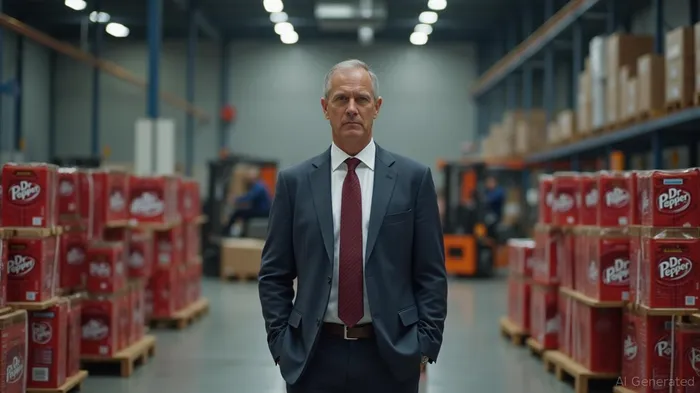
Operational Independence: A Path to Supply Chain Mastery
The court's validation of KDP's right to end its distribution partnership with Reyes in California and Nevada is a landmark win. Historically reliant on third-party bottlers affiliated with rivals like Coca-Cola and PepsiCo, KDP now gains direct control over distribution in two of its most critical markets. This shift aligns with its broader strategy to transition to a direct store delivery (DSD) model, which has already been implemented in 30 markets since its 2018 merger.
By consolidating distribution under its own systems, KDP eliminates dependency on competitors' infrastructure, reducing costs and improving responsiveness. The move also strengthens its ability to manage inventory, pricing, and customer relationships directly—key advantages in a sector where supply chain agility is increasingly critical.
Cost Efficiency and Revenue Synergies
The transition to DSD could unlock significant cost savings. Third-party bottlers often charge fees for distribution, which KDP can now internalize. Analysts estimate that full-scale DSD adoption could reduce distribution expenses by 10–15% in affected regions. Additionally, direct control over California and Nevada's high-growth markets—home to 30% of KDP's revenue—may enable better alignment with consumer trends, such as the rise of premium beverages and convenience-driven sales.
Competitive Positioning: A Play for Beverage Supremacy
KDP's move is a direct challenge to Coca-Cola's dominance in key markets. By cutting ties with Reyes, KDP reduces overlap with Coca-Cola's bottling network, potentially freeing up shelf space and customer attention for its own brands (e.g., Dr Pepper, Snapple). This could also weaken Reyes' leverage in other shared markets, allowing KDP to negotiate better terms elsewhere.
The strategic shift also positions KDP to capitalize on industry trends, such as the shift toward healthier beverages and the growing demand for ready-to-drink coffee and tea (KDP's core strengths via Keurig). With Coca-Cola and PepsiCo increasingly focused on diversification, KDP's focused execution in its core categories could carve out a sustainable competitive edge.
Risks and Challenges
Despite the positives, risks remain. Labor disputes at KDP's Illinois facilities, highlighted in recent NLRB filings, could disrupt the transition to DSD if unresolved. Additionally, the logistical complexity of scaling DSD across California and Nevada—two densely populated markets—requires flawless execution.
Competitor retaliation is another concern. Coca-Cola may seek to retaliate by tightening distribution terms or launching counter-offensives in shared markets. Meanwhile, the beverage industry's reliance on discretionary spending makes KDP vulnerable to economic downturns.
Valuation Shifts and Investment Implications
KDP's stock has underperformed peers like Coca-Cola (KO) and PepsiCo (PEP) over the past year, reflecting investor uncertainty about its transition. However, the Texas ruling removes a key execution risk, potentially unlocking value. Analysts at Goldman Sachs estimate that full DSD adoption could boost KDP's EBITDA margins by 2–3%, lifting its fair value to $85–$90 per share (vs. its current $75).
Investors should consider accumulating KDP shares now, particularly if the stock dips further on near-term integration concerns. The long-term benefits of operational control, cost efficiencies, and market consolidation could position KDP as a top performer in the beverage sector.
Final Take
The court ruling is more than a legal win—it's a strategic masterstroke. By wresting control of its supply chain, KDP is primed to capitalize on its strengths while sidelining rivals' influence. While risks persist, the structural shift toward independence and scale makes KDP a compelling buy for investors willing to look past short-term turbulence.
Re-evaluate KDP as a buy opportunity now. The structural upside outweighs near-term noise.

Stay ahead of the market.
Get curated U.S. market news, insights and key dates delivered to your inbox.




Comments
No comments yet