
Keurig Dr Pepper's $18-Billion JDE Peet's Acquisition: A Strategic Bet on Premium Coffee's Future


 Aime Summary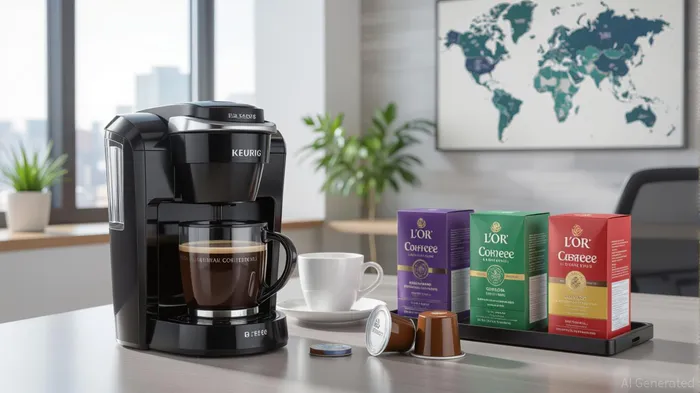
The beverage industry is undergoing a seismic shift. As consumers trade downmarket staples for premium, differentiated products, companies are racing to consolidate market share and redefine competitive advantages. Keurig Dr Pepper's (KDP) $18 billion acquisition of JDE Peet's in 2023 is not merely a transaction—it is a masterstroke in the broader narrative of premiumization, a calculated move to dominate the global coffee sector and unlock long-term shareholder value.
Strategic Rationale: Merging Scale, Innovation, and Global Reach
The acquisition combines KDP's U.S. dominance in single-serve brewing systems with JDE Peet's global coffee expertise, creating a powerhouse with $35 billion in combined revenue. JDE Peet's brings iconic brands like Peet's Coffee, L'OR, and Jacobs, while KDPKDP-- contributes its K-Cup ecosystem and a portfolio of carbonated and non-carbonated beverages. Together, they form a vertically integrated entity capable of spanning the entire coffee value chain—from brewing systems to ready-to-drink (RTD) formats and plant-based alternatives.
The strategic logic is clear: premium coffee is a high-margin, high-growth category. U.S. consumers spent over $40 billion on coffee in 2024, with RTD and cold brew driving much of the growth. By bundling Keurig brewers with JDE Peet's premium pods and leveraging cross-promotional campaigns, the combined entity can capture both the hardware and consumables markets, a playbook that has worked for decades in the coffee industry.
Synergies and Financial Discipline: A Blueprint for Margin Expansion
The deal's success hinges on $500 million in annualized cost synergies by 2027, derived from three pillars:
1. Supply Chain Optimization: Consolidating procurement and manufacturing across 150 global facilities.
2. Shared Services: Streamlining IT, R&D, and marketing to reduce overhead.
3. Brand Consolidation: Leveraging cross-promotional opportunities to drive incremental sales.
Critically, the acquisition maintains financial discipline. JDE Peet's has committed to reinvesting 50% of its $500 million in productivity savings into high-growth areas, such as expanding Peet's into new markets or enhancing sustainability efforts. The combined entity's target net debt/EBITDA ratio of below 3.0x by 2025 ensures it remains investment-grade, preserving flexibility for further innovation or M&A.
Market Performance and Challenges: A Mixed Bag
Post-merger results have been encouraging. In Q2 2025, KDP's U.S. Refreshment Beverages segment reported 6.1% revenue growth to $4.16 billion, driven by strategic pricing and the acquisition of GHOST, an energy drink brand. JDE Peet's, meanwhile, posted a 24.7% operating margin in the same period, outperforming peers like Coca-ColaKO-- and PepsiCoPEP--.
Yet challenges persist. The U.S. coffee segment saw a 0.2% sales decline in Q2 2025, attributed to declining pod and brewer shipments. This underscores the need for innovation in the single-serve market, where competition from private-label brands and new entrants in plant-based coffee alternatives is intensifying.
Industry Trends and Market Dominance: A Duopoly in the Making?
The KDP-JDE Peet's merger reflects a broader trend of consolidation in the premium coffee sector. By absorbing a key competitor and integrating its strengths, the combined entity is positioned to dominate both hot and cold beverage categories. JDE Peet's planned European IPO and JAB Holding's exit from the beverage sector provide regulatory and liquidity advantages, though integration risks—such as aligning corporate cultures and managing inventory overhangs—remain.
The result? A duopoly-like position in the U.S. and European coffee markets, with the combined entity controlling a significant share of single-serve systems, RTD coffee, and premium ground coffee. This scale could allow it to dictate pricing, innovate faster, and outmaneuver smaller rivals.
Investment Implications: A Long-Term Play on Premiumization
For investors, the acquisition represents a high-conviction bet on the future of the beverage industry. The company's reaffirmed 2024 guidance—mid-single-digit net sales growth and high-single-digit Adjusted EPS growth—reflects confidence in its strategic direction. However, success depends on executing synergies, navigating integration challenges, and maintaining innovation in emerging categories like plant-based and cold brew.
Key metrics to monitor include:
- Margin Sustainability: Can the combined entity maintain its 24.7% operating margin while investing in growth?
- Debt Reduction: Will the net debt/EBITDA ratio fall below 3.0x by 2025?
- Innovation Pipeline: How quickly will new products (e.g., plant-based alternatives) gain traction?
For those with a 5–7 year horizon, the valuation appears compelling. At current multiples, the stock offers a discount to its long-term growth potential, particularly if the company meets its productivity and deleveraging targets.
Conclusion: A Strategic Bet on the Future
Keurig Dr Pepper's acquisition of JDE Peet's is more than a transaction—it is a strategic repositioning for an era defined by premiumization and consolidation. By merging scale, innovation, and global reach, the combined entity is well-positioned to redefine competitive advantages and drive sustained growth. While integration challenges persist, the disciplined approach to capital allocation and margin management provides a strong foundation for long-term value creation.
For investors willing to bet on the future of premium coffee, this is a deal worth watching—and potentially, owning.

Delivering real-time insights and analysis on emerging financial trends and market movements.
Latest Articles
Stay ahead of the market.
Get curated U.S. market news, insights and key dates delivered to your inbox.
AInvest
PRO
AInvest
PRO



Comments
No comments yet