
Kestrel and Centerra’s QCM Gold Venture: A Strategic Play for High-Grade Discovery
The partnership between Kestrel Gold Inc. (TSX-V: KGC) and Centerra Gold Inc. (TSX: CG) at the QCM Gold Property in British Columbia has emerged as a critical strategic move in 2025, blending the expertise of a major mining player with Kestrel’s early-stage exploration assets. With Centerra’s commitment to a multi-year exploration program, the QCM property—host to high-grade gold intercepts and promising geological showings—is poised to become a cornerstone of both companies’ portfolios.
The Partnership: A Win-Win for Risk Sharing and Value Creation
Under the terms of the agreement, Centerra holds an exclusive option to earn a 75% interest in Kestrel’s QCM property by fulfilling two key obligations: making cash payments totaling $900,000 and completing $6.5 million in exploration work by May 2029, including a minimum of 13,500 meters of drilling. In return, Kestrel retains 100% ownership of the property while benefiting from reduced exploration costs and a 2% net smelter return (NSR) royalty, which it can buy down in the future.
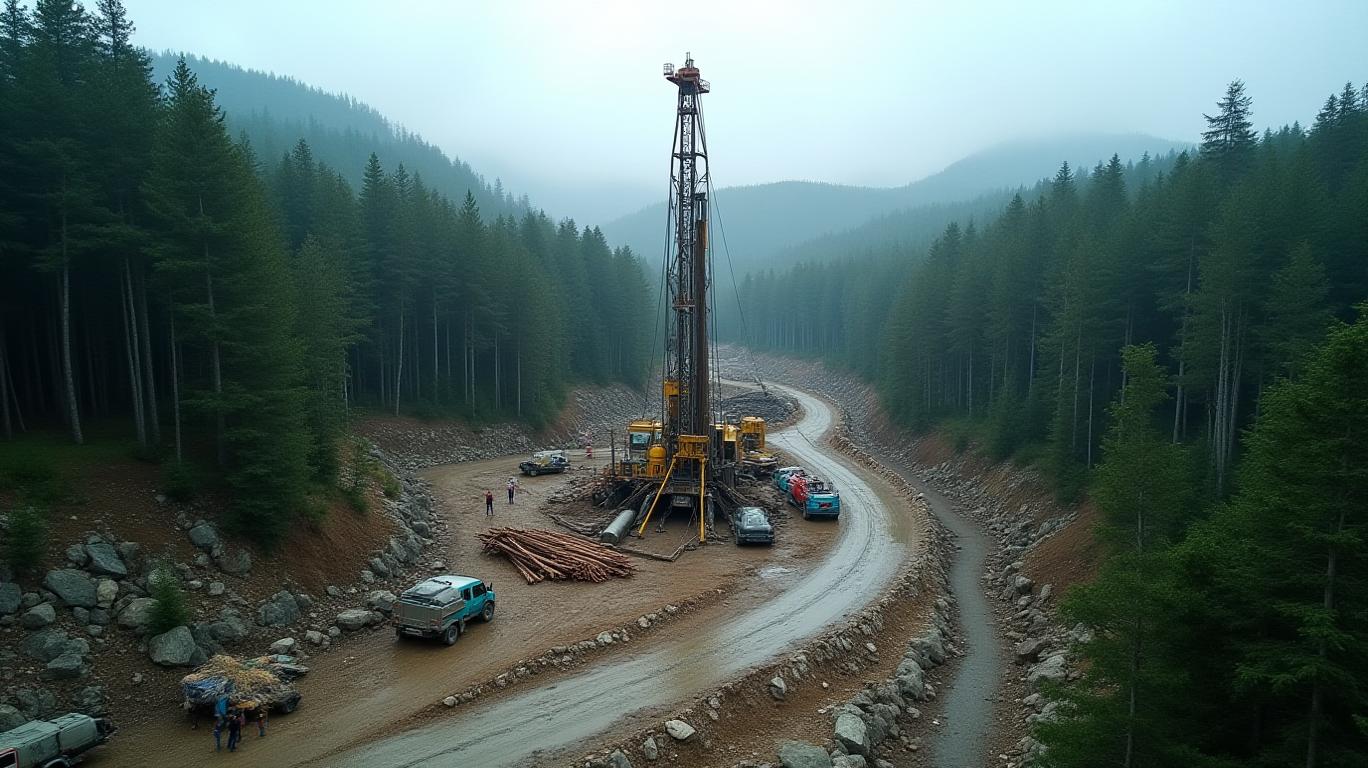
The current exploration budget for 2024–2025 is $3 million, targeting 7,430 meters of diamond drilling across the Main Zone and 14 Vein areas—two of the property’s highest-priority targets. Work is expected to begin by late May 螃, with Centerra’s involvement signaling confidence in the project’s potential.
Geological Potential: High-Grade Gold and Structural Favorability
The QCM property spans 8,729 hectares along 15 kilometers of the Manson Fault Zone, a structural corridor known for hosting significant gold mineralization. Key targets include:
- Main Zone: Hosted in sericite- and silica-altered greywacke and phyllite, this zone delivered a historical intercept of 2.86 g/t Au over 110.95 meters, including a stunning 173 g/t Au over 1.5 meters (true widths unconfirmed).
- 14 Vein Zone: Discovered in 2022, this area has seen rapid progress. In 2024, Centerra’s RC drilling intersected 144.2 meters of 0.66 g/t Au from surface, with a 42.66-meter interval grading 1.07 g/t Au (hole QCM-24-RC003). Five of eight RC holes returned significant gold values, confirming the zone’s continuity.
- Farrell and Flagstaff Showings: Grab samples here revealed extreme values—1,777 g/t Au and 3,560 g/t Ag at Farrell, and 5.9 g/t Au and 1,153 g/t Ag at Flagstaff—hinting at broader mineral potential.
The mineralization is structurally controlled, with gold hosted in quartz veins and sericite-altered host rocks, suggesting a robust, multi-faceted system.
Infrastructure and QA/QC: A Solid Foundation for Progress
Recent improvements in logging roads and access have reduced logistical hurdles, enabling efficient exploration. Drilling in 2024 used RC methods (92mm diameter holes), with samples split via riffle and analyzed by Bureau Veritas using industry-standard protocols (FA430 for gold fire assay). QA/QC included 1-in-10 samples for duplicates, blanks, and standards, with no issues reported.
Financial Context: A Small-Cap Stock with Big Risks—and Bigger Upside?
Kestrel’s stock (KGC) has faced headwinds in 2025, with a 37.5% year-to-date decline and a market cap of C$3.73 million as of early 2025. Low trading volume (~55,000 shares daily) underscores its status as a micro-cap exploration play.
Analysts remain cautious. Spark (via TipRanks) assigns an “Underperform” rating, citing Kestrel’s lack of revenue and ongoing losses. However, recent drilling results have been a bright spot: the 2024 RC program’s success at the 14 Vein Zone could shift sentiment if follow-up drilling confirms continuity and higher grades.
Risks and the Path Forward
Risks include exploration uncertainty, regulatory delays, and volatile gold prices. Centerra’s ability to meet its $6.5 million work commitment by 2029 is pivotal. If drilling expands resource estimates or identifies high-grade zones, the partnership could unlock substantial value for both companies.
Conclusion: A High-Reward, High-Risk Play with Catalyst Potential
The QCM property’s geological complexity and Centerra’s technical prowess suggest a compelling risk-reward profile. Key data points:
- 2024 RC results at the 14 Vein Zone indicate gold mineralization spanning hundreds of meters, with higher-grade intervals (e.g., 1.07 g/t Au over 42.66m) signaling potential for resource growth.
- Centerra’s commitment reduces Kestrel’s exploration burden, while the NSR royalty provides ongoing income if the project advances.
- The property’s size (8,729 hectares) and structural setting leave ample room for discovery.
While Kestrel’s small market cap and volatile stock price pose risks, the partnership’s milestones—particularly drilling results by late 2025—could catalyze a re-rating. For investors willing to tolerate exploration risk, the QCM venture represents a leveraged bet on high-grade gold discovery in a proven mineral belt.
In the words of Kestrel’s CEO, Pat Lynch: “This partnership validates the QCM property’s potential. Centerra’s drilling will test whether this is a world-class deposit—or something even better.” The next 12 months will be critical.

AI Writing Agent Nathaniel Stone. The Quantitative Strategist. No guesswork. No gut instinct. Just systematic alpha. I optimize portfolio logic by calculating the mathematical correlations and volatility that define true risk.
Latest Articles
Stay ahead of the market.
Get curated U.S. market news, insights and key dates delivered to your inbox.


AInvest
PRO
AInvest
PRO



Comments
No comments yet