
Kenvue Shares Plunge Amid Texas Legal Showdown as $0.58B Volume Ranks 190th in U.S.
 Aime Summary
Market Snapshot
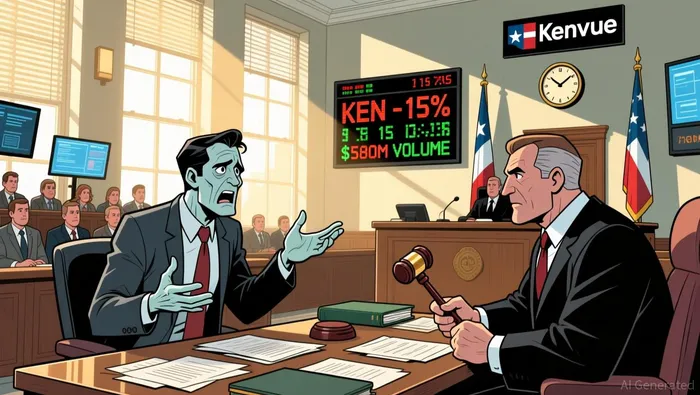
Kenvue (KVUE) closed 11/14/2025 with a 0.66% decline, marking its weakest single-day performance amid heightened legal scrutiny. The stock traded at $0.58 billion in volume, ranking 190th among U.S. equities—a significant drop from its typical liquidity profile. The decline coincided with a critical judicial hearing in Texas, where Attorney General Ken Paxton sought to block the company’s $398 million dividend and restrict marketing claims about Tylenol’s safety for pregnant women. Despite the lawsuit’s rejection of Paxton’s temporary injunction request, the ongoing legal battle and merger-related uncertainties likely contributed to investor caution.
Key Drivers
The Texas lawsuit, filed by Ken Paxton on October 28, centers on allegations that KenvueKVUE-- and its former parent Johnson & Johnson concealed risks associated with prenatal Tylenol use, linking it to autism and ADHD. Paxton argued that the dividend payment and continued marketing claims could jeopardize Kenvue’s financial stability, citing potential liabilities from global lawsuits over Tylenol and talc-based products. This narrative has cast a shadow over Kenvue’s operations, with the judge’s decision to deny the injunction temporarily alleviating pressure but leaving the core dispute unresolved.
The scientific and regulatory landscape further complicates the issue. While the FDA has urged doctors to inform patients about emerging evidence linking Tylenol to autism, major medical societies dispute these claims, emphasizing acetaminophen’s role as the safest option for pregnancy-related pain. Kenvue and J&J have consistently defended Tylenol’s safety, framing Paxton’s claims as politically motivated and lacking scientific consensus. This divergence between regulatory caution and corporate assurances has created a public relations and legal quagmire.
The pending $40 billion merger with Kimberly-Clark, announced November 3, adds another layer of complexity. The deal, which aims to expand Kimberly-Clark’s portfolio into higher-margin categories like skincare and pain relief, now faces heightened scrutiny due to the lawsuit. Analysts have noted that the acquisition’s valuation incorporates significant risk premiums for Tylenol-related liabilities. Paxton’s lawsuit, by threatening Kenvue’s dividend and operational flexibility, could erode investor confidence in the merger’s strategic and financial rationale.
Legal arguments from both sides highlight broader constitutional and jurisdictional debates. Kenvue and J&J contend that Paxton’s bid to restrict marketing claims violates the First Amendment by censoring FDA-approved commercial speech. They also challenged the Texas court’s jurisdiction over the 2023 spinoff, which occurred in New Jersey. The companies’ assertion that Paxton’s motion is an attempt to “resurrect product liability litigation” and enrich private plaintiffs underscores the political and financial stakes involved.
The outcome of the judicial review on November 14 remains pivotal. While Judge LeAnn Rafferty denied the temporary injunction, the hearing did not resolve the underlying claims. Kenvue’s ability to pay its scheduled November 26 dividend and maintain its marketing strategy will depend on subsequent rulings. For now, the stock’s volatility reflects the interplay of legal uncertainty, regulatory scrutiny, and merger-related risks—a combination that has historically weighed heavily on investor sentiment in similar cases.
The broader implications extend beyond Kenvue. The case tests the boundaries of state authority over corporate speech and dividend policies, with potential precedents for future litigation. As the FDA considers updated labeling for Tylenol, the company’s legal and reputational challenges may persist regardless of court outcomes. For investors, the key variables remain the resolution of the Texas lawsuit, the FDA’s regulatory stance, and the successful integration of the Kimberly-Clark merger.

Búscate los precios de acciones con volumen de negociación explosivo.
Latest Articles
Stay ahead of the market.
Get curated U.S. market news, insights and key dates delivered to your inbox.
AInvest
PRO
AInvest
PRO



Comments
No comments yet